Showing posts with label best branding strategies. Show all posts

Wednesday, December 26, 2018

4 Ways to Know When It's Time to Rebrand Your Business


Many entrepreneurs and business owners believe that a company's "brand" is simply the company's name and logo. That's not true, of course: A brand is more than just its underlying company's name and logo.

Yet, it's also true that that a name and business logo are key ambassadors for a brand, so it's important that both be strong.

Your company's own brand is the sum total of the experiences your customers and prospects have with your company. A good brand communicates what your company does and how it does it. A good brand also establishes trust and credibility with your prospects and customers. And because a brand evolves over time, many companies, including some of the most successful ones, rebrand.

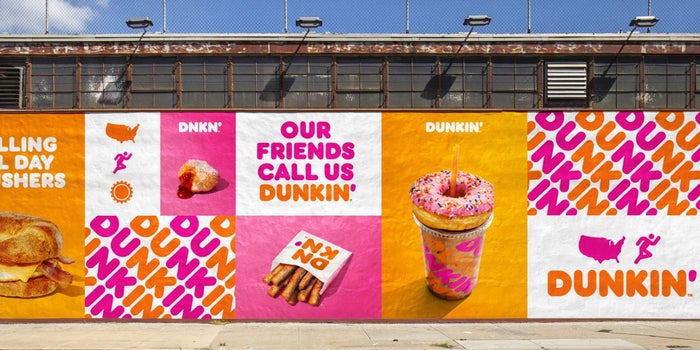
You may have noticed recent rebrands by Dunkin' Donuts, Weight Watchers, Uber, Unilever and others. That's why it's worthwhile to look closely at why companies rebrand and what your own company should know to successfully rebrand your business. When should a company even consider rebranding? Here are ways you can know when the time is right.

Companies should rebrand to better differentiate from the competition.

If your company name is generic and similar to that of other businesses, you’re hurting your brand. A generic logo will similarly hurt your brand. A related problem occurs when you use stock art in your branding or marketing materials: You may be hurting your brand because everyone recognizes stock art when they see it; and those photos may turn up being used by your competitors.

This is where rebranding comes in: It can help your business stand out from your competitors' by showcasing the things that make your company different and better.

Even the best companies change their brand identity. For example, did you know that Google started with the name "Backrub" or that Accenture started out as "Andersen Consulting"? It's not unusual for a company to outgrow its name and look for a fresh, unique business name that can help grow its business. Maybe it's time that your company do the same.


Companies should rebrand to give new life to outdated branding. 

It's possible that your Comic Sans font, flash-based website or 1990s color palette is dragging your brand down and making your business look outdated. What are you going to do? The answer is "rebrand," something even the most successful businesses do, as seen from the various iterations of the Airbnb logo:


Smart companies rebrand because they know that good design can make or break a business, because they know they've outgrown their original mission. Maybe your business started off selling personalized t-shirts, but now you want to add customized coffee mugs. If your branding revolves around t-shirts, customers won't know that they can look to you for mugs, too.

This is a common problem,. and we always advise clients to make sure their business name is not too narrow or literal.


Companies should rebrand to outgrow their poor reputation.
Uber's recent brand overhaul was necessary to break ties with its bad reputation and visibly demonstrate a commitment to a new, improved culture. If your business is struggling to overcome a negative reputation, a rebrand can help consumers see you in a fresh new light.


Companies should rebrand when their business evolves.

Sometimes, a business gets the opportunity to expand or target a new market. When that happens, it's important to ensure that your new customers and prospects can connect with your brand. That's what happened with Pabst Blue Ribbon, a low-price U.S. beer popular with fraternities and hipsters. China’s version of PBR -- the stately sounding Pabst Blue Ribbon 1844 -- sells for $44 a bottle!

This happened because Pabst saw a chance to re-market itself to the
Chinese craft beer market -- a market unaware of its budget reputation in the United States. By doing its homework, Pabst expanded into a new demographic and significantly grew its business.


6 things your company needs to know to rebrand successfully

1. Start by understanding your mission and values. 
Before you rebrand, it's crucial that you clearly understand your company's mission and values. Consider and assess what makes your company special. Why does your company exist, and what values does it have that are essential?


2. Develop a rebranding strategy that works with your existing branding. 
Many companies don't have the luxury of starting from a clean slate. If you're doing a partial rebrand, make sure to take the existing brand assets into account. BrandExtract, a branding firm with over a century of experience, explained why consistent branding is important, saying:
A consistent brand helps increase the overall value of your company by reinforcing your position in the marketplace, attracting better quality customers with higher retention rates and raising the perceived value of your products or services …. In contrast, erratic,
inconsistent behavior quickly leads to confusion and mistrust.

3. Consider the market and your competition. 
Before you rebrand, do your due diligence. Research what your competition does. Determine how you stand apart from your competitors, and what your true value proposition is. It's vital that your new brand be fresh and relevant, but not so of-the-moment that it ends up looking dated too quickly.

4. Collaborate with your team. 
Your brand may be one of your most important company assets, but just as valuable are the people that help grow your business every day. Include voices from across your company: Some of the best ideas and most valuable feedback come from departments you might not expect.


5. Manage the rebrand carefully. 
A rebrand is often a complex and lengthy endeavor. Without a careful plan of attack and a well-managed process, the rebrand can quickly go off the rails. Set deadlines and mitigate going down those pesky rabbit holes with a well thought-out project plan.

6. Launch your rebrand and tell the world. 
Even the most incredible rebrand is wasted if you never actually launch it. Make sure you plan your rebrand launch and be prepared to explain why you rebranded. Minimize the risk of customer confusion through a carefully planned launch that showcases the story behind the rebrand.

A rebrand is a declaration of your company’s commitment to upward growth. Change is never easy, but sometimes, as the song goes, a change will do you good.


Source: www.entrepreneur.com
Picture:


ABOUT WNFP
Westchester Networking for Professionals (WNFP) is a business organization focused on providing our members and guests with an extraordinary networking experience, bringing business professionals together for the sole purpose of generating new relationships and developing new business opportunities. Not a member, learn how you can become a member and join this awesome group of professionals to connect and grow your business.

Stay Connected with WNFP!
Join WNFP Communities!

Monday, September 17, 2018

8-Step Branding Strategy for Your Small Businesses


Branding is so much more than having a cool logo or flashy website.

Sure, today you have to be able to engage your audience and “tell your story” . . . but if you don’t tell it the right way, you’re left with nothing but a wasted opportunity.

This is where branding strategy comes into play.

Many startups, small businesses, and entrepreneurs only look at the present, focusing on short-term rather than the long-term growth and success of their business (the difference between a startup that dies after 6 months and a prosperous business such as eCommerce giant, Amazon).

So what exactly does branding mean? By definition, it means, “making a mark”. OK, that’s pretty vague.

Let me explain.

Branding is not a one-size-fits-all kind of deal. Simply put, branding differentiates you from your competitors, and it allows you to control how you want to be perceived.

This is something that so many people neglect because they are involved in every other aspect of the business—they are overwhelmed.

Building a brand is a process. So where do you start?

Step 1 – Determine your target audience

Your business might be founded on a brilliant idea, but until you determine your target audience, your marketing efforts are going to suffer.

Who am I trying to reach? Who does my product/service appeal to most? Who is my ideal customer?

Now use this data to align your brand’s efforts with your target audience.

Step 2 – Research competing brands within your industry

Today, even the most original ideas have competition, and untapped niches are few and far between.

Scout out your competitors. What are they doing right? What are they doing wrong? How can you draw influence without becoming a carbon copy of other businesses?

Step 3 – Choose a brand name that is easy to spell, say, hear and REMEMBER

It’s easy to overthink naming your brand; but the most important thing is that you choose something that can be spelled, pronounced, and remembered.

If you’re able to use your brand name to clue your audience in on what your business is about, that’s a plus!


Step 4 – Define your brand

Your brand can be anything. And until you spend some time defining your brand and narrowing your focus, that’s exactly what it will be – anything.

As we mentioned earlier, branding is not a one-size-fits-all kind of deal. Developing your brand’s identity allows you to create something unique and marketable.

Step 5 – Create value propositions

In online marketing, you don’t have the benefit of a face-to-face conversation or a facility that showcases your latest products and services. This makes value propositions extremely important to your brand.

What are value propositions? These are main selling points of your brand. They are what separate you from your competition.

Once you identify your value propositions, be sure to put them on display.

Step 6 – Set brand guidelines

Brand guidelines (or style guides) are often overlooked by small businesses, but they are an important component of a brand’s identity.

A clear set of brand guidelines allows you to maintain order and uniformity. A brand without guidelines looks scattered and unsure of itself.

Step 7 – Stand out from the crowd

If you followed steps 2 & 5, you should be able to start carving out your own lane within your industry or niche.

But if you’re still feeling this out, ask the people around you for honest feedback. What do they see as most attractive about your business? These are elements worth emphasizing.

Step 8 – Be consistent

The only way to build brand trust is through consistency.

If you make a 100% guarantee but only deliver 90% of the time, that’s not being consistent. If you boast a one-hour response time but don’t respond to someone for 24 hours, that’s not being consistent.

When it comes to building trust, all of the little things do matter.

Branding strategy is critical to the success of any business. If you dream of sustained success and customer loyalty, you need to be purposeful about branding.


With these 8 steps, you can do just that. 


Source: www.business2community.com
Image Credit: iStock by Getty Images

ABOUT WNFP
Westchester Networking for Professionals (WNFP) is a business organization focused on providing our members and guests with an extraordinary networking experience, bringing business professionals together for the sole purpose of generating new relationships and developing new business opportunities. Not a member, learn how you can become a member and join this awesome group of professionals to connect and grow your business.

Stay Connected with WNFP!
Join WNFP Communities!

Monday, August 27, 2018

5 Branding Tips If You're an Entrepreneur on a Budget

Ever hear of a brand style guide? That's the very first thing you'll need.


Think of branding as you would meeting someone on a blind date. You dress to make a specific impression. You communicate in a way that makes the other person interested in knowing more. And, if things work out, you may nudge your way toward a second date.

This is also the heart of branding, because with branding, you give someone an experience of your company that establishes a clear picture of who you are and ultimately engages that someone -- now a "customer" -- enough to buy your goods and services.

Many entrepreneurs ignore branding because they consider it too expensive or don’t think they'll need it until they reach a specific growth point. The truth is, however, that the longer you wait to brand, the more confusion you'll create in the marketplace. So, instead, start with the basics and use the many free or inexpensive branding tools that won’t break the bank but will have a drive revenue.

Create a brand style guide.

A brand style guide establishes guidelines that define your brand and how it will be shared with the marketplace. Similar to a marketing plan, a style guide assures a consistent company presence across every engagement so that your brand becomes recognizable to current and potential customers.

A brand style guide can be as complex or limited as you choose, and for most small businesses and startups should cover:


  • Mission and vision
  • Competitive analysis
  • Target audience
  • Creative guidelines
  • Voice

Establishing your brand style guide requires time and effort, but no money unless you choose to hire a consultant. There are also several free examples of brand style guides that can provide inspiration.

Design your logo.

Design your logo using your brand style guide. Your logo will appear on everything from business cards to your website, so it needs to visually encapsulate your brand. For assistance, check out the free or inexpensive logo-making websites, like AI logo designer by Designhill, or Sothink Logo Maker. Both provide quality designs for little to no money.

You can also find independent contractors on sites like Fiverr, to design your logo. Before using any of these options, study competitors' logos and logos from businesses that you admire, even if they are in a different industry. Identify the elements you like, and the ones you don’t, and design the logo that best represents your brand and will appeal to your target audience.

Launch your website.

Every business needs a website. Period. Why? A recent study by Deloitte found that small business with a strong digital presence earned twice as much revenue per employee than those without it. Websites generate sales, increase consumer trust and provide a 24/7 online marketing presence, which supports the company’s growth.

The challenge is that developing a website can be expensive, but resources such as Squarespace and WiseIntro can get you on the digital map cheaply, and you can upgrade or redesign your site as your company grows. If you have the funds to splurge on one piece of your branding, this is the place to spend it.

Leverage social media.

Social media sites are free to use and a great way to build your brand. Yes, you can pay to run ads and access high-level analytics, but you don’t need to start there right out of the box. Effective social media leveraging requires a professional and consistent presence. Start by conducting research to determine which social media channels are most likely to reach your target market and industry influencers.

Next, use free resources, such as Canva, to give your posts the branded look you need for a small-time investment but no financial outlay. Finally, utilize an editorial calendar to remind you to upload fresh information to these sites on a scheduled basis. Think outside the marketing box, and truly enhance your brand by sharing information about your mission and vision in ways that also highlight your personality.

Start a blog.

Blogging is another excellent way to establish your brand and engage your audience. This is where branding your voice is critical. Be intentional and consistent in your tone and communication process. Establish your expertise in your industry, discuss trends or other information relevant to your target audience and share stories about your company and staff to personalize your relationship with customers.

This is also a great opportunity to connect with other experts or influences by offering them opportunities to guest blog or request to curate their content on your site. The key to branding is to deliver fresh content on a consistent basis that will bring your audience back for more. There are several free and inexpensive blogging platforms, such as WordPress, that can get you up and running in minutes.

Bottom line


Your brand is the foundation of your business, but you don’t need to spend thousands of dollars to establish and support it. The brand style guide should inform every aspect of your professional engagements, from your logo to your blog, to clearly and consistently communicate who you are to your target audience. A strong brand will provide financial returns, so get started today.


Source: https://www.entrepreneur.com/
Image Credit: Mlenny | Getty Images


ABOUT WNFP
Westchester Networking for Professionals (WNFP) is a business organization focused on providing our members and guests with an extraordinary networking experience, bringing business professionals together for the sole purpose of generating new relationships and developing new business opportunities. Not a member, learn how you can become a member and join this awesome group of professionals to connect and grow your business.

Stay Connected with WNFP!
Join WNFP Communities!

Thursday, August 23, 2018

4 Ways to Boost Business Branding in 2018 (Infographic)


The brand is considered one the most valuable assets of a business. However, it is also an aspect that many business owners fail to understand the basics, let alone its significance. A quick search on the internet will give a diverse range of answers, such as “the emotional and psychological relationship you have with your customers,” or “the name, term, design, symbol, or any other feature that identify your product distinct from the others.”

Regardless of the definition you subscribe, we can all agree that the brand is a multi-faceted and does encompass many aspects that revolve around the interactions between your business and its audience. More than a logo, your brand lives and evolves in the minds and hearts not only of your customers, but of your employees, stakeholders, and even competitors as well.

As such, developing a good brand is essential to running a successful business today. Not only it helps you attract, retain, and engage potential customers, but it is instrumental if you want your business to leave a mark in your industry as well.

When developing a brand, it is always best to strive for transparency and authenticity. This is because 94% of all consumers are more likely to be loyal to a brand when it commits to full transparency. Likewise, 80% of consumers say that “authenticity of content” is the most influential factor in their decision to become a follower of a brand.

While the process of developing a good brand can be time and resource consuming, the merits it can provide to your business is astounding. And with a plethora of digital tools and technologies available in the market at your disposal, boosting your brand should not be as hard as it used decades ago.


Learn the ways to improve your business branding in 2018 by checking out this infographic from CJG Digital Marketing.


Source: https://www.business2community.com/
Image Credit: CJG Digital Marketing


ABOUT WNFP
Westchester Networking for Professionals (WNFP) is a business organization focused on providing our members and guests with an extraordinary networking experience, bringing business professionals together for the sole purpose of generating new relationships and developing new business opportunities. Not a member, learn how you can become a member and join this awesome group of professionals to connect and grow your business.

Stay Connected with WNFP!
Join WNFP Communities!

Friday, August 17, 2018

Up Your Social Media Game By Answering These 8 Branding Questions

Don't put the social media cart before the brand strategy horse.


To excel at social media, you must be a social media expert, right? While this is true in some respects, having narrow social media knowledge can also be limiting. A social media-only focus can actually hold back your social media strategy from reaching its full potential. You are building more than a social media presence -- you are building a brand. Social media is not an end unto itself. Vanity metrics -- followers and likes -- may be early indicators of good content, but the true test of social media is business impact. Management will eventually stop paying for social media activity that doesn’t lead to bottom line action.

Despite the hype, spending on social media has failed to live up to expectations. In 2017, actual social media spending was nearly half of predicted levels. This stems from a continued struggle to show the real impact of social media and to integrate social media with wider marketing strategy. CMO Survey results indicate marketers still rank social media low in its contribution to company performance (46 percent) and low in how well it is integrated with the wider marketing strategy (59 percent). Social media actions, and even plans can exist on their own, but without having an understanding of the larger marketing and business strategy behind them, they could be acting in vain. Are you putting the social media cart before the brand strategy horse?

To help understand how social media fits into the bigger picture of marketing and business, consider the following key questions to help develop a basic brand understanding of your business or organization. The questions emphasize the consumer perspective which is especially important in social media. Answering these questions can help create a broader understanding of a business, its marketing and how social media contributes. They can help you gain more of a branding perspective, speak the language of business and move towards integration and improving ROI.

1. Why does the business exist?

Vision and mission matter to today’s consumers. To make money is not a sustainable answer for customers or employees. What does the company behind the product or service stand for, and where is it headed? This could be a focus on solving a greater problem or spreading a bigger message. Maybe the business supports a cause, community or the environment. Perhaps the mission is simply being the absolute best at something specific.

2. How did the business get started?

A brand’s backstory is important. People buy for rational and emotional reasons that can come from an organization’s origin story. Show the human side of the business starting in a garage, the founders investing their last five dollars or making a childhood dream come true. Perhaps an event put the cause on their heart, or something they couldn’t get as a customer motivated the creation of the company. Even large corporations can benefit by showcasing their humble roots.

3. How does the business measure success?

Business objectives are where the rubber meets the road. All marketing action, including social media, must help support business needs such as sales, average spend, market share, leads, contracts, awareness, customer satisfaction, retention, referrals, volunteer, or donations. To do this, brand building must start with specific objectives clearly defined. Make sure they are SMART:


  • Specific (quantified such as XX percent or $XX)
  • Measurable (data you can access)
  • Achievable (not too high)
  • Relevant (support vision/mission)
  • Timely (deadline like X months or X years)

4. What does the business sell?

Don’t take knowledge of the brand’s products and services for granted. Start by literally listing every product and service offering, lines and versions. But then go further to describe each from the consumer’s perspective. What is the real value to the customer? Turn product and service features into consumer benefits. Then look for gaps in product lines and offerings from the company, but also its competitors. This can uncover key messages to emphasize and may uncover key opportunities for growth.

5. What is happening in the industry?

An industry overview provides valuable context. Is the industry and category growing or declining? What innovations and trends are important? Are there gaps in offerings? What do consumers care about most? What are their pain points, threats and opportunities? What are the consumer’s unmet needs? Once identified, clearly communicate how the brand meets these needs.

6. Who is the business trying to reach?

Be clear on the overall market and ensure you have the right target market. Don’t merely identify everyone who could possibly use the product or service. Focus limited resources on the segment with greatest possibility of return. Narrowly define the group most likely to have the unmet needs the business provides. Be specific with demographic (gender, age, income, education), psychographic (attitudes, values, lifestyle) and behavioral (products used, brand loyalty, usage) bases. Who needs the solutions the brand offers the most?

7. Who else targets this market?

Brands are evaluated by consumers against key competitors. Identify several top competitors by market share and sales in same industry and/or by replacement products and services outside the category. What do you offer that is different? Why should they pick you? With this understanding summarize the main distinctions of the brand.

8. How can you sum up your branding strategy?

Understanding your main message focuses effort, ensures consistency and improves integration. Summarize all the answers above into a positioning statement written to the target market. Boil it all down to a main overall message. What is the essence of what the brand means to the target audience?


Now that you have a larger brand understanding, take that knowledge and apply it to current social media presence and actions. Where is the target market active in social media? Look at social networks, messaging apps, blogs/forums, ratings/reviews and podcasts. Look for ways to leverage geosocial, crowdsourcing, influencer marketing, social care, user generated content and paid social media. Identify the top social platforms for the target and then compare to the current business social media accounts. Do you need to make some adjustments based on the target market?

What about messages and content? Are you talking about the right things based on your products and services, industry and competitors? Look at business objectives. Are you driving to the right places and actions that matter? Are you telling the complete brand story? Don’t miss out on parts of the mission, vision and backstory that could drive consumer action. Finally, ensure that all social media is integrated in message, tone and look with other forms of digital and traditional marketing communication to optimize efforts. It could be a good time to perform a social media audit.


Being a better social media professional can start with improving your business intelligence and gaining a better understanding of overall branding. Having a strong foundation in branding will lead your social media activities in the right business building direction. The latest CMO Survey results indicate that the top use of social media by companies is for brand awareness and brand building. Answering these questions will increase your brand knowledge and help improve your social media strategy.


Source: https://www.entrepreneur.com/
Image Credit: Kelvin Murray | Getty Images


ABOUT WNFP
Westchester Networking for Professionals (WNFP) is a business organization focused on providing our members and guests with an extraordinary networking experience, bringing business professionals together for the sole purpose of generating new relationships and developing new business opportunities. Not a member, learn how you can become a member and join this awesome group of professionals to connect and grow your business.

Stay Connected with WNFP!
Join WNFP Communities!

Monday, July 9, 2018

Strengthen Your Customer Relationships Through Branded Content


In the world of social platforms, attention spans are often short. In turn, brands are forced to adapt at breakneck speeds. Out of this strange brew of ever-evolving consumer preferences and marketing strategies, branded content has emerged as the new king of marketing and public relations (PR).

Branded content (sometimes referred to as branded entertainment or branded journalism) can involve videos, articles, podcasts and other media. Unlike commercials, social ads and more formal advertising, branded content brings value to people by entertaining and/or informing them. It’s a more effective, direct form of advertising that has a strong uplift because of its efficacy.

Big brands -- including the likes of Disney, Dove, Discovery, MTV, Red Bull and others -- rely on branded content as a primary saturation mechanism. This branded content stands out and has a substantial PR reach and social media effect.

Make no mistake, producing branded content that is memorable and impactful requires that businesses deeply understand the values they share with customers. The objective is to create and strengthen that bond through a shared narrative.  

A great example of this in motion is Dove’s Real Beauty Sketches series. The company’s overall objective was to, “Inspire every single one of the 80% of women who feel anxious about how they look to reconsider their view of their own beauty and remember: You’re more beautiful than you think.”

The cosmetics maker produced a film centered on having FBI forensic experts draw portraits of participating women based on self-descriptions while separated by a curtain. In turn, the same women were drawn based on the descriptions of others. The unveiling of the final portraits was captivating and profoundly moving.  

ADVERTISEMENT


According to Dove, the video saw more than 50 million views in the first 12 days and has since reached nearly 180 million views. The series was covered by The New York Times, ABC News, Bloomberg and The Guardian, to name a few outlets. How’s that for PR outreach?

While viewers of branded content may be well aware that they’re being advertised to, the method of connecting them with a brand is successful because of the strong narrative and storyline. I've seen this success firsthand, as my agency focuses on creating strategic branded content for our clients, among other brand-building initiatives. 

From my perspective, setting your brand apart in these turbulent, shark-infested waters is critical. In order to reap the rewards of your efforts, there are some important things to keep in mind.

Create a seamless story that speaks to your audience. 


To cut through the clutter and make your branded content truly stand out, there are some tricks to the trade. Marketers must be sure to: 

  • Create content that welcomes people, instead of relying on emotional filters or a sense of urgency.
  • Understand that content is created for people, not a consumer or a member of a demographic.
  • Tell a story that’s thoughtfully created and highlights the values of the brand.
  • Make branded content seamless -- the voice of your ads, social channels and site content should carry over the same message.


By following these simple rules, you can expand your digital reach faster. Moreover, you’ll be connecting with people who are encouraged to act based on the content they’ve enjoyed. Above all else, branded content should leave the viewer with a sense of solidarity with the brand.

Insert personality into your story.


Content that lacks personality is stale and boring, and it is essentially a waste of your time and that of the readers. Instead, evoke a strong, personal flavor in your content -- one that carries on with residual value in the mind of the reader long after they’ve already mentally ingested it.

Whether your message is humorous, boisterous, empathetic, emotional or downright serious in tone, maintaining this theme across all your branded content channels is imperative. The goal is to interact and reach consumers who appreciate the message your brand is conveying.

The more your brand speaks in its natural voice and talks about the things it believes in, the easier it is to connect with audiences that believe in those same ideas.

Remember the three must-haves of branded content.

Finally, like any marketing method, you’ll see better results if you follow a few simple rules of the trade. Based on my experience, the following three rules should be a part of your strategy:

  1. Create stories for people, not for sales. Doing so makes your content more valuable to the consumer and rewards them for viewing it.
  2. Syndicate your content far and wide. Don’t just plop it on your website and expect sales to skyrocket.
  3. Use PR to share your content. PR isn’t dead. Tell the world about your content by issuing a press release and using social syndication services to gain reach.


The marketing paradigm has shifted. From my perspective, the average user now abhors ads, pop-ups, click bait and wasted time spent on shoddy content. To gain reach and saturation -- and, ultimately, an uplift in sales -- you’ll need to create amazing content that shines. Doing so will deliver measurable results to your ROI in the long run.

ADVERTISEMENT


Source: https://www.forbes.com
Image Credit: Pexels


ABOUT WNFP
Westchester Networking for Professionals (WNFP) is a business organization focused on providing our members and guests with an extraordinary networking experience, bringing business professionals together for the sole purpose of generating new relationships and developing new business opportunities. Not a member, learn how you can become a member and join this awesome group of professionals to connect and grow your business.

Stay Connected with WNFP!
Join WNFP Communities!
Business blogs
Business Blogs - Blog Rankings