Showing posts with label online marketing. Show all posts

Thursday, February 16, 2017

3 Advertising Trends That Are Revolutionizing Offline Marketing

Advertising tech trends you need to know in 2017.


Technology radically changed advertising. You do not even have to look as far back as the television ads of the 1960s to see the significance of those changes. Advertising technology has raced forward every year for the last decade to become one of the most futuristic industries there is today.

Ten years ago, advertising was just finding its legs on the internet. There were banner ads, pop ups, and endless email distributions. It was an era of blind advertising where companies treated the online space like the real world. Advertising was about as targeted as billboards: if there was a high volume of traffic, that was all that mattered.

But in the last ten years, technology has empowered advertisers to become incredibly specific with how they target potential consumers. They can aggregate search data and social media data to paint incredibly precise pictures of who people are and what they want to buy. Gone are the days of blind advertising online. But while advertising technology raced forward online, it stalled in the real world.

Billboards became digital, but they never became smart. Physical store locations still hang signs in their windows to lure customers in, but have no idea who the customers are. Advertising in the physical world is ready for modern technology, and it may finally be getting it. These are three advertising trends that are revolutionizing offline marketing:


    1.    Targeted Digital Out of Home

Billboards project a static piece of marketing to the crowd of people that can see it. Whether that crowd is Generation Z kids in a mall or Baby Boomers stuck in traffic on a freeway, the ads they see are not customized to them. But new technology is allowing advertisers to aggregate a huge volume of data in real time about the people who are in close proximity to billboards and that is changing everything.

The technology is called targeted Digital Out of Home (DOOH) and it is effective because it can capture smartphone IDs when they ping wifi routers. Those smartphones are then matched to existing advertising IDs that catalogue online search and social media data. The result is an immediate profile of a whole crowd.

"Maybe the crowd is primarily millennials, or spanish speaking soccer moms, or people shopping for a new car of a certain household income; the digital signs can immediately serve an ad that best fits the demographic that is actually looking at it," explains Jonathan Frangakis, co-founder and CEO of DOOH targeting company Mira. "This all happens in near real time. More specifically, aggregation, scoring and ad serving happens in less than a second, so the digital billboard is always adapting to aggregate crowd profiles."

This technology does not mean that billboards will suddenly begin to serve ads based on your specific profile, but it will aggregate your profile with a crowd of others. That is a huge opportunity for marketers who have not been able to target demographics in real time in offline environments until now.


    2.    Online to Offline

As good as online marketing is at targeting customers, it does have a blind spot. A huge percentage of total commerce still takes place "offline", meaning at physical stores. That does not mean that the ads are not effective, just that it is hard to track their actual success.

New advertising platforms in the online to offline (O2O) space are bridging that gap. There are a litany of platforms and none has emerged as the clear leader, but the concept is that users would connect their credit cards to the platform and then continue browsing the internet and shopping like normal. What changes is that when the consumer uses their credit card at an offline store, it can be traced back to an ad that they saw online.

Connecting online ads to offline sales has been called a trillion dollar idea and it makes sense why. If advertisers could only pay for ad impressions that turn into sales, then they would functionally have a guaranteed ROI.

    3.    Offline to Offline

Okay, so connecting a specific sale to an online ad is great for marketers, but what about the $7.3 billion spent on offline marketing? How can advertisers calculate the effectiveness of those marketing expenditures?

New technology is working to unravel that mystery, too. The space is new and is not technically called offline to offline, but the attribution model effectively does just that. Companies offering this service use algorithms and data captured from online searches to calculate the likelihood a consumer saw a TV commercial or billboard prior to making a purchase.

While not as proactive as targeted DOOH or Online to Offline technologies, it is nonetheless a critical piece in connecting offline advertising to actual revenue. Marketing in the modern era requires actionable data, so efforts to retroactively establish what inputs drove a particular purchasing decision are becoming more important. "

The offline world is getting the technology treatment that the online world has had for years now," says Frangakis. "Advertising offline is not becoming obsolete, in fact in the coming years it could see substantial growth as advertisers begin to adopt these new technologies and data strategies."


Source: http://www.inc.com/
Image Credit: Getty Images


ABOUT WNFP
Westchester Networking for Professionals (WNFP) is a business networking association dedicated to helping small businesses and entrepreneurs develop, expand and grow. We offer affordable opportunities to help create a positive impact and advancement in your business interests and personal quality of life to take you to the next level.
Stay Connected with WNFP!
Join WNFP Communities!

Monday, January 9, 2017

Lunch & Learn 01/19/17: Getting Started with Inbound Marketing


Westchester Networking for Professionals will be hosting our next Business Lunch & Learn Networking Series on January 19, 2017 on the topic of Getting Started with Inbound Marketing with Cindy Penchina, Owner Hudson Fusion, LLC as she teaches attendees strategies on how to start attracting the right prospects to your business, convert those prospects into leads, close those leads into customers, and delight your customers so that they’ll become promoters for your business.

Inbound marketing is about using marketing to bring potential customers to you, rather than having your marketing efforts fight for their attention, it's one of the most effective marketing method for doing business online. 

Sessions are held in Elmsford, NY from 12:00 pm - 2:00 pm and includes lunch and networking opportunities.  Event sponsorship opportunities also available.

Don't delay, seats are limited, for event information click the link: Getting Started with Inbound Marketing.

Please feel free to share with colleagues and friends.


Source: https://www.hubspot.com

ABOUT WNFP
Westchester Networking for Professionals (WNFP) is a business networking association dedicated to helping small businesses and entrepreneurs develop, expand and grow. We offer affordable opportunities to help create a positive impact and advancement in your business interests and personal quality of life to take you to the next level.
Stay Connected with WNFP!
Join WNFP Communities!

Wednesday, June 15, 2016

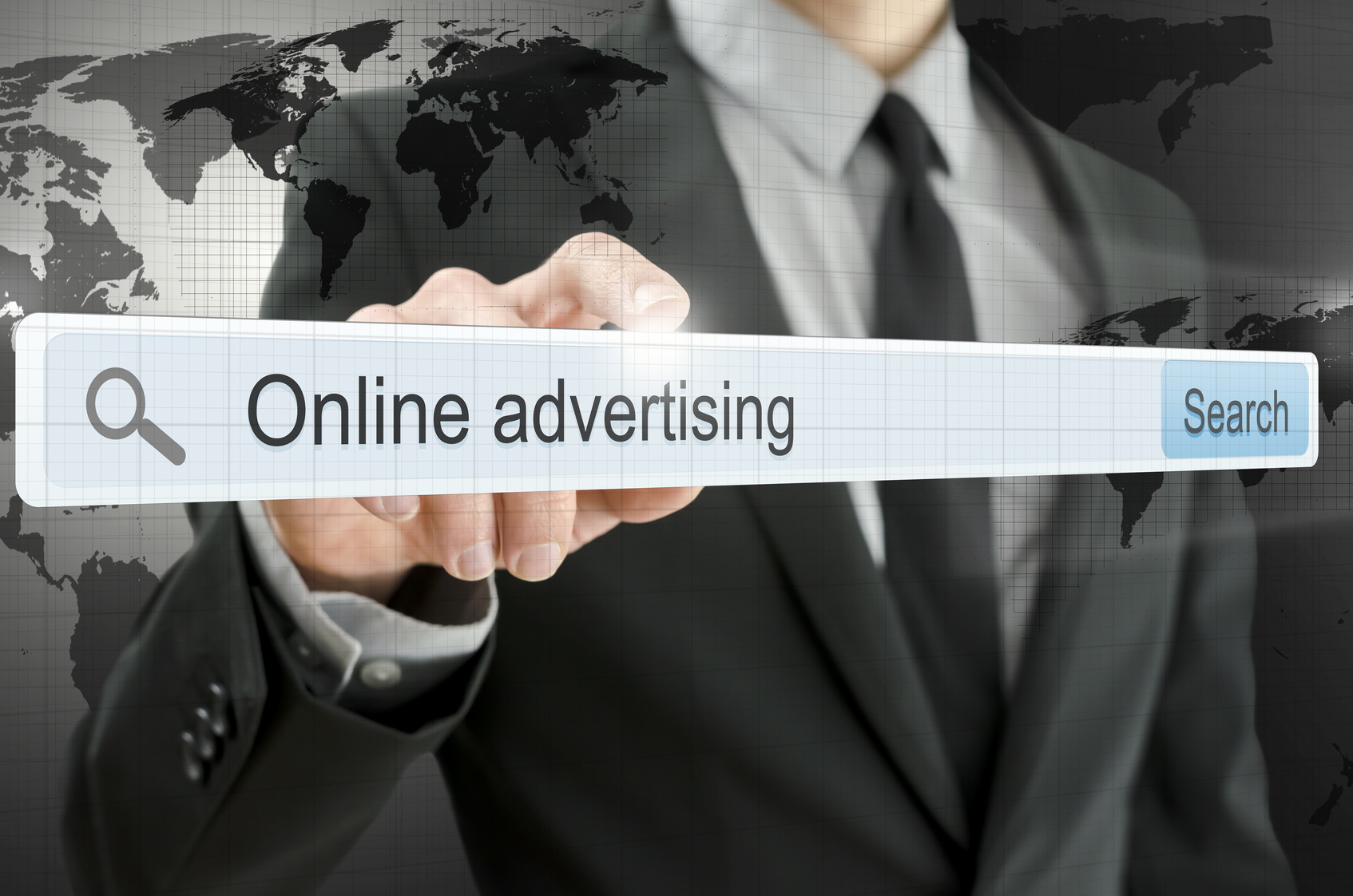
Online Advertising: What Marketers Can Do In Light Of A Crisis Of Faith


You remember the promise at the turn of the 21st century: online advertising will provide comprehensive data and proof of effectiveness, all with incredible new opportunities for interactivity. This statement could also be called “The Great Digital Over-Promise.”

Nearly two decades later, marketers are finding themselves in the awkward position of having sold a dream and a promise that has faltered under real-world conditions. Jessica Davies described the current state of online advertising in Digiday, writing that “online advertising is under the microscope, thanks in large part to the rise in ad blocking.” Davies’ assertion is reinforced by research conducted by Adobe and PageFair, which reveals that as much as 28% of U.S. internet users may have ad blocking enabled.

Ad blocking, fraud, viewability and a host of other challenges have bruised online advertising’s reputation and left many marketers in the unenviable position of buying something they may not completely believe in, nor can perfectly demonstrate its effectiveness.

In a stroke of irony, online advertising finds itself in the position most other forms of traditional advertising have dealt with their entire existence: everybody knows advertising works, yet no one can prove exactly how or when or why. As the old adage goes, half of advertising works — we just don’t know which half in today’s digital age.

This creates an environment that every tech startup and marketer has been trying to overcome for decades. In the end, advertising remains just as much about faith as fact.


Expectations, Expectations, Expectations


Online advertising is effective, but marketers have been trained to expect far more from it than other forms of media. This means that every false data point and report of impropriety is under a level of scrutiny rarely applied to other media channels. If marketers had access to data that showed every missed billboard impression, for instance, every distracted driver, or every overcast day that affected billboard legibility, we might see an upheaval in pricing and demand.


Source: http://www.forbes.com/


ABOUT WNFP
Westchester Networking for Professionals (WNFP) is a business networking association dedicated to helping small businesses and entrepreneurs develop, expand and grow. We offer affordable opportunities to help create a positive impact and advancement in your business interests and personal quality of life to take you to the next level.
Stay Connected with WNFP!
Join WNFP Communities!

Friday, April 29, 2016

7 Predictions For The Future Of Online Marketing


I recently wrote a piece on my “7 Predictions For How The Internet Will Change Over the Next 15 Years.” Among my predictions were the disappearance of conventional Internet “connections,” the commoditization of privacy, the arrival of augmented reality, less work for skilled humans, and the arrival of the Internet to planets beyond Earth.

Those predictions for the development of the Internet got me thinking about their more practical, grounded ramifications. For example, with these predictions in mind, what can we say about the future on marketing and advertising? Here are my predictions for how online marketing will change over the next 15 years:

1. ‘Reality optimization’ will become a thing.

With augmented reality and more digital interactions with the physical world, brands will have to hybridize traditional and digital models of advertising. For example, the concept of search optimization is all about getting found, but there may be a new, physical application of this inbound discovery effort once augmented reality devices become popular. Companies may invest in some digitally relevant style of advertising, such as pop-up ads that appear when a user is close, or there may be digital ways of accessing physical locations, like virtually shopping at a supermarket. Think of these as a way of “optimizing” reality for digital consumer interactions.

2. Content feeds will become finely-tuned for each individual.

With the rise in connection availability and better algorithms for surfacing and serving content, users will have access to instant forms of information and entertainment at all times, highly-tailored to their interests. They’re going to become dependent on constant streams of this individualized content, filtering out anything deemed irrelevant for them the same way most modern users ignore generalized traditional advertising. For marketers to survive, they’ll need to provide a similarly instantly-rewarding experience, also customized for the individual. This may include adopting technologies that allow for such customization, or a simpler route of engaging people individually.

3. Non-digital ads will die.


People have been saying it forever (and I’ve even written about it recently), but once the Internet is truly everywhere, with no concept of connection, traditional advertising is going to eventually die. It may become digitized in some way, such as the pop-up digital ads I mentioned in my first point, but it will cease to exist in the form we know it today. The key disappearance here will be tangible forms of advertising—billboards, magazine ads, and so on.


4. Privacy concerns will reach their zenith, spawning more brands that prioritize it.

User concerns over privacy, transparency, and trust will reach their zenith as more tech brands monopolize the industry and consumers increasingly rely on digital systems to provide their wants and needs. Brands that are able to offer these rare, commoditized factors are going to have a distinct advantage over the majority that aren’t, which means a handful of competitive brands will jump on this opportunity and differentiate themselves accordingly. You’ll start to see more brands with “old world” values, and a niche of customers who want to stay as off-grid as possible, evolving into their own targetable demographic.

5. Competition will be reduced.

Thanks to increasingly sophisticated algorithms and machine learning systems, there will be less work available for humans. With less work, there will be fewer businesses, and the ones that remain won’t be quick at adapting to these new technologies and applications. All this results in a complicated evolution of our economic system; we’ll all have more access to the resources we’ve always wanted, but there will be fewer brands and businesses providing them. If your brand is one of the cutting-edge (and lucky) businesses to make the cut, you’ll likely benefit from the reduced competition. That doesn’t mean you won’t have to work hard to stay relevant, but you’ll have an easier time differentiating yourself.

6. Strange new social interactions will be introduced.

Social media platforms as we know them today are giant collections of content; each individual or organization has a dedicated profile that submits and promotes content, which is then pooled together in the newsfeeds of other profiles. In the future, this relationship has much room to evolve. Digital profiles may be more closely tied to an individual, and individuals may be able to produce content and exchange with one another in more immediate, interactive ways with wearable technology such as Internet-connected augmented reality contact lenses or glasses.

7. Face-to-face interactions will be rare, but highly valued.

Future generations may grow up in a world where digital-exclusive interactions are the norm, but until we make that progress as a society, most of us will still have a need for in-person, face-to-face interactions. The slow disappearance of these interactions in favor of digital experiences and algorithmically generated content feeds will leave users hungry for this personal interaction, and the brands who deliver these kinds of experiences will have a chance to get ahead of the competition. In some ways, this is like marketing taking a step back, reverting to one-on-one, in-person customer relationships to compensate for the overly digital age.

These predictions are somewhat general, and intentionally so. They’re based on predictions on the future of the Internet, which themselves are highly speculative and open for debate. I do imagine some of these outcomes manifesting no matter how the Internet develops—for example, the “death” of traditional advertising (as we know it) and the rise of individualized marketing efforts—but we’ll just have to wait and see how everything plays out.


Source: http://www.forbes.com/sites/jaysondemers

ABOUT WNFP
Westchester Networking for Professionals (WNFP) is an organization consisting of professionals and entrepreneurs which focuses on the success of our Members. We help our Members establish lasting relationships and generate new business opportunities towards the growth of their business.
Stay Connected with WNFP!
Join WNFP Communities!

Thursday, March 17, 2016

5 Tips for Your Next Email Blast


Getting ready to send your next email blast and wondering what you can do to improve your results?

This post was written for you.

Here are 5 simple tips for your next email blast, or eblast.

1. Don’t call it an email blast!
If you read our blog or subscribe to our Hints & Tips newsletter, you know that “blast” is a word we never use.

That’s because email blast is a dirty word.

Blast invokes images of something you send out without much thought or consideration. It doesn’t take much time or effort either, because you’re literally just “blasting” out information.

Effective email marketing on the other hand is something that takes time, thought, and consideration because you’re focused on building relationships and not just “blasting” your audience with updates. You need to craft a message that’s relevant to your readers and offer something of value.

This type of email marketing enables you to build relationships, stay top of mind, drive valuable repeat business, and encourage word-of-mouth referrals.

Achieving these types of goals starts with dropping the “blast” mentality.

2. Get to know your readers
Once you decide to market to your audience the right way, you’ll need to take steps to better understand who they are, what they’re interested in, and how you can improve your relationship with them.

But keep in mind that all of your readers are not the same.

Some people may be lifelong customers while others may be completely new to your business.

Rather than “blasting” all of your contacts with the same information, you should take the time to figure out how to deliver a more personalized experience to each of your subscribers.

This process is known as segmentation. Here are a few examples of how different industries segment their list:


  • A nursery will email its residential customers about new spring plantings and its commercial customers about availability of bulk mulch.
  • A cosmetics boutique will email one discount coupon to customers who buy makeup and another to those who buy skin-care products.
  • A financial services firm will email tax prep customers a timely IRS filing reminder and another to financial planning clients about rebalancing their portfolios.

3. Email with purpose
When you approach emails with an eblast mentality, you risk forgetting one of the most important steps in an effective email marketing strategy: setting a goal.

Whether it’s to bring new customers into your store, drive traffic to your website, or simply raise awareness — your goal should dictate how you craft your message and deliver it to your target audience.

Rather than packing information into an email and “blasting” it out to your list, you can focus your message around a particular goal and hit send only when you have a clear purpose in mind. By delivering a more focused message, you’ll not only improve your chances of driving action from your readers but you’ll give your audience what they want.

4. Make it valuable
Today, consumers expect more from the businesses they interact with online and off.

With so many brands competing for their attention in all the places they visit every day — whether it’s through TV, email, or social media — consumers have gotten better and better at filtering out messages that aren’t relevant to their needs or interests.

If you want your audience to remain engaged with your content, you need to make sure you’re offering something of value. For some readers, that means offering a special discount or an exclusive promotion to your email list. For others that could mean offering a how-to article from your blog or a piece of content that’s more than just the typical sales pitch.

Make it valuable, make it relevant, and most importantly, make it something your readers will thank you for time and time again.

5. Measure your results
If all you’ve been doing is sending out email blasts to your readers, you probably haven’t taken the time to measure your results.

But if you’re not measuring your results, how could you ever hope to improve on the work you’ve been doing?

Measuring your email marketing results starts with looking at your email reports.

These reports will tell you exactly how many people are opening your emails, clicking your links, and even sharing your content. They’ll also provide insight into the type of information your audience is most interested in and will provide a benchmark to improve upon every time you hit send.

Whether you’re trying to learn more about your readers, provide valuable content, or give your emails more purpose — your email reports can help.

Email marketing the right way
Thinking of your email as writing a “note” rather than a “blast” gets you in the right frame of mind. Your emails should be like a pleasant conversation amongst friends. First, you get their permission to enter into a dialogue, then you offer interesting and informative content, and lastly, you listen to their responses and feedback.

Friendly conversations that offer helpful, relevant information will go much further than “blasts” that talk at your customers rather than with them.

Ready to get started? Log in and put these tips to work today.


Not a Constant Contact customer? Start your free 60-day trial today!


Source: http://blogs.constantcontact.com/

ABOUT WNFP
Westchester Networking for Professionals (WNFP) is an organization consisting of professionals and entrepreneurs which focuses on the success of our Members. We help our Members establish lasting relationships and generate new business opportunities towards the growth of their business.
Stay Connected with WNFP!
Join WNFP Communities!

Sunday, April 20, 2014

Free and Affordable Ways to Drive Traffic to Your Website

Would you like to drive traffic to your website?

The internet has many articles on how to drive traffic to your website and Westchester Networking for Professionals (WNFP) can help small business owners and entrepreneurs  increase their website visibility and exposure with our professional community.

Here are a interesting articles we found online to help you drive traffic to your website:

50 Ways to Drive Traffic to Your Website with Social Media
Social media can drive the type of web traffic that's actively seeking your information.

7 Ways to use Google Webmaster Tools to Increase Traffic to Your Website
Maintaining you Google Webmaster tools is essential for any website.

How to Drive More Facebook Traffic to Your Website in 5 Easy Steps     
Getting Facebook fans to your website (and then hopefully onto your email list) is even more critical with Facebook’s recent announcement of decreased organic reach for pages. 

Two Simple Ways To Increase Your Website Traffic By 5 Times This Month
Discover time tested principles and tips for driving traffic to any website or blog using my proven and tested techniques. 


Other solutions to driving traffic to your website could be to promote your business using WNFP's marketing and promotions opportunities. Renting a website banner available to place on WNFP's website, adding your business listing to WNFP's Business Directory, taking advantage sending out your messages to WNFP's email subscribers with a eMailBlast and creating a free discount offer to other members for display on WNFP's Member2Member Discounts and Saving Program page are all ways we can help you increase your visibility and exposure with local professionals and visitor to our website.

I hope you find these tools useful to helping you drive traffic to your website.

Sincerely,
Communication Committee
http://www.wnfp.org
Business blogs
Business Blogs - Blog Rankings