Showing posts with label best email marketing campaigns strategies. Show all posts

Tuesday, September 11, 2018

How to Launch Your First Email Marketing Campaign and Get the Results You Want

Email isn't going anywhere. There are 3.7 billion global email users. Wouldn't you like all of them to be your customers?


Email isn’t going anywhere. There are 3.7 billion global email users, and that number is expected to grow to 4.1 billion by 2021. What's more, this communication channel is supremely popular: People check their emails multiple times a day, and when you're trying to market your company, you can get your name into thousands of inboxes just by launching an email marketing campaign.

The cost? Email marketing is also super-affordable, which makes it great for small businesses.

But just sending an email message promoting your business isn't enough. People are inundated with a ton of promotional emails every day, and many get deleted without ever being read. That's why you need to make sure your emails will stand out through the noise.  

So, where do you start and what can you do to be successful with your first email campaign? Let’s jump into it: Here’s how to launch your first email marketing campaign, which will boost engagement for your company and its sales.  

Build your email list.

In order to have a successful email marketing campaign, you’ll need people to email. That’s why you have to build up your email list to be a moneymaker for your business. Having an email list allows you to have a ton of qualified leads at your fingertips, and you can email them any time you want to promote your business. But how do you get people signed up?

Shinesty uses this attention-grabbing pop-up to encourage visitors to sign up for its email list.


Email List Pop-up from Shinesty. 

Using a nonintrusive, exit-intent popup on your site is a great, attention-grabbing tactic to get more email subscribers. Offering an incentive in your pop-up will convince users to hit that subscribe button, so consider offering a discount or another freebie in exchange for a prospective customer's email address. Building a substantial email list is the backbone of any successful email campaign.

Choose an email marketing service provider.

Once you’ve built up your email list and gotten tons of users ready for you to send a message, it's time to get your email campaign in motion. Using Gmail or Outlook is strongly discouraged for sending bulk emails. That’s why you need to choose an email marketing service provider. Some great options are Constant Contact, MailChimp or ConvertKit.

By using an email service provider, you’ll get a number of benefits, including the ability to send bulk emails and manage your email database, campaign-management services and customizable email templates. You'll also be able to ensure you’re compliant with CAN-SPAM laws.

Define the goal of your campaign.

Before you send out any emails, you have to figure out why you’re sending out the emails in the first place. Not defining a focus for your email marketing campaign will make that campaign appear all over the place, and confuse readers. So what is the goal of your campaign? Typical goals include:


  • Educating users about your product/niche
  • Promoting products or announcing a sale
  • Upselling customers
  • Increasing engagement on your blog/social media


Pinkberry’s goal with the following email campaign was to target its “inactive” users with a surprise incentive to return:


Pinkberry Email Campaign. 

Remember: Not only do you have to decide "why?" but also "whom?" Will you be sending this campaign to customers who have already purchased, users who have never purchased or everyone on your email list? How you design your emails depends on what you want out of your campaign, so determine your goal and plan your campaign around it.

Craft your email.

After deciding what type of email marketing campaign you’re going to launch, start crafting your email. The first tip is to create a catchy subject line that will grab attention and make people want to open up your email. You can use a free tool like CoSchedule’s Email Subject Line Tester to see if your subject line makes the grade.

Other tips that will get your emails opened include personalizing them to each user; people will pay closer attention if you say their name. Designing an eye-catching email with a good mixture of text and images is also important. Design experts often recommend that emails employ a 60/40 text-to-image ratio.

Finally, when writing copy for your email campaign, keep it short and snappy and show some personality. You want to get your point across without boring readers by making them scroll through a long email to find out what you’re actually talking about. You should focus on content that shows readers how they will benefit, instead of just telling them how great you are.


Now you’re ready to launch your first email marketing campaign. Don’t forget that once you hit "send," you can start to measure your results, like your open rate and your number of orders or registrations, for example. When you measure your results, you’ll be able to see what’s working and what’s not; and the next time you send out a campaign, you’ll get even better results than the first time around.


Source: www.entrepreneur.com
Image Credit: tolgart | Getty Images


ABOUT WNFP
Westchester Networking for Professionals (WNFP) is a business organization focused on providing our members and guests with an extraordinary networking experience, bringing business professionals together for the sole purpose of generating new relationships and developing new business opportunities. Not a member, learn how you can become a member and join this awesome group of professionals to connect and grow your business.

Stay Connected with WNFP!
Join WNFP Communities!

Tuesday, August 14, 2018

4 Email Marketing Hacks That Will Help You Stand Out From Your Competition


So you’re a digital marketer. I’m willing to bet money on the fact that you (or your company) already use email marketing as a key tool in your marketing toolbox. You’re in good company too.

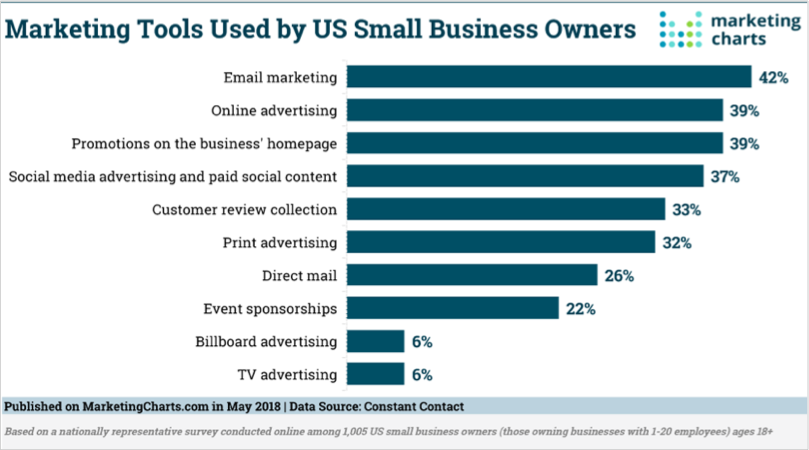
Email marketing ranks #1 in the list of methods or tactics used by businesses to reach out to new customers and build awareness.


This reliance on email is not without good reason. Not only is email marketing an extremely low-cost marketing tool, it’s also the one that offers the best bang for your marketing buck. According to a study by The Relevancy Group, Q2 of 2017 saw 21% of revenues for businesses come from email marketing alone.

That double digit figure however, doesn’t come with bland ol’ emails that look exactly like the previous one. As consumers’ exposure to personalized communications grows, what was yesterday’s “hack” has become today’s “must-have” or “fundamental.” Here are a few things you must look out for if you want each one of your emails to create an impact and bring in conversions.


Email Marketing Hack #1. Pre-header text


An oft-overlooked piece of email marketing, pre-header text (also known as “preview text”) is that bunch of words you see in your inbox, immediately following the subject line itself. Many otherwise-perfect emails run into a brick wall here, when they forget to remove standard text like “View in a web browser” from the beginning of their emails:


Leading email service providers like Gmail and Yahoo allow marketers to say a little more to their users beyond the subject line, before they even open their email. Consider it a bonus chance to reel in that elusive open, click or conversion!

Where once marketers had to depend on custom code to include pre-header text in their emails, that process has now become incredibly simple with the slew of marketing automation platforms out there. Most have WYSIWYG interfaces where you can type pre-header text into a form field, and voila, the pre-header text is set!

Things to keep in mind when optimizing your pre-header text:


  • Think of pre-header text as your second subject line. Spend equal thought in crafting and perfecting it.
  • Unlike subject lines, in many cases, the pre-header text will not be cut off and full sentences are often visible, depending on the device being used to view it. Don’t skimp on the length in favor of brevity on this one.
  • Adding a call to action that builds on the introduction offered in your subject line is a great way to improve open rates.
  • Last but most important, don’t miss out on adding pre-header text to all your emails.

Email Marketing Hack #2. “Smart” content


When speaking of smart communications, how can one not mention the iMessage app. From auto suggesting responses to auto filling personal information from phone data, there’s a wealth of capabilities it offers that make it a truly “smart” messaging app.

Emails have now begun taking inspiration from these smart messaging apps to offer content that’s tailored to every aspect of a user’s profile, making the email hyper-relevant to the user. And we all know that relevant content delivered to the user at the right time is a strong bet for a likely conversion. From web browsing data to transactional data to a user’s profile data, companies sit on a gold mine of data sources waiting to be tapped and crafted into effective marketing messages.

Spotify dug deep into users’ listening data, preferences and usage history to create this hyper-personalized email for its premium users. The campaign drove a staggering 75% engagement rate with 57% of subscribers calling it a “memorable email.”


Truly smart emails leverage even the most innocuous data points. Fast food chain Chick-Fil-A used smart emails that identified a user’s device and served up different emails based on the device detected (iOS, Android, desktop etc.) to drive it’s app download campaign. The emails hit their mark brilliantly, with Chick-Fil-A eventually ending up with the #1 trending app in the iTunes Store.

In addition to using “smart content”, you also need to “be smart” with your content. For instance, although videos in emails are becoming commonplace these days, you still want to make sure your audience gets your message exactly as you want them to, and so you’re better off including an animated gif, for which support across all email clients is exceptional.

You can learn from tech tutorial and gadget blogs like iGeeksBlog – even if you’re explaining something like how to record your iPhone screen, you can turn it into a series of stitched images or gifs instead of an actual recording.


This way, you succeed in educating your subscribers without any chance of frustrating them in the process.


Email Marketing Hack #3. Embedded surveys


Market research owes a great deal to email marketing over the last decade. With the ability to reach millions of respondents in one go, email makes data collection simpler than ever before. Unfortunately, market researchers fall prey to one of the inherent flaws of email marketing – conversions can only be as strong as an email’s click through rate. Let me explain.

Most email surveys have buttons that say “Take Survey” or “Start” that take the user to a new browser tab and kick off a standalone survey. Trouble is, not enough people bother clicking on this CTA button, resulting in poor response rates and thin data.

Enter embedded surveys.

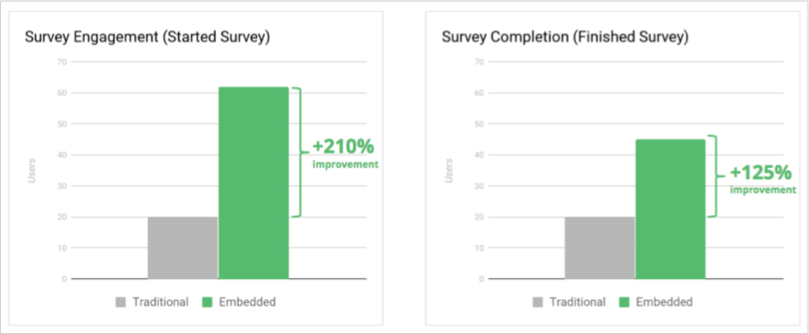
By including the entire survey inside the body of the email, marketers can prevent the inevitable user drop-offs and collect exponentially higher responses than they would have otherwise.


Data shows that embedded email surveys increase survey response rate by 125% compared to traditional surveys that take the user out of their email inbox.


Embedded surveys can be used for a variety of purposes including soliciting a user’s product review, NPS or customer satisfaction ratings, completing customer profiles, requesting users’ interest and more.

Some things to keep in mind with embedded surveys:


  1. Keep the survey short and simple. Too many questions will make your email bulky and unreadable, not to mention, lower your response rates.
  2. Experiment with radio buttons, open text fields, check boxes or even buttons to keep the survey easy on the eye as well as easy to take.
  3. Check whether your email marketing platform supports embedded surveys. Most platforms do. MailChimp lets you use custom tags or integrate with SurveyMonkey or Google Forms, Google schema for email allows users to fill forms and write reviews from within Gmail, and so on.
  4. Different email clients render embedded surveys differently. Check how your survey renders on the most popular email clients before sending one out.

Email Marketing Hack #4. Creative design


You likely put lots of care and thought into your website and product design, so be sure to carry that design thinking over to your email campaigns. Using a color scheme and cohesive design can help raise brand identification by 80%.

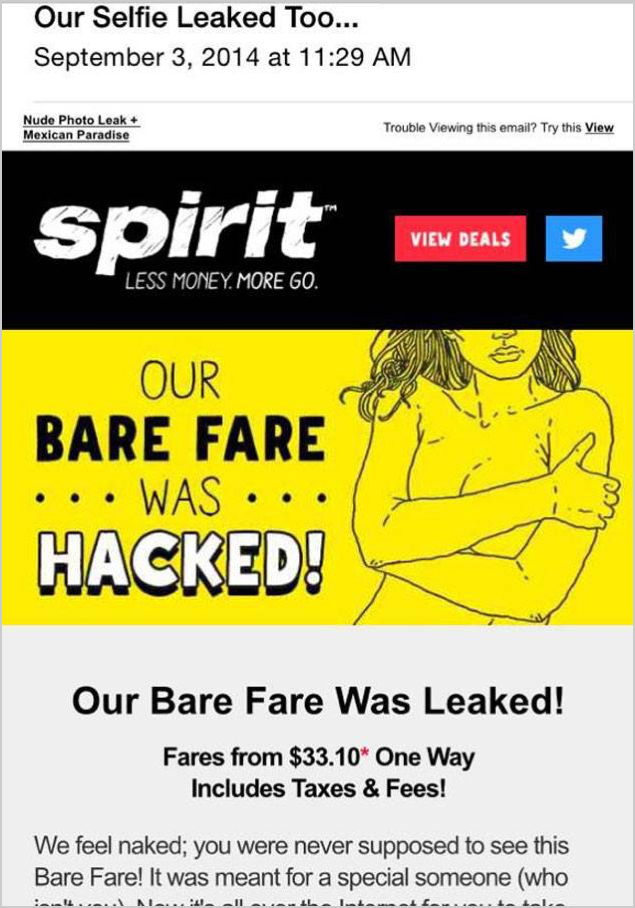
Take Spirit Airlines, for example. Their website includes bright yellow as the main color, with accents of black and red. They also include cartoon drawings and a font that almost looks handwritten. These same design patterns translate perfectly over into their email campaigns, so recipients can easily recall their brand. Spirit’s colors also make them stand out from their competition, as many airlines tend to include more muted or standard colors, such as white, blue, red and grey.


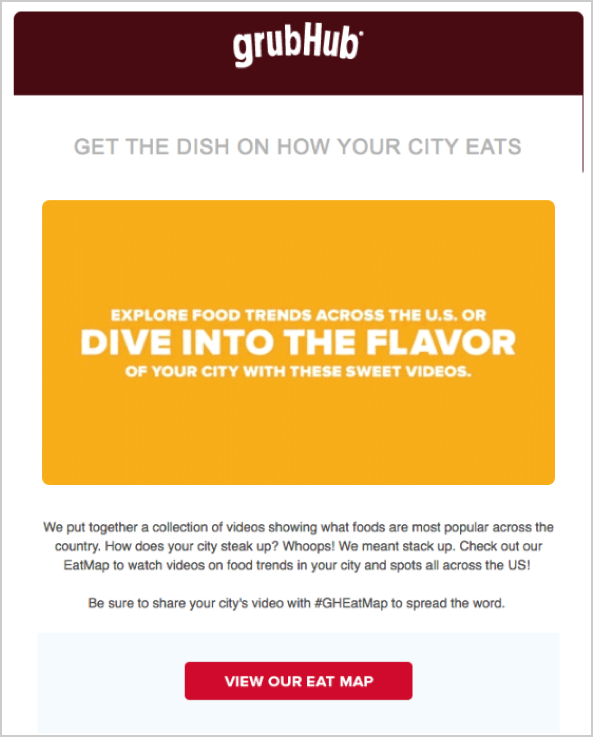
Add in the unexpected by including things like gifs or videos for a visual that is sure to catch people’s eye, like GrubHub did with their email campaign. Since a food delivery service tends to have quite a long list of competitors, including a short video played on repeat that illustrated their overall message made GrubHub’s email truly unique.


Wrapping up


Even though 269 billion emails are sent and received every single day, a mere 21% of them actually hit those all-important customer eyeballs. Of the emails that are read, even fewer get acted upon. Given the potential that email marketing holds, you owe it to your business to equip your emails with every advantage you can to help them hit the mark. The tactics we discussed here are fast becoming email staples that no business can do without.

What’s taking you so long?


Source: https://www.business2community.com
Image Credit: N/A


ABOUT WNFP
Westchester Networking for Professionals (WNFP) is a business organization focused on providing our members and guests with an extraordinary networking experience, bringing business professionals together for the sole purpose of generating new relationships and developing new business opportunities. Not a member, learn how you can become a member and join this awesome group of professionals to connect and grow your business.

Stay Connected with WNFP!
Join WNFP Communities!

Wednesday, August 8, 2018

10 Tips for Writing Emails That Will Get You Tangible Results

If you follow this 10-step process, you'll avoid the email mistakes that other marketers are making.


Before you write an email message, you should understand some copywriting basics. Following are 10 steps that you should keep in mind as you write your email messages:

Step 1: Exploit your product’s (or service’s) benefits

If you’re writing an email message with a call to action that motivates people to take an action, then you need to exploit the benefits of the item you’re offering. Whether that item is one of the products or services you sell or it’s a free ebook, if you want people to act, you need to clearly explain the benefits they’ll get when they complete the action. Don’t just talk about the features of what you’re offering -- clearly explain what people will get when they act. What problems will be solved or pain points addressed after that action is taken? How will acting make their lives better, easier or happier? Determine the benefits of your offer and promote them in your message.

Step 2: Exploit your competition’s weaknesses

Depending on your desired call to action, it could make sense to include copy in your message that shows why taking an alternate action is a bad idea and won’t deliver the same benefits as taking your desired action. Can recipients save more money if they take your action instead of a competitor’s? If you can show that your offer benefits people more than other offers, then include copy in your message that draws attention to those differences. Never assume people know what your key benefits are or how your offer is better than competitors’. Tell them in your copy!

Step 3: Know your audience

Writing any email marketing message begins by understanding the audience who’ll receive it. You need to know your target audience and what’s most important to them. This includes not only the benefits and features of your offer that are most important to them but also the language they’ll best relate to. Unless yours is a highly technical or regulated industry where very specific language is expected, your email marketing messages should be personable and conversational. Write in a language using style and words the target audience best responds to. Your message should sound like a conversation.

Step 4: Communicate WIIFM (what’s in it for me?)

No one cares about your business, products or services. That sounds harsh, but it’s true. All people care about is how your product, service, or offer can help them, make their lives better or make them happier. Don’t fill your messages with information about how great your company is and how wonderful your product or service is. Instead, write copy that clearly and repeatedly answers the question, “What’s in it for me?” Expand on the benefits of your offer so recipients understand how it will affect their lives in positive ways.  


Step 5: Focus on “you” not “we”

Messages that focus on your business, products or services will be less effective than messages that focus on the audience. So think about how you can word the features, benefits, and differentiators of your product, service, or offer so they talk to consumers and not about your business. An essential part of focusing on “you” rather than “we” in copywriting is to write messages in the second person. For example, rather than writing a message that says, “Download our free ebook to learn our five Facebook advertising tips,” a marketing company could use copy that says, “Download your free ebook and learn five tips to boost your Facebook ad conversions.”

Step 6: Know your medium

To write effective email marketing messages, you need to understand the nuances of email communications that affect your copy. For example, email marketing messages should be structured with a main heading and subheadings as well as bulleted lists, so it’s easy for recipients to quickly scan your messages and evaluate their relevancy. Email copy should be written in short paragraphs so there are no long blocks of text. It’s also important to ensure your copy layout is easily readable on all devices. Furthermore, white space is important to allow readers’ eyes to rest.

Step 7: Avoid TMI (too much information)

What information is important to your audience? All copy should speak to the audience’s wants and needs. Clutter is an email message killer, so include only essential information and keep your copy is as tight as possible. Your overall email marketing results will improve when your messages are focused and devoid of extraneous information.

Step 8: Include a call to action

Your call to action is arguably the second most important part of your email marketing message after the subject line. Therefore, you need to make it extremely obvious what people should do after they read your message. Write a call to action that creates a sense of urgency and taps into your audience’s emotions.

Step 9: CYA (cover your ass)

Before you send an email message, analyze it to determine if any of the copy could get you into trouble legally or ethically. Be sure to include any disclaimers or proof to back up your claims so your messages and offers are as clear as possible. This could be as simple as including an expiration date and time (including time zone) for a coupon or a disclaimer clarifying that a free trial lasts only a certain number of days. The key is to leave no room for confusion, so when in doubt, consult with an attorney.

Step 10: Proofread


If you write your copy, design and proofread your own messages, you’re practically guaranteed to miss simple typographical and grammatical errors because you’re too close to the content to see all the mistakes. Use the spellcheck and grammar-checking tools in your word-processing software or even third-party grammar and spelling tools, but don’t rely on them entirely. Even tools miss errors or provide recommended edits that aren’t always the best choices for your copy, so ask another person to proofread your messages for you.


Source: https://www.entrepreneur.com
Image Credit: JGI | Jamie Grill | Getty Images


ABOUT WNFP
Westchester Networking for Professionals (WNFP) is a business organization focused on providing our members and guests with an extraordinary networking experience, bringing business professionals together for the sole purpose of generating new relationships and developing new business opportunities. Not a member, learn how you can become a member and join this awesome group of professionals to connect and grow your business.

Stay Connected with WNFP!
Join WNFP Communities!

Wednesday, May 23, 2018

How to Make Your Emails More Relevant and Effective


As an email marketer, it’s your job to recognize and pay attention to the needs of your subscribers. When someone signs up for your email list, it’s because they expect to get something worthwhile in return from you. To succeed in email marketing, you have to live up to the promises you make to your subscribers.

Crafting the right email for your subscribers is very important. Without a solid strategy in place, you risk sending emails to your subscribers that don’t meet the mark. Backed by data and a lot of insights, the team at EmailMonks has created a list of 6 questions that will help you create more effective and relevant emails and a better overall experience for the subscribers on your list.

The goal with this list is to help you bridge the gap between what you want to achieve as a marketer, and what your subscribers are hoping to receive from you.

Here are the 6 questions you should consider when crafting and sending emails to subscribers:


1. Is the reply-to email validated?


Picture this scenario: your email has a “from name” and a neat subject line. But for some reason, it’s not getting the open rate you expected it to get. Can you guess why? The problem may lie in the reply email address that you have listed. These days, in order to succeed with email marketing, you need to invest in personalization whenever possible. That means using first names in subject lines and the body of the email, segmenting your list, and using an email address from an actual human being as your reply email in the campaigns you send.

Imagine you are the customer. You receive an email from the brand you have subscribed to. The content makes you want to reply or ask a question. You click on reply-to, type in your email and send. As you wait by for days expecting an answer, the email has been sent to a no-reply email address. Because of this experience, you’re led to believe that the brand is not customer friendly, and you unsubscribe from the list.

In this example, the reply email address you chose to use as a business left a bad taste in the mouth of your subscriber. Instead of using email marketing as an opportunity to nurture a relationship, your email has led to an increase in unsubscribes. .


How do you handle this situation?

If you don’t want to receive emails on the ‘from address”, create an “info@” email address, which is quite common. Use it in place of the no-reply addresses, and send your emails.

When your subscribers can see that your reply email address is functional or comes from an actual person, they are much more likely to reply to your emails. Worried about managing the engagement that you’ll get from using a real email address as opposed to a no-reply email address? You can set an autoresponder to the emails received, which gives you some time to see the email and respond with the actual answer.


2. What’s the opening line?


89% of marketers say that email is their primary channel for lead generation. With this in mind, it’s vital that you send email campaigns that your subscribers actually want to open.

Subject lines play a significant role in whether or not a subscriber will open an email.

Not convinced? Consider this:

35% of email recipients open email based on subject line alone.

So as a marketer, the question you need to ask yourself is this: how can you write subject lines that drive action and persuade your subscribers to actually open the emails you send?

As it turns out, personalization is key.

Subject lines personalized with recipient’s first name, can lift open rates by 20%!

Saying thanks can also help.

If you use the words ‘thank you’ in your email subject lines, engagement can skyrocket to 62%.

Adding emojis to your subject line can also increase the open rates for your email. With emojis, you can to say more with fewer characters.

3. Have you segmented the list yet?


To boost the effectiveness of your campaign, you should also consider taking the time to segment your list.

Your business caters to different audience types who are dwelling in various lifecycle stages. As a result, the kind of content they expect can differ. If you blast the same email to your entire list, you risk sending emails to people that aren’t relevant, which can lead to an increase in unsubscribes. This is why you should segment your audience according to their preferences.

Consider this:

51% of marketers say that email list segmentation is the most effective personalization tactics.

There are various benefits associated with segmentation of email lists.

Marketers have found a 760% increase in email revenue from segmented campaigns.

So how can you get started with segmentation? Kick things off by choosing to segment your list based on demographics or audience behaviour. At the end of the day, you can find success by ensuring your segmentation strategy is in line with the needs, expectations, and desires of your audience.


4. Have you included the CTA?


An email is incomplete without a call-to-action. If your audience is not compelled to take any action, you may not be able to achieve your marketing goals.

There are a lot of factors that can make a CTA ineffective in an email campaign. Sometimes the button is too small or, the color is off-putting. In some cases, instead of being led to the discounts page, the subscriber mistakenly reaches the home or main page of the website. This can irk your subscriber, and drive them to engage less with the campaigns you send to them in the future.

Here are tips to create the perfect CTA for your email:


Keep it as precise, clear and straightforward as possible

Use action words to compel the audience to click on it


Use colors that ensure the CTA button stands out

Reduce friction or confusion by only including one CTA in your email (emails with a single CTA have shown to increase clicks 371% and sales 1617%)

5. When are you sending your emails?


Reaching out to the customer at the right time is crucial for the success of your email campaign. If you send an email when your subscribers are sleeping, you might lose out on a possible conversion. That’s why you need to identify the right time and day to send your emails.

Many businesses believe that the best day and time to send out an email is Tuesday at 10 am. While this time of day and day of the week does tend to be effective for a lot of business and brands, it’s important to consider your specific audience and situation when deciding when to send out your campaigns.

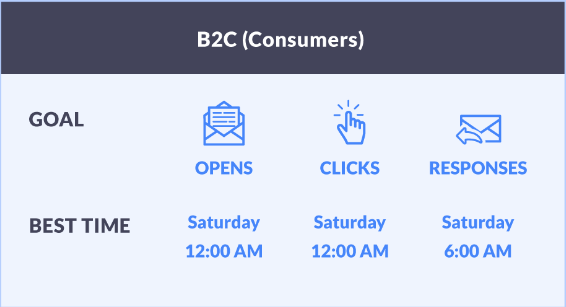
It’s also worth noting that the best time to send emails can differ depending on whether you’re operating as a B2C or B2C business.

The image below gives the best time and day to email B2B and B2C subscribers:


Here are a few tips to help you identify the time and day best suited to your audience:

Analyze the send and open rate data for your emails for a period of six months

Check the times and days for the following:
  • When subscribers opened the email
  • When subscribers clicked on the links in the email
  • When subscribers responded to the emails

Does your segmented list open the emails during holidays and weekends? What motivates them to click on your emails during these days?

With the answers to these questions, you should be able to determine the perfect send time and day for your subscriber list.

6. Have you personalized your emails?


Consider this fact about personalization in marketing:

60% of marketers struggle to personalize content in real-time, yet 77% believe real-time personalization is crucial.

You have already segmented the email list; you should now send content that you believe will prove to be useful to each individual on your list. If the email content you send is relevant, you’ll have a much better chance driving more conversions for your business.

To send relevant emails, you need to invest in personalization. Here’s why:

Personalized messages based on behaviour are 3x better than batch and blast.

Wrapping up


If you don’t give the subscriber what they are looking for at the right time, you might just lose out on a possible conversion.

As a marketer, you need to have a firm understanding of what each of your subscribers are looking for, and why they have subscribed to your email list. Knowing this information will help put you on the right path toward building more effective email marketing campaigns for your business.

How do you stay relevant to your subscribers? Share your ideas in the comments section below.


Source: https://www.business2community.com
Image Credit: Propeller


ABOUT WNFP
Westchester Networking for Professionals (WNFP) is a business organization focused on providing our members and guests with an extraordinary networking experience, bringing business professionals together for the sole purpose of generating new relationships and developing new business opportunities. Not a member, learn how you can become a member and join this awesome group of professionals to connect and grow your business.

Stay Connected with WNFP!
Join WNFP Communities!

Tuesday, May 22, 2018

The 7 Legal Rules Your Emails Must Follow


The following excerpt is from Susan Gunelius’ book Ultimate Guide to Email Marketing for Business.

As an email marketer, you need to comply with laws that were put in place to protect consumers. While it might be tempting to buy a list of email addresses and just start sending messages to everyone on that list, this is a bad idea for a few reasons. First, you might be breaking the law. Second, you might be hurting your chances of your future email marketing messages getting into people's email inboxes, including inboxes belonging to your own customers. The bottom line is, your actions as an email marketer can affect the deliverability of your email today and in the future.

The most important law you need to know and follow in the United States is the CAN- SPAM Act of 2003. This law applies to all forms of commercial email messages and not just commercial email messages sent in bulk to lists of people. What makes a message commercial? It's not clearly defined in the Act, but it's probably broader than you think. For example, a commercial message doesn't have to promote a product or service directly to messages as be considered commercial. Even messages that promote content "any electronic on a commercial website -- such as a blog post, free ebook, mail message, educational article or tutorial -- would be considered commercial since they indirectly promote the company.

The cost for noncompliance can be very high, particularly since you can be charged penalties for each separate email violation up to $40,654. Furthermore, if your email messages violate other laws, such as those related to deceptive advertising, you could face even more fines or criminal penalties, including imprisonment.

There are seven primary requirements of the CAN-SPAM Act. Following is a basic explanation of each of the main requirements. If you always err on the side of caution and assume messages sent from your company are commercial advertisements or promotions (even if they're not directly advertising or promoting a product or service), then you should be safe.


Header information. The header information in your messages must not be false or misleading. This includes the information in the message's "From," "To," and "Reply To" fields as well as the routing information. In other words, your messages should accurately identify both the person and business that initiated the message. Furthermore, the header information should include the originating domain (which is typically your business' web domain) and real email address.

Subject line. The subject line of your email messages must reflect the true content of the message. Don't try to conceal what the message is about with a clever subject line. Instead, the subject line should clearly explain what the recipient will get when they open the message. Both inaccurate and vague subject lines could get you in trouble.

Ad disclosure. You must identify that the message is an ad or promotional in nature. The good news is that the CAN-SPAM Act provides a great deal of flexibility in terms of how you disclose this information. The most important thing to understand is that somewhere in your message, you must conspicuously explain that your message is promotional (even if it's indirectly promotional) or an advertisement. Leave no room for confusion here.

Location. You must include your physical address in your messages. This has to be your valid postal address, which means it can be your street address or a post office box registered with the U.S. Postal Service. It could also be a private mailbox that you registered with a commercial mail receiving agency, but make sure that agency was established under postal service regulations or it won't meet the requirements of the CAN-SPAM Act.

Unsubscribe option. Your messages must include an easy and obvious way to unsubscribe if recipients want to opt out of receiving email messages from you in the future. You cannot create conditions to opt out, such as requiring a person to pay a fee or provide any personally identifiable information aside from an email address. Furthermore, the opt-out process must not require a person to do more than send a reply email message or visit one web page. If you send multiple types of messages (e.g., newsletters, product updates and so on), you can offer a way for people to choose which types of email messages they want to opt out of receiving from you. However, you must also provide a way for them to opt out of receiving all messages from you.

Opt-out completion. After you send a message, recipients must have 30 days to unsubscribe. If someone unsubscribes, you must honor that request within 10 business days. Once a person unsubscribes, you're not allowed to transfer or sell that person's email address (individually or as part of a list) to anyone else (unless the company you're transferring the list to is helping you comply with the CAN-SPAM Act).

Third parties. If you hire another person or company to manage your email marketing, you're still responsible for complying with the CAN-SPAM Act. In fact, both you and the person or company handling your email marketing are responsible and could get in trouble if the law isn't followed. Therefore, make sure anyone you work with knows the laws and complies with them. You'll need to monitor their activities for compliance on an ongoing basis.


Source: https://www.entrepreneur.com
Image Credit: cnythzl | Getty Images


ABOUT WNFP
Westchester Networking for Professionals (WNFP) is a business organization focused on providing our members and guests with an extraordinary networking experience, bringing business professionals together for the sole purpose of generating new relationships and developing new business opportunities. Not a member, learn how you can become a member and join this awesome group of professionals to connect and grow your business.

Stay Connected with WNFP!
Join WNFP Communities!
Business blogs
Business Blogs - Blog Rankings