Showing posts with label avoid email marketing mistakes. Show all posts

Wednesday, September 12, 2018

Using These 10 Phrases in Your Email Marketing May Keep you from Success


Marketers have to be careful when drafting emails to avoid having them be triggered as spam. Marketing teams send out bulk emails on a consistent basis to leads, opportunities, and customers in an effort to show as many people as possible why their business’ products matter.

Here, we’re going to break down our top ten spam trigger words to avoid in your emails. You want every email your marketing team sends out to count, to give your business the best possible chance at increasing conversions.

Spam Trigger Words to Ignore

Multi-level Marketing

This refers to the practice where businesses hire salespeople to go around and try and sell someone a product, then have that person recommend the product to someone else. Sometimes this is a legitimate practice; most of the time, it’s comparable to a pyramid scheme. Any business practice connected to a pyramid scheme should be avoided like the plague. Even googling “multi-level marketing” brings up questionable results, so it makes sense that any emails with the term in it will be triggered as spam. Don’t get it confused with multi-channel marketing, which is actually a growing strategy that works well.

Increase Sales

This is both surprising and not surprising. It’s hard to imagine a B2B marketing team drafting an email for hundreds or thousands of potential clients and not using this phrase; however, that’s exactly why it’s often triggered as spam in the first place. Here, context matters. It’s a phrase that will eventually come up in an email, but there are ways around it. For example, don’t use the phrase in the subject line. Steer clear of trying to look spammy and try these techniques instead to boost sales.

Web Traffic

If you saw an email with “Web Traffic” in the subject line, would you think it’s legitimate if you don’t know where that email is coming from? Increasing web traffic for an online business is absolutely essential for the success of that business. The more traffic your website receives, the more likely you’ll convert that traffic into sales. Spammers and scammers take advantage of this term because it’s something all online businesses are doing research on.

Online Biz Opportunity

Shortening words in an email might seem like a really convenient way for you to write emails quickly, and with a personal touch, but that’s not professional and it should be avoided even with the best intentions. “Online Biz Opportunity” screams spam to anyone who’s been on the internet for more than ten years. No Millennial or Gen Z’er will ever click on an email like that. We know better. You’d find this phrase on a sketchy Craigslist ad — not in a mass email for a legitimate marketing campaign.

While You Sleep

This is one of those phrases that’s simply too good to be true, everyone knows it’s too good to be true, and yet, it’s still used constantly. Marketing campaigns typically require more than a day to complete, along with the sales process and then completion of a purchase, depending, of course, on what you’re selling. You don’t want to oversell in general, so try to limit the hyperbole for your business’ and marketing team’s own benefit.


Free Consultation

Few things in today’s world are actually free, which immediately jumps out to just about everyone. Even if the consultation is free, there’s always a catch, and if there’s a catch, that means your marketing team isn’t being transparent to its targeted audience. Unless you’re truly offering a free consultation for potential buyers, do not advertise it as free. To avoid being marked as spam, leave “Free Consultation” out of the subject line.

Once in a Lifetime

This is another phrase that’s simply not true — ever. There’s no marketing campaign or product that’s going to offer a potential customer a “once in a lifetime” experience. Hyperbole in general needs to be avoided if you’re trying to make a conscientious effort to avoid having your emails being marked as spam.

As Seen On …

Who can honestly look at this phrase and not think about horribly scripted and produced infomercials for products that barely work? This also isn’t the best strategy for your marketing team because if the product they’re trying to sell has already been done, it shows that your product isn’t exactly better than anyone else’s. Having your products or services associated with a term that implies them being cheap or unreliable.

Call Now

Last, but definitely not least, is “Call Now,” which is innocent enough, but like “As seen on,” is often associated with potentially-sketchy products and services. It’s good to implement actionable content in your marketing strategy, but this phrase has been around for too long to be associated with anything other than a marketing ploy. Plus, customers today are more interested in using other channels to reach out to a company — especially if they’re being reached via email. That alone could set off a red flag.

The Final Word

It’s important for marketing teams to make sure their emails aren’t being marked as spam or contain too many spam trigger words. If they do, they will either be ignored altogether or get reported, which doesn’t make the business look good. Marketing teams should avoid hyperbole whenever possible and avoid making claims that are too good to be true because they’re not really fooling anyone.


Spammers and scammers use these words to pray on those who are easy to manipulate. Any reputable business would never go out of their way to be anything less than transparent with their customers. They prioritize the customer experience and want to make sure the buyer’s journey is as clear as possible. The more a potential buyer feels like they can trust a company, the more likely they’ll return. First impressions matter, so it’s best to make sure even a simple email isn’t being interpreted as spam.


Source: www.smallbiztrends.com
Image Credit: Shutterstock


ABOUT WNFP
Westchester Networking for Professionals (WNFP) is a business organization focused on providing our members and guests with an extraordinary networking experience, bringing business professionals together for the sole purpose of generating new relationships and developing new business opportunities. Not a member, learn how you can become a member and join this awesome group of professionals to connect and grow your business.

Stay Connected with WNFP!
Join WNFP Communities!

Wednesday, July 25, 2018

10 Things You’re Missing Out on by Using a Personal Email Account to Do Your Email Marketing


If you’re like a lot of small businesses and organizations, you may be using a personal email account — like Gmail, Outlook, AOL, or Yahoo — to communicate with a group of email contacts.
Chances are you’ve also noticed some limitations in what you can and can’t do with a personal email account.


One of the biggest limitations of using a personal account is in the design of your emails.

If you’re not a professional designer, it’s tough to create emails that actually match your brand and make your business look professional.

Other limitations include:

Problems getting messages delivered: Has anyone ever told you they didn’t receive your email? Sending mass emails from a personal account can result in more emails being sent to the spam folder.

Difficulty keeping track of your email contacts: Manually keeping track of new email addresses and people who have asked to be taken off your list can cause headaches and take up hours of your time.

No understanding of who opened an email or clicked a link: You hope your emails are getting opened and read, but personal accounts don’t provide that information.


Email marketing services like Constant Contact are built to make it easy to create beautiful emails that drive real business results.

They have the tools you need to manage your email contacts and provide in-depth reporting tools to track important metrics like opens, clicks, and shares for your emails.
They also provide tools and training to help you stay compliant with important email laws, which are 
easy to violate if you’re trying to do marketing from a personal email account.


One of the best ways to see how an email marketing service can benefit your business is to try it for yourself.


You can try Constant Contact free for 60 days.

Still have questions about why an email marketing service is right for you? Here are 10 things you’re missing out on by not using a service for your email marketing.

1. You’re not prepared to send bulk emails
Many email accounts and most Internet Service Providers (ISPs) limit the number of emails that you can send at one time. This means that as your email database grows, you could run into more and more problems with getting your emails delivered.

Email providers like Constant Contact work diligently to maintain strong relationships with ISPs and establish reputations for sending permission-based emails.  As a result, our customers see more of their emails delivered to their recipients’ inboxes, and less emails in the spam folder.

2. You’re putting relationships at risk
When someone joins your email list, they trust you to protect their information. They also trust that you’ll respect their privacy and give them the option to opt-out.

But as hard as you try to fulfill these obligations to your audience, when sending email using Outlook or another email account, mistakes can happen. Perhaps the biggest mistake is exposing your entire list in the To: line of your email.

Another mistake is failing to offer an easy way to unsubscribe. This can not only damage your reputation as a business, but can also put you at risk of violating email laws, which require an unsubscribe link in every message you send out.

3. You can’t host and manage your list from one location
An email marketing service hosts your email list and automatically performs critical list management functions. These functions include sign-up for new subscribers, editing capabilities so that subscribers can edit their own profiles, and the ability to unsubscribe with one click.

An email service will also manage bounced emails for you, differentiating between reasons for the bounce (including full mailbox, vacation message, non-existent address or blocked).

4. You’re on your own
Email marketing services like Constant Contact are built to make it quick and easy to do email marketing for your small business.
If you’re switching from a personal email account, we’ll give you the tools and training to help you get started — from uploading your existing email contacts to setting up your first email campaign.

If you do run into any problems or have questions about how to improve the look of your emails, simply pick up the phone and give us a call. Our award-winning support team is committed to your success.


ADVERTISEMENT


5. You’re unable to deliver emails in the right format
Emails can display differently, based on the email client and device a recipient is using.

With an email service like Constant Contact, you’re able to send both a text and HTML version of each message you send out. This means that your emails will be delivered to your subscribers in the correct format every time.

In comparison, your email account can’t tell which email format each recipient is able to receive — which can make your email unreadable or send it to the spam folder.

6. You can’t create professional-looking emails that match your brand
With an email marketing service, you’ll have access to hundreds of professionally-designed email templates that make it easy to create great looking emails.

We handle the design work for you — you just need to customize the template with your colors and branding, choose the images you’d like to include, and add your content. These templates will make your message look great in any inbox, whether someone is reading on a desktop or a mobile device.

7. You can’t protect yourself from delivery problems
A good email marketing service maintains strong permission policies and has an active anti-blocking team working with ISPs on your behalf to ensure that your email is delivered.

At Constant Contact, we monitor all outgoing email to ensure that all major ISPs and corporate domains are successfully accepting your email. If there is a “blip” on the receiver’s end when your email campaign is being sent, an email marketing service makes continued attempts to send your email while quickly addressing the problem with the ISP.

8. You can’t see who opened or clicked
Using an email marketing service like Constant Contact gives you access to in-depth reporting to see key metrics like emails sent, opened, who opened, who clicked through, and which links they clicked on. You’re also able to see important details like spam reports, bounces, and opt-outs.

This will allow you to see what’s working and identify opportunities to make improvements, or identify potential issues that could put your business at risk.

9. You don’t have the newest tools and features
Here at Constant Contact, we have a team of people who are focused on staying on top of the latest trends in the industry. We provide regular updates and new features to enhance functionality, comply with the law, and optimize email delivery though ISPs.

In addition, we are members of groups like The Email Service Provider Coalition (ESPC). The goal of the ESPC is to provide unique and effective spam-fighting solutions that will optimize your email delivery and response and minimize the spam in your subscribers’ inbox.

10. You could be breaking the law
You don’t have the time or resources to stay up-to-date with the latest email laws and regulations. Unfortunately, if you’ve been using a personal email account to send your marketing emails, there’s a good chance you’re already in violation of some important laws like Controlling the Assault of Non-Solicited Pornography and Marketing Act (CAN-SPAM) and the Canadian Anti-Spam Legislation (CASL).

Email marketing services like Constant Contact are responsible for ensuring that your emails are compliant with these legislations. We provide the tools you need to follow the laws, and let you know when there’s a change that could impact your business.


Don’t wait to make the switch.

Email marketing is the most effective marketing tool available to small businesses today.

Consider the following:

  • 91 percent of U.S. adults like to receive promotional emails from the companies they do business with. (MarketingSherpa)
  • 66 percent of consumers have made a purchase based on an email marketing message they’ve received (Direct Marketing Association)
  • Email is almost 40 times more effective than Facebook and Twitter combined in helping your business attract new customer (McKinsey)


Source: https://smallbiztrends.com
Image Credit: Constant Contact


ABOUT WNFP
Westchester Networking for Professionals (WNFP) is a business organization focused on providing our members and guests with an extraordinary networking experience, bringing business professionals together for the sole purpose of generating new relationships and developing new business opportunities. Not a member, learn how you can become a member and join this awesome group of professionals to connect and grow your business.

Stay Connected with WNFP!
Join WNFP Communities!

Tuesday, July 17, 2018

Everything You Need to Know About Email Marketing

When it comes to successful marketing strategies, did you know email marketing consistently ranks as one of the best tactics? Studies show email has a median ROI of 122 percent; this is more than four times higher than other top strategies, including social media. In addition, HubSpot reports 86 percent of consumers want to receive emails from companies they do business with at least once a month.

[WATCH VIDEO]

As you can tell, research backs up claims that email marketing is worth the investment. In addition to the hard numbers, there are additional reasons this tactic plays an important role in your overall content marketing strategy.

As Forbes points out, email marketing can “fuel” your business’ strategy to increase website traffic and search engine optimization (SEO). How?


  • It’s cost efficient.
  • It provides a way to promote your blog posts, articles or other content.
  • It increases link shares by making it easy for subscribers to share your content on their social pages or website.
  • It encourages customer loyalty as well as brand awareness and reputation.
  • It increases your social media follower base by offering another way to remind subscribers to connect with your social channels.

How can you include email marketing as an effective component of your content strategy? Keep reading to find out!

Before we move on though, I wanted to make sure you are aware of how the EU’s new GDPR laws may affect your business, even if you operate in the United States. As Erika’s article about how GDPR affects marketing explains:

While this law only applies to members of the European Union, it’s still going to affect those of us that do business on this side of the pond thanks to our global economy. In terms of your email marketing, if you have even one person on your list that is an EU citizen, it’s important you’re aware of the regulations. And if you don’t, it’s beneficial to be informed for good measure.

Make sure you check out her post for specifics about how to comply with the regulations.


How to Create Effective Email Marketing Messages


Before you begin your email marketing campaign, make sure you have a clear understanding of your budget and goals. Once you’ve clearly established them, you can tackle the question of how you’ll achieve your goals.


ADVERTISEMENT

Effective Email Marketing Tactics


When it comes to the most effective email marketing tactics, Campaign Monitor reports the most important tactics are (in order):

  • Personalization
  • List Segmentation
  • Automated Campaigns (see 15 examples of automated emails you can send on the Social Media Hat)
  • Testing and Optimization
  • Responsive Design

Entrepreneur backs up the importance of personalization too, sharing that, “More than half of consumers and 65 percent of B2B buyers surveyed were likely to switch brands if a company didn’t make an effort to personalize its communications to them.”

Whether you’re putting together an email marketing strategy for a small business, a medium-sized company or a major organization, personalization matters. How can you do this? As Entrepreneur recommends, “Get to know your subscribers better, and increase personalization by including polls in your emails. Not only is this an easy way for small businesses to learn more about their subscribers, it leads to more engaging emails and gives subscribers a chance to voice their preferences proactively.”

How are you segmenting your email marketing lists?


As you get to know your subscribers better, you can segment your lists better. Kissmetrics recommends separating them based on your target audience’s variables, such as:

  • Demographics (e.g. age, gender, job title, etc.)
  • Email Engagement (open rate and clickthrough rate)
  • Geographic Area
  • Past Purchases
  • Amount Spent with Your Business
  • Website Behavior
  • Time Since Last Purchase


Once you have subscribers divided into specific lists, you can send more targeted, personalized emails based on their information. For example, if you have the lists segmented by geographical location, you could send an email letting one group of subscribers know about an upcoming event in their area.

Clearly, this can be a lot to manage. The good news is you can also subscribe to a third-party email marketing management platform (such as MailChimp or Constant Contact) to take advantage of tools and services they offer to assist with personalization, as well as list segmentation, automation, testing and responsive design.

Speaking of MailChimp, their blog shares a lot of helpful advice based on research into what’s worked well for their customers. In addition to the tactics above, the email marketing platform recommends:

  • Using landing pages to provide, “A clear call to action and an easy space to make purchases.” This tactic has helped their customers increase their list growth rates by about 36 percent.
  • Incorporating social media into your email marketing. MailChimp provides tools to incorporate Facebook and Instagram ads directly into your email campaign.
  • If it’s appropriate for your brand voice, incorporate emojis into your emails.
  • Rely on clear, high-quality visuals. As MailChimp explains, “What we do know is that when it comes to the relationship between click rate and the ratio of text to images in campaigns, keeping the amount of copy per image lower leads to success.”

Email Marketing Specifics: Creating Your Messages

How much time do you spend crafting your email marketing subject lines?

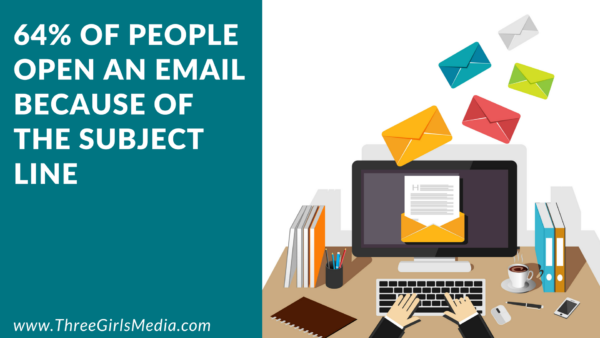
Email marketing statistic next to computer with envelopes coming out.

How much time do you spend crafting your email marketing subject lines?

Now that you have an idea of what tactics you want to include in your email marketing strategy, it’s time to get down to actually creating messages for your subscribers.

As Natalie Petersen shared in her recent post about content development, your e-newsletter should include these elements:


  1. An enticing subject line. 64 percent of people say they open an email because of the subject line, so spend time on it and make sure it’s enticing.
  2. A strong visual appearance. In addition to choosing colors and an overall feel that matches your brand, include high-res images throughout the newsletter.
  3. Concise, helpful content. Make your email easy to read and provide something of value to your readers. If you want to share an article that’s more than a couple of paragraphs, post it on your blog and link to it from the newsletter. Also, a brief introduction at the top of the email is a fantastic way to give your readers a quick look at what the issue includes and infuse a bit of your personality.
  4. Grammatically correct text. Text that’s rife with errors can be confusing, plus it makes you look less professional. If possible, have a co-worker or friend proofread the text for you and double check your work.
  5. A call to action. What do you want your readers to do after reading your newsletter? Share it with their friends? Contact you to for a free consultation? Make it clear how you’d like them to respond – after all, if you never ask they’ll never do it!

What type of content should you include? The biggest key here is to know your target subscriber. What messages will they want to receive from you? How will you provide them value?

For example, if you have a younger target audience, research into millennials’ preferences will help guide your email content. As this infographic shares:


  • 63 percent of millennials actually prefer to communicate with retailers via email.
  • 59 percent will take action from emails containing a site-wide or product category-wide promotional offers.
  • The majority of millennials want to engage with retailers via email for discounts and promotional offers.
  • 71 percent will take action from an email containing their preferred content (e.g. discount codes and free shipping)
  • The majority of millennials will pull up an email when browsing in a physical store to access coupons.

10 Common Email Marketing Mistakes


As you begin (or revisit) your email marketing campaign, make sure you avoid these all-too-common e-newsletter mistakes:


How often do you review your email marketing analytics?


1. You forget to look at the analytics. How will you be able to measure success without objective data? Each time a newsletter is distributed, take a look at how many recipients open it, which links they click, if they forward it, etc. As you look at this information, try to notice any trends you see emerging. Do your readers seem to like a particular type of content more than another? Is the open rate higher or lower when you send it in the afternoon as opposed to the morning? Pay attention to these tendencies and adjust your email marketing campaign accordingly.

2.  Your emails aren’t mobile friendly. If your newsletter doesn’t load on mobile devices, or is formatted in a way that’s hard to read, readers won’t take your email seriously. Ensure images, email size and videos that you send are compatible with mobile devices so that potential customers can find your emails.

3. You lack consistency. Sporadically sending out emails to subscribers may frustrate them and then cause them to forget they asked to receive your messages and then unsubscribe when they see them. Instead, implement your email marketing on a consistent schedule and stick to it. You also want to be consistent with the content you share in your emails so subscribers will know what to expect and be more interested in opening them.

4. You over communicate. Your subscribers follow you for a reason, but if you spam them with too many emails they will unsubscribe. When you create your email marketing schedule, don’t over load it with too many messages going out too frequently. 

5. You ignore design.
Do your email marketing messages fit your branding?

While a generic template or no HTML at all can be tempting, ignoring a custom-design means you’re losing brand identity. Custom templates allow you to showcase your business in a unique way and make it stand out from the rest of the emails people receive.

6. Your headlines are dull. You want your marketing emails to be opened at the very least. Create a compelling subject line that grabs the attention of your recipients. Subject lines that lack pizazz can be easily categorized as spam to potential customers.

7. You forget to customize the preview text. This is the preview of what shows up in recipients’ inboxes. As HubSpot explains, “If your email client supports preview text, also known as pre-header text, you can optimize it for every email you send. Allowing this text to auto-populate is a lost opportunity to grab attention or delight your recipients.” Most email marketing platforms include a place for you to customize this space.

8. Your emails are too long. When it comes to email marketing, the shorter the content, the better. Each paragraph of your email should be about 3 to 4 lines at the most. Your potential customers are in a hurry and usually scan through emails. Ensure that your first sentence has the most important information so they won’t miss the crucial parts of your message.

9. You don’t repurpose content you’ve already created. There’s no need to reinvent the wheel every time you send a newsletter. Share your latest blog post or a fascinating article you shared on Facebook. Remember, it takes multiple impressions for consumers to remember a brand, so repeat your message in as many channels as possible.

10. You sound like a used car salesperson. Just because email marketing isn’t face to face doesn’t mean you can’t add a little personality to your messages. Avoid sounding like a used car salesperson by avoiding a full on sales pitch within your emails. Try adding a little humor, fun facts or anything else that may tickle the fancy of your potential customers.

Now you’re ready to get started with or revisit your email marketing campaign!


Source: https://www.business2community.com
Image Credit: N/A


ABOUT WNFP
Westchester Networking for Professionals (WNFP) is a business organization focused on providing our members and guests with an extraordinary networking experience, bringing business professionals together for the sole purpose of generating new relationships and developing new business opportunities. Not a member, learn how you can become a member and join this awesome group of professionals to connect and grow your business.


Stay Connected with WNFP!
Join WNFP Communities!

Friday, June 22, 2018

11 Reasons Your Email Marketing Sucks — and 41 Ways to Fix It

Today’s inboxes are hammered with digital marketing messages, spam, forwards, newsletters, and notifications. People check email at red lights and while watching TV. (Don’t get us started on the ones checking mail at the movies.) While email marketing remains the best way to reach leads and existing customers, it’s harder than ever to cut through the clutter. Avoid these common email marketing mistakes and you’ll come out on top.


1. You’re not segmenting your email list.

Who are you talking to? Picture your Netflix account. You probably have profiles set up. You, your wife, your kids. Maybe you share an account with your parents. Each audience has unique tastes. The viewer who loves car chase movies doesn’t want to watch British period romances. The viewer who watches Pokemon doesn’t want to catch up on Game of Thrones.

Show people what they want to see. Your email marketing list consists of just as many audiences. College-aged kids looking for a fun night out. Sales professionals trying to make a big win. Retirees who have put off their next doctor’s appointment and want to feel better. The days of spray and pray marketing are over and today’s consumers expect highly-targeted messages that give them what they want, when they want it.

Want another reason to segment? According to MailChimp, segmented campaigns see over 100% higher open rates than non-segmented campaigns. They also have higher open rates, lower spam reports, and lower instances of unsubscribing.


Here’s how to fix it:


  • Segment your email marketing contacts into lists and sublists based on customer data.
  • Don’t forget to create suppression lists. These are people you’re not marketing to at the moment.
  • Add checkboxes to forms to gather additional information—zip code, birthday, interest groups—from your visitors.
  • Don’t forget to be GDPR compliant.


2. You’re not A/B testing.

This isn’t time for instincts. When it comes to email, the only thing you should trust your gut for is digesting your food. Clever marketers don’t try to predict whether or not an audience will love a call to action, subject line, or image. They use A/B testing.

Go to war. Think about it as a battle to the death. Using the email automation software of your choice and a robust recipient list, test your content to see what performs best. Solid programs will send your test emails to sample audiences, and automatically send the winner to the bulk of your contact list. No more guesswork.

This is a rare opportunity to know exactly what’s working and build on that. A/B testing helps you determine what your audience is connecting with (and what they’re not connecting with.) Your emails will consistently perform better when you optimize them regularly.


Here’s how to fix it:


  • A/B test the subject line of your next big email promotion.
  • Test the next email’s image, offer, or CTA. Only test one thing at a time. This is a science experiment.
  • Keep your variables to an absolute minimum to know which changes mattered.


3. You’re not automating your email marketing.

You have a lot to say to your prospects and current clients. But, you probably don’t have time to manually send all the emails you know you should. Reminders, newsletters, thank-yous, promotional offers, and so on. Email marketing could take you all day …. That’s where email automation comes in.

Get your finger on the trigger. The key to a successful automated nurture campaign is to first know what actions or behavior should trigger the email workflow. Triggers are actions or behaviors on your website or at your location, such as filling out a form, downloading a coupon, or abandoning a cart.

Remember: email marketing is about nurturing, not selling. Dig deep into what your recipients want and need. How can you help them solve a pain point? Remind them how good it feels to actually enjoy their destination wedding rather than agonize over all the planning. Offer tips that help them apply for a law degree with less stress. Close with a helpful promo code, or the opportunity to book another experience.


Here’s how to fix it:


  • Map your customer journey to find the “triggers” for your email marketing.
  • Set up automated workflows that move guests through the funnel by delivering the right message (and the right deal!) at the right time.
  • Make sure workflows move customers out of one list and into a new one as they evolve from a lead to a new customer to a loyal one.
  • Add helpful reminder workflows. Shopping holiday coming up? Remind them to grab that gift.


4. Your newsletter is selling something.

Don’t send a crappy newsletter. People sign up for newsletters because they anticipate value in their inbox. While that value may come in the form of exclusive discounts and opportunities, it should also make them smile. It shouldn’t waste even 30 seconds of their time with content that’s all about how great you business is.

Short. Sweet. Helpful. Your newsletter should be genuinely fun to read. (Not just fun for your mom to read.) That means limit “news” unless it’s truly interesting, don’t toot your own horn, and keep it nice and short. Think brief tips, at-a-glance event schedules, and exclusive coupons. The end.


Here’s how to fix it:


  • Revise your current newsletter. (You do have a newsletter, right?) Would you read it?
  • Review delivered, open and click-through rates.
  • Establish benchmarks and share more meaningful content to increase those numbers.
  • If it isn’t working, A/B test different subject line styles, delivery days and times, images, and content.


ADVERTISEMENT


5. Your emails don’t work on mobile devices.

Be responsive or go home. Around 80% of your contacts will open your emails on their phones. To get the full picture of what that means, imagine what most people are doing when they open their email on their phone. (Hint: They’re often at a red light.) Your email marketing needs to speak to those people, even if you think they should put their phones down while driving.

No more squinting. Responsive emails adjust instantly and elegantly depending on the screen size of the viewer. Every single email you send should be coded to be easy to read and scroll on a cell phone screen or on a tablet. Emails that aren’t mobile-friendly get deleted because no one has time to try to read microscopic fonts or click on tiny calls-to-action. (What is this, an email for ants??).


Here’s how to fix it:


  • Start using a responsive email template.
  • Email code is notoriously finicky across platform, software and screen combinations. Use your email software testing tool on every email you send.
  • Remember the red-light reader. Put the most important information up front and make it large enough to understand in a 5-second scan.
  • CTAs should be big enough to tap with a finger. And not too close together.


6. There’s no call to action in your emails.

Make something happen. Every email you send should have a purpose. (A strategic purpose, not an existential purpose.) Even helpful, non-salesy emails should have a call to action. Book a consultation. Attend an event. Read a blog post. Download a coupon.

Emphasize the action part. There’s nothing wrong with falling back on the old stalwart Learn More as long as you’re asking your reader to do something. Stick to action words. Be as concrete as possible. Book a Massage is better than Start Relaxing. Email marketing calls to action are not an exact science, and you should anticipate tweaking and optimizing them on an ongoing basis to get the results you want.


Here’s how to fix it:


  • Review all of your marketing and nurturing emails. Make sure they have a call to action that aligns with the appropriate stage in your customer’s journey.
  • Set up tracking links using bit.ly or a platform like HubSpot so you can test the CTAs across a variety of campaigns.
  • Test and test and test again. Colors, copy, sizes, and placements can all affect CTA performance.


7. Your emails have too many calls to action.

Whoa, slow down. People don’t like too many choices unless we’re talking about those amazing soda machines that let you make peach ginger ale and grape sparkling water. Many marketing emails have failed by containing too many links, effectively paralyzing the reader.

Focus. It’s normal to have an impulse to offer your readers lot of options. For family entertainment center marketing, it might make sense to pull out all the stops. Pizza. Rides. Escape rooms. Drink deals. Cool events. But to get the best click-through rates on your emails, you must narrow it down to one, or maybe two, calls to action. You can always send more emails, and each one will perform better if you focus your call to action energy on one invitation to click.

And while you’re focusing, make sure that you send your reader where they think they’re going. Don’t bait and switch. That makes people angry, and angry people don’t schedule fun into their agendas. (Even though they probably should.)


Here’s how to fix it:


  • Audit your emails and double check for too many links. Narrow it down to one impactful, compelling call to action.
  • Newsletters get a bit of a pass here, if done right.
  • Use text-based links and a few choice buttons, and keep it as easy to read as possible.
  • Check the language of your call-to-action against the link destination. Are you delivering on the CTA’s promise?


8. Your emails are too long.

The clock is ticking. Remember that person reading the email at a red light? Well, that red light just turned green. And your email is marked as read, and they’re never going to open it again. Your email was too long.

Streamline every email marketing communication. When you compose your emails and your newsletter, imagine your reader in line at the grocery store or about to be called back from the waiting room at the dentist. You have mere seconds to get your message across. Use quick, snappy headlines. Don’t oversell or over think or over describe anything.

Emails should be visually appealing and simple. Small chunks of text with easy to read buttons and plenty of color contrast. Think mobile first at all time and you’ll produce marketing emails that your guests can digest and act on no matter where they’re reading. (Because yes, they could very well be on the toilet.)


Here’s how to fix it:


  • Fall out of love with your words! Keep it simple and to the point.
  • Read your emails out loud and make sure they’re conversational and quick.
  • See if you can shorten your message by at least 30%. Now do it again.
  • Does the design of the email help a reader scan for information. Colors, icons, and buttons help guide readers quickly.


9. Your emails have the same old subject lines.

Subject lines are the gatekeepers. If you can’t get a reader to open, you’ve lost the battle. Your thoughtful call to action, beautiful images, and elegant words will go to waste. So how do you cut through the clutter of an inbox? Very carefully.

Surprise them into opening. Plumbers around the country send very similar emails. Your industry is no different. You’re working against a flood of information that people are becoming increasingly numb to. Subject lines are your chance to stand out.

Consider personalization, emoji, and surprising language. This is where the A/B testing you’ve decided to embrace comes heavily into play. Try testing literal subject lines against very short, baffling subject lines. Test giving away the contents of an email versus offering no insight into the content of an email. Your recipients will show you what works and what doesn’t, and you can build on that — without growing complacent. This is ongoing work.


Here’s how to fix it:


  • Pay attention to what gets you to click. Pay attention to what gets your leads to click.
  • Test a wide variety of subject lines.
  • Avoid the Promotions tab and the SPAM folder by keeping salesy exclamation marks and percentage symbols out of subject lines. Also, emojis are fun, but too many can trigger the SPAM police.
  • Try A/B testing with short, long, personalized and generic subject lines.


10. You’re not tracking email marketing analytics.

Do the (fun) math. Email analytics are useful. They’re also addictive once you start looking. Don’t shy away from these numbers. They’re there to guide you and steer you away from judging the success of emails based on your instincts or feelings. Data doesn’t lie.

Optimize emails based on past performance. Any email automation software worth its price will give you a ton of insight into email performance. Never send it and forget it. Schedule time to regularly dig in and monitor the performance of your emails. Pay attention to open rates and click-through rates. Track how often you lose subscribers.

Data is only valuable with context, so compare against average industry performance and keep in mind that segmented, targeted emails will always perform better than emails you throw at your entire audience. Both have value in their own right. There’s no magic number that indicates success, but you should strive to improve the numbers you see and ensure that they don’t consistently drop.


Here’s how to fix it:


  • Get familiar with your email software to see what you can measure.
  • Set benchmarks based on your average open rates and click-through rates.
  • Experiment with various elements to try to improve those numbers every time you send an email.


11. Your emails are all about you.

Don’t be the annoying guy at the cocktail party. Ultimately, people don’t want to hear about how great you are. They want to know what’s in it for them — or better yet, they just want their lives to be improved in some way by the media they engage with. Sometimes that’s a major perspective shift when you’re the person in charge of crafting marketing emails. But you can do it.

Provide value at every touchpoint. Value is a big, vague notion. In order to know what your guests find valuable, talk to them. Pay attention to how they interact with your emails. Survey them. Treat readers like humans, not pieces of data. Give them something useful in your emails, and the ROI will follow.

This can feel counterintuitive when you’re trying to move the needle and grow your business, but it comes down to this: If your emails read like advertisements, they will be ignored. Consistently. It takes more effort to send great emails, but the return is tangible if you nail it. You’ll convert contacts to leads, and you’ll delight existing guests who will mention you in car line, and in the break room, and via text — in all the places you can’t track. (Yet. The future will most certainly be increasingly creepy.)


Here’s how to fix it:


  • Figure out what your guests truly care about. (Open and click-through rates are a good place to get that information, or you can ask them!)
  • Make sure that every email you send focuses on the needs of the recipient, not the needs of your business. What value are you bringing? How are you making their day brighter?
  • With every email, ask yourself: Is this for me, or is this for my customers?


You can fix your email marketing. 

Testing frequently, nailing your frequency, providing value in the content you send and personalizing your messages are important, but it all comes back to respect. Respect your contacts and much of this will fall into place naturally.

ADVERTISEMENT


Source: https://www.business2community.com
Image Credit: N/A


ABOUT WNFP
Westchester Networking for Professionals (WNFP) is a business organization focused on providing our members and guests with an extraordinary networking experience, bringing business professionals together for the sole purpose of generating new relationships and developing new business opportunities. Not a member, learn how you can become a member and join this awesome group of professionals to connect and grow your business.

Stay Connected with WNFP!
Join WNFP Communities!

Tuesday, May 22, 2018

The 7 Legal Rules Your Emails Must Follow


The following excerpt is from Susan Gunelius’ book Ultimate Guide to Email Marketing for Business.

As an email marketer, you need to comply with laws that were put in place to protect consumers. While it might be tempting to buy a list of email addresses and just start sending messages to everyone on that list, this is a bad idea for a few reasons. First, you might be breaking the law. Second, you might be hurting your chances of your future email marketing messages getting into people's email inboxes, including inboxes belonging to your own customers. The bottom line is, your actions as an email marketer can affect the deliverability of your email today and in the future.

The most important law you need to know and follow in the United States is the CAN- SPAM Act of 2003. This law applies to all forms of commercial email messages and not just commercial email messages sent in bulk to lists of people. What makes a message commercial? It's not clearly defined in the Act, but it's probably broader than you think. For example, a commercial message doesn't have to promote a product or service directly to messages as be considered commercial. Even messages that promote content "any electronic on a commercial website -- such as a blog post, free ebook, mail message, educational article or tutorial -- would be considered commercial since they indirectly promote the company.

The cost for noncompliance can be very high, particularly since you can be charged penalties for each separate email violation up to $40,654. Furthermore, if your email messages violate other laws, such as those related to deceptive advertising, you could face even more fines or criminal penalties, including imprisonment.

There are seven primary requirements of the CAN-SPAM Act. Following is a basic explanation of each of the main requirements. If you always err on the side of caution and assume messages sent from your company are commercial advertisements or promotions (even if they're not directly advertising or promoting a product or service), then you should be safe.


Header information. The header information in your messages must not be false or misleading. This includes the information in the message's "From," "To," and "Reply To" fields as well as the routing information. In other words, your messages should accurately identify both the person and business that initiated the message. Furthermore, the header information should include the originating domain (which is typically your business' web domain) and real email address.

Subject line. The subject line of your email messages must reflect the true content of the message. Don't try to conceal what the message is about with a clever subject line. Instead, the subject line should clearly explain what the recipient will get when they open the message. Both inaccurate and vague subject lines could get you in trouble.

Ad disclosure. You must identify that the message is an ad or promotional in nature. The good news is that the CAN-SPAM Act provides a great deal of flexibility in terms of how you disclose this information. The most important thing to understand is that somewhere in your message, you must conspicuously explain that your message is promotional (even if it's indirectly promotional) or an advertisement. Leave no room for confusion here.

Location. You must include your physical address in your messages. This has to be your valid postal address, which means it can be your street address or a post office box registered with the U.S. Postal Service. It could also be a private mailbox that you registered with a commercial mail receiving agency, but make sure that agency was established under postal service regulations or it won't meet the requirements of the CAN-SPAM Act.

Unsubscribe option. Your messages must include an easy and obvious way to unsubscribe if recipients want to opt out of receiving email messages from you in the future. You cannot create conditions to opt out, such as requiring a person to pay a fee or provide any personally identifiable information aside from an email address. Furthermore, the opt-out process must not require a person to do more than send a reply email message or visit one web page. If you send multiple types of messages (e.g., newsletters, product updates and so on), you can offer a way for people to choose which types of email messages they want to opt out of receiving from you. However, you must also provide a way for them to opt out of receiving all messages from you.

Opt-out completion. After you send a message, recipients must have 30 days to unsubscribe. If someone unsubscribes, you must honor that request within 10 business days. Once a person unsubscribes, you're not allowed to transfer or sell that person's email address (individually or as part of a list) to anyone else (unless the company you're transferring the list to is helping you comply with the CAN-SPAM Act).

Third parties. If you hire another person or company to manage your email marketing, you're still responsible for complying with the CAN-SPAM Act. In fact, both you and the person or company handling your email marketing are responsible and could get in trouble if the law isn't followed. Therefore, make sure anyone you work with knows the laws and complies with them. You'll need to monitor their activities for compliance on an ongoing basis.


Source: https://www.entrepreneur.com
Image Credit: cnythzl | Getty Images


ABOUT WNFP
Westchester Networking for Professionals (WNFP) is a business organization focused on providing our members and guests with an extraordinary networking experience, bringing business professionals together for the sole purpose of generating new relationships and developing new business opportunities. Not a member, learn how you can become a member and join this awesome group of professionals to connect and grow your business.

Stay Connected with WNFP!
Join WNFP Communities!

Thursday, May 10, 2018

15 Biggest Email Marketing Turnoffs for New Customers


Email marketing remains one of the best ways to communicate with your audience. However, nobody likes their inbox spammed with too many messages that provide no value, so here are some of the biggest email marketing turnoffs any business should keep in mind when approaching new customers.


1. Template Emails


There is nothing worse than making the investment, as a client, into a new product and service and receiving a template email correspondence. Your first email to a new customer should be personal and offering next steps, gratitude for their business and a way to contact you with any questions or issues. Make the customer feel like you personally care about them. – Jennifer Mellon, Trustify

2. Excessive Emailing


In an effort to better understand your users’ needs and provide an exceptional customer experience, it’s easy to break a cardinal rule when it comes to email marketing: overkill. Excessive emailing frustrates new users and leads to unsubscribes and churn. Be sure to coordinate your engagement outreach, survey gathering and abandoned cart emails so they don’t get in the way of your good intentions. – Matt Bendett, Peerspace

3. Misleading Emails


Some businesses still send out messages with misleading subject lines, implying that the recipient has won something or that they can get something for free. When they open the email, it turns out they have to buy something. Anything in the subject line or message that’s not completely honest will only ruin your credibility. You can send compelling messages without such tactics. – Shawn Porat, Scorely

4. An Immediate Sales Pitch


Email marketing is still one of the most effective ways to reach an audience and grow a brand. However, subscribers are very smart. If someone is willing to give you their email address, you need to provide them with value and appreciate the relationship. This is where autoresponders can really come into play. If you want to lose a new subscriber right away, try to sell them in your welcome email. – Zac Johnson,Blogger

5. Poor Format


Most people prefer to skim through content and email is no different. It’s critical to avoid big chunks of text. Instead, use short sentences and lots of line breaks. Make sure your first sentence captures the reader and then get to the point quickly. You only have a few seconds to get your message across. – Ajay Paghdal, OutreachMama

6. Lack of Substance


The difference between an email that new customers will read versus one that will be filtered into their spam folder is substance. Even if you send emails with pertinent information and exclusive offers, customers will be discouraged to take advantage if it looks like generic promotional spam. Adding some interesting copy will help make a better impact with customers. – Bryce Welker, CPA Exam Guy


7. Communication Without Permission


One of the biggest turnoffs to a new customer is to be suddenly bombarded with emails. Instead, initial emails should be informative and set expectations, i.e. we will be sending you an email once a month to let you know about our offers and to share news you might find useful. That way, the customer feels you care about their time and their understanding of how you communicate with them. – Peter Boyd, PaperStreet Web Design

8. Inconsistency


Many times, people will dive into email marketing overpromising and underdelivering. They will tell their new customers to expect a weekly newsletter from them, only to deliver a couple of newsletters a year. To make sure you’re keeping your promise, use email service providers to automate the weekly newsletter and keep customers posted on what they want to see from you. – Jared Atchison, WPForms

9. No Welcome Email


Think about this: you just gave your favorite website your email address to send you relevant news, and you go to your inbox to see if they sent you something yet. Nothing. Not even a welcome email. Welcome emails get viewed the most and they are an opportunity to set the stage and expectations for future emails. – Syed Balkhi, OptinMonster

10. Feeling Taken From Rather Than Given to


New customers are trusting you with their info, and it’s crucial not to break that trust. Lack of email etiquette/boundaries, and communicating without offering something of value, are just a few of the things that turn new customers off. Companies should be mindful of this and always aim at sending communication that their customers (especially new ones) cannot wait to open. – Dalia MacPhee, DALIA MACPHEE

11. Offering Too Many Products


We receive the best returns on email marketing when the email focuses on a single product. Using a single email as a broad spread of products does not generate nearly as much interest as focusing on the details, benefits, pricing and turnaround of a single product. Each email is targeted to a list of customers who would be most likely to consume the advertised product. – Carmine Silano, CheerSounds Music

12. A Poorly Written Subject Line


Thanks to Twitter, we all know how to craft a good message with limited characters. A good marketing email should tell who you are and what you want, as well as why the recipient is receiving it. This way, the customer will be able to know what they are about to open and will be more inclined to do so. – Ryan Bradley, Koester & Bradley, LLP

13. No Clear Ask


Despite the spam potential, I’m generally open to receiving marketing emails, especially for new software products. This helps me stay on top of the new trends. Unfortunately, many of the emails I receive have no clear value or ask. I don’t really know what they are offering and what they want from me. This should be clear for the recipient. – Brian Samson, True North

14. Tacky Taglines


Nothing turns someone off in an email marketing campaign more than a super pitch as a headline and pure sale copy. Inherently, there is an understanding between a recipient and sender of sales intent. However, the sender needs to offer information useful to the recipient that opens a dialogue. You should start building a relationship through useful content, then transition naturally to a sale. – Matthew Capala, Alphametic

15. Automation Overkill


I think it’s great to find tools that help you use your time wisely, but when used incorrectly, automation can be detrimental to the customer experience. There’s nothing worse than knowing when the next “just checking in” message will arrive in your inbox, and when it’s clear to the customer that they are on an automated list, automation serves as a waste of everyone’s time. – Kevin Yamazaki, Sidebench


Source: https://www.business2community.com


ABOUT WNFP
Westchester Networking for Professionals (WNFP) is a business organization focused on providing our members and guests with an extraordinary networking experience, bringing business professionals together for the sole purpose of generating new relationships and developing new business opportunities. Not a member, learn how you can become a member and join this awesome group of professionals to connect and grow your business.

Stay Connected with WNFP!
Join WNFP Communities!

Tuesday, May 8, 2018

4 Easy and Effective Email Marketing Tips for Your Small Business


Email marketing allows you to reach a highly targeted audience at a low cost. In fact, experts at Campaign Monitor, an email marketing company, estimate that an effective email marketing message has the potential to result in $38 in revenue, for just $1 of marketing investment.

Here are some email marketing conversion tips all small businesses can use:


1. Include descriptive tags with your images.


Online publication MarketingCharts cites data revealing that the average person receives more than 400 commercial emails a month. Emails that include images can help your small business stand out in an already-crowded inbox, especially if you choose those that evoke an emotional response to a product, a promotional campaign concept or your brand.

However, email marketing now comes with a “catch 22,” given that at least half of all email messages are checked on a mobile device, according to experts at Litmus, an email analytics company. While mobile devices may positively boost response to time-sensitive messages, small screens aren’t always conducive to images. If a recipient opens your email only to see that images have been blocked, you could be banished to his or her spam box indefinitely. The more often that happens, the harder it is to form a reputation as a sender whose emails are recognized as legitimate: According to the experts at Sender Score, 28 percent of the email messages that are sent reach a user’s inbox.

Descriptive ATL tags can help you improve conversion, and decrease the risk of images in email marketing. Nonprofit organization WebAIM point out that ALT tag copy that is applicable in both context and functionality ensures the meaning of an image translates, even if the recipient can’t see the picture. Review the ALT tags for images on your site and in your email campaigns for relevancy, using descriptive words that will make the customer want to take action.

2. Don’t send messages that aren’t targeted.


While you may not have robust data on prospects, you can learn a little more about what they respond to with each message you send. Diligently track open and click-through rates with each campaign, including the optimal times to send messages based on response and headline tests. Place email recipients in segments based on your findings to build an effective drip campaign that is personalized and relevant based on their activity. Internet Retailer reports that retailer totes Isotoner improved its email marketing campaign revenue by a whopping 7,000 percent when it used analytics based on past email activity, site search history and past purchases to deliver highly targeted email messages.

3. Don’t ask for too much.


Segment your email marketing campaigns so that each recipient is served the most relevant offer based on his or her preferences, and that he or she is presented with one clear message, call to action and a seamless checkout experience -- whether on a desktop or mobile device. Prefill special offers the email message may include so customers aren’t required to key special discount codes that are part of your email offer at checkout. Partner with a reputable mobile payment provider for a secure and branded checkout experience to eliminate concerns with payment security, or require the customer to take additional steps to complete the transaction. For example, Mobile Commerce Daily reports that despite the popularity of PayPal by retailers in online sales, evidence suggests that it kills conversion by nearly 15 percent (particularly when consumers are shopping on a mobile device), because it requires additional steps to make a purchase.

4. Use emails to form a lasting relationship.


Email campaigns should build upon one another, and acknowledge what you know about the customer, based on his or her past activity. In fact, marketing firm Epsilon cites data indicating that “triggered” emails targeted based on a recipient’s engagement with past messages have open rates that are 76 percent higher than those with generic messaging. If you cannot convince your customers to click on your message, you can’t convert them, regardless of your pricing or product quality.

Email marketing is an affordable way to communicate with prospects and customers, gain valuable insights about their preferences and increase sales. However, it requires strategy to convert message recipients into buyers. Follow these steps to improve the ROI you realize from every email you send.


Source: https://www.entrepreneur.com
Image Credit: Shuttershock


ABOUT WNFP
Westchester Networking for Professionals (WNFP) is a business organization focused on providing our members and guests with an extraordinary networking experience, bringing business professionals together for the sole purpose of generating new relationships and developing new business opportunities. Not a member, learn how you can become a member and join this awesome group of professionals to connect and grow your business.

Stay Connected with WNFP!
Join WNFP Communities!
Business blogs
Business Blogs - Blog Rankings