Showing posts with label best sales emails. Show all posts

Friday, August 24, 2018

How To Create An Email Newsletter

So you’ve decided to create an email newsletter. Hooray for you! Or maybe someone’s suggested you launch one and you really have no idea what they’re talking about? Whether you’re an email newbie or you just want to make sure you’re doing things correctly, we’ve got you covered.

Right on cue, here’s “The best email newsletter post ever”.

What is an email newsletter?

Basically, an email newsletter is a type of email sent out by companies or individuals to a subscriber list (existing or potential customers that have signed up to receive marketing communications) that’s contains valuable content (guides, blog posts, news, products reviews, personal recommendations, tips, announcements and other resources).

Newsletters are an essential part of the email marketing strategy, as they allow businesses to nurture their contacts, by establishing themselves as key players in their industry, sharing insights and highlighting new products that will drive traffic to the website.

What are the advantages and the drawbacks of sending an email newsletter?

The immense popularity of email newsletters isn’t a coincidence. Email marketing is one of the most effective marketing channels. The average ROI is £38 for each pound invested and 72% of customers prefer to be approached via email. Well-designed marketing emails sent regularly, like email newsletters, guarantee constant website traffic, webinars and other event registrations and product sales. As newsletters statistically form the largest part of all marketing emails sent, they hold a great deal of marketing potential.

Wondering whether setting up an email newsletter is the right step for your business? Let’s have a look at the advantages and drawbacks of sending one!

Strengths of sending an email newsletters

Creating a newsletter is not just a way to keep your customers informed about your new product or features, but has many other advantages.

A newsletter is a constant source of traffic

One of the main reasons for creating a newsletter is that it generates regular website traffic. Organic engagement on social media platforms like Facebook is declining dramatically. Banner advertising is rarely noticed in the era of ad blockers. Written press releases sent by email will often be ignored by journalists and online editors.

Luckily, this is not true for newsletters. Emails that reach someone’s inbox are usually seen, and the likelihood that they will be opened is high, provided that the subject line is appealing and the sender is recognized (so make sure your readers know who you are!). If your newsletter is well designed and it contains relevant content, this will enhance your chances of the reader clicking on the calls-to-action for more information.

Email Newsletter generates considerable savings

Money is important for marketers. So anything that saves you money should be a top priority. And newsletters do.

Don’t underestimate how much money email marketing saves you, compared to other using other marketing tools. Paid advertisements like banner advertising, Google AdWords, Facebook Ads and influencer marketing are considerably more expensive than email newsletter marketing. The cost of a newsletter software is usually low and labor costs are also lower, as the newsletter is created and optimized faster than other media.

Easy performance measurement

The success of a marketing tool is based on whether it reaches the required relevance or not. And in order to find out, performance must be measurable.

Measuring the performance of an email newsletter is simple. Your email statistics provide you with all the information you need to do this: open rates, click rates, unsubscribe rates, bounces, which user terminals were used to open the newsletter and when, which links are clicked on, etc. These KPIs will help you accurately calculate your ROI and produce target-audience relevant newsletter content.


Corresponding KPIs Newsletter

Define rough content

Planning the topic of your newsletter is closely connected to the objectives you have defined, but coming up with content can be hard at first.

To find inspiration, analyze your competitors’ newsletters (of course, avoid copying it and concentrate on what else you can offer to make yours better 💪) and newsletters of companies that you think are successful at email marketing. This is likely to give you inspiration about new potential topics, products, events etc.

Another recommended method is to carry out a survey in advance, and to continue asking your contacts to share their thoughts as you grow your newsletter list. At Mailjet, we do this to ensure we are always providing the kind of content our subscribers want to read, and we love reading their feedback.

If you’re just starting one, ask your target audience and customers what content they want to see and what are their expectations for a potential newsletter. If you want to incentivize customers to complete it, consider giving away freebies or discounts.
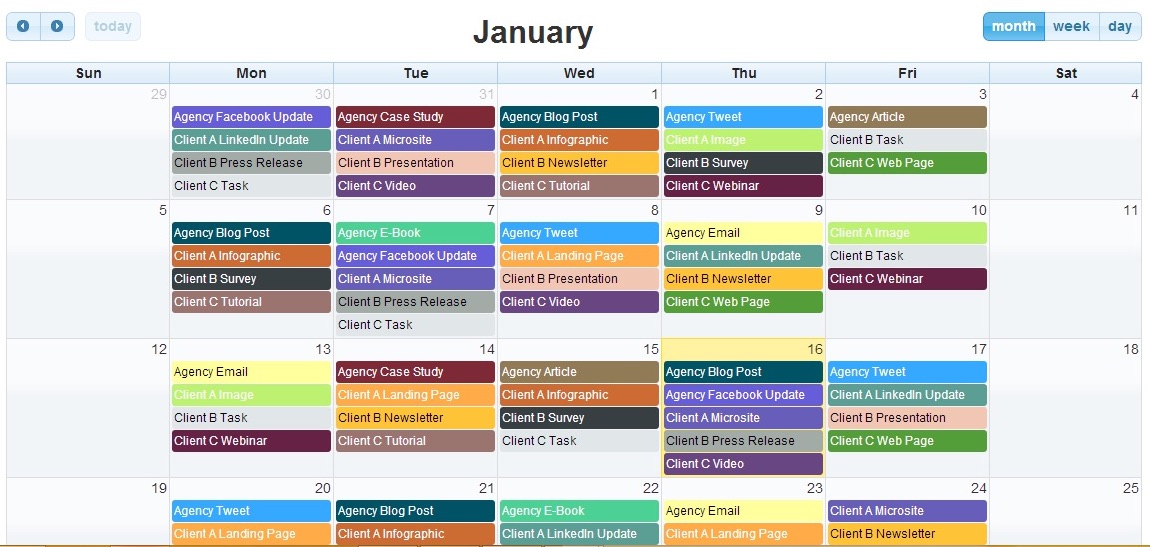


How to Build your newsletter subscriber lists before creating an email newsletter

In order to be able to create and send a newsletter, you obviously need recipients (duh!). Setting up an email contact list with high interaction rates is relatively simple if you take certain factors into consideration.

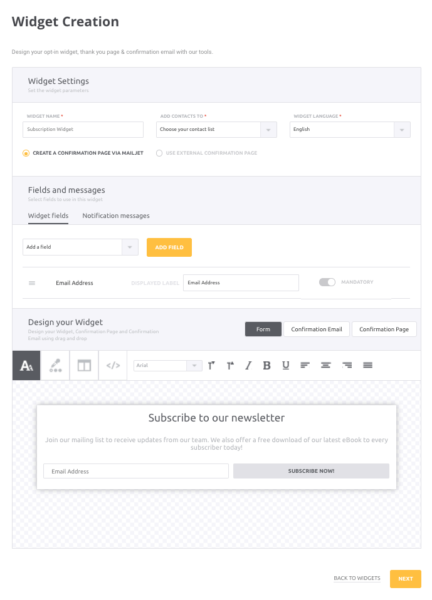
How to add subscription widgets to your site

To gain new newsletter subscribers, the first thing you’ll need is a responsive subscription widget with a double opt-in process. Add the subscription widget to all the relevant pages of your website. Some of the most effective places to include your widget in are the homepage, the blog, the footer and pages with gated content, such as guides, white papers, and others.
New York Times email subscriptions

Explore other channels to develop your newsletter contacts list

Aside from adding a widget on your site or a dedicated landing page, there are other ways of growing your email list, such us promoting it on your social media platforms, incentivising existing subscribers to share or encouraging people to join at events or at your physical store.

Consider what benefits prospective recipients may have if they subscribe to your newsletter. Ideally, you have already clarified these reasons in your strategy. Bear in mind that arguments like ‘100% free’, ‘no spam messaging’ or ’subscription can be canceled at any time with a single click’ are not actual benefits.

Real added value, for example, is provided by things like special offers, advanced information and booking facilities, invitations to exclusive events, regular industry information, access to exclusive content like e-books, email mini-courses, etc.

Build your email contacts list properly: Get consent from your contacts


But remember, regardless of how you’re getting your subscribers, you should always ask for consent before adding anyone to your email database. Remember what data protection and spam laws (like GDPR) say about consent, and ensure you’re complying with the applicable regulations.


Source: https://www.business2community.com/
Image Credit: business2community.com


ABOUT WNFP
Westchester Networking for Professionals (WNFP) is a business organization focused on providing our members and guests with an extraordinary networking experience, bringing business professionals together for the sole purpose of generating new relationships and developing new business opportunities. Not a member, learn how you can become a member and join this awesome group of professionals to connect and grow your business.

Stay Connected with WNFP!
Join WNFP Communities!

Thursday, February 22, 2018

10 Tips for Writing Cold Emails That Will Land Your Next Big Job


Despite the rise of a variety of new communication methods, such as Instagram direct messages, virtual reality meeting spaces and Slack, email remains a central part of business communication. In fact, the average professional will send or receive 86 work emails each day.

For those hoping to land a great new job, email is still an excellent way to connect with recruiters, hiring managers and influencers. But, because people are bombarded from all angles, including the new messaging platforms mentioned above, getting the attention of an influential businessperson can be challenging.


Recommended for you: 
Monthly Email Marketing Workshop Series for Beginners

Here are 10 strategies that will enable job seekers to land an exciting new gig through unorthodox email outreach strategies.


1. Embed a personal video in emails.


Both consumers and B2B buyers prefer video content to written content when shopping for a product or service. The same is likely true for professionals searching for talented people to join their team.

Free or inexpensive video-production platforms like Wistia and Vidyard make it easy for anyone to record a high-quality personalized video using only the camera embedded in a computer.

Adding a personalized video will help to set your cold emails apart, and will provide you with helpful analytics that make it easy to know how many times your video was viewed, as well as how much of the video was viewed on each visit. Armed with this information, you can create a follow-up email that outlines only the points the viewer missed.


2. Track email delivery and open rates.


Email extensions like Mailtrack and MixMax track email open rates. This allows senders to time follow-up emails based on the level of engagement from the recipient. A recipient who opens your email multiple times is probably more engaged than someone who totally ignored your first email.

Tracking open rates can also help you to understand if your email subject line is effective. Ambitious job hunters can even devise tests to determine what subject lines work best.


3. Use tracking links to determine recipient engagement.


If your email was opened, did the recipient click on a link included within the email? The only way to know the answer is if you use a tracking link. Platforms like Google URL Shortener and Bit.ly help senders see if a link shared within an email was clicked.

Senders can experiment with the call to action, or link anchor text to see if presenting the link in a different light drives better click-through rate (i.e., the percentage of email recipients who clicked on a link in the email).


4. Sprinkle in outreach via unorthodox channels.


Simply hammering away at recruiters and hiring managers via email may not get the job done. Instead, you'll need to think like a marketer developing a multi-channel marketing strategy. Make a list of the channels members of your target audience use on a regular basis, and target those.

Certainly, email is a popular channel for most audiences. But, SMS messages, phone calls and even snail mail can be effective ways of engaging otherwise hard-to-reach professionals.


5. Take the time to offer overwhelming value early on.


Whenever asking for help from a professional you don't know, it's best to offer value upfront to prove your worth. A good way to do this as a job applicant is by suggesting a fix to a small but meaningful problem.

For software engineers, that could mean emailing the hiring manager with a fix for a bug you found in their project. For a marketer, it could involve analyzing the website's SEO performance to identify new areas of opportunity.

Offering value will take different shapes for different professionals and seniority levels. The point is, offering value before receiving value can be an effective way to motivate recipients to reply to a cold email.


6. A/B test cold outreach to identify the most effective tactics.


The best digital marketers use A/B testing to perfect various channels, including email. While the average professional will not have access to sophisticated A/B testing tools, a similar effect can be achieved using some of the platforms mentioned above.

The key to conducting the "poor person's" version of A/B tests is to carefully change one independent variable at a time while measuring a single dependent variable. Slowly, you'll begin to identify the ideal combination of subject line, call to action and email content to motivate recipients to get in touch with you.


7. Include a clear call to action.


A good call to action should provide the email recipient with a clear next step. In some cases, your call to action may be a request that the recipient click on a link in the email. In other cases, you may simply want the recipient to reply.

Whatever you may want to motivate, finding the right call to action can dramatically improve performance. Be specific with your ask, and be sure to place it in a prominent location so that the call to action will not be easily overlooked.


8. Create a professional email signature.


The average person forms a first impression in just seven seconds. That means everything about your cold email must be highly professional. A simple way to add another layer of professionalism to a cold email is by including a well-designed call to action.

Using a tool like Wise Stamp, email senders can provide forms of social proof like links to social media accounts or testimonials from colleagues to encourage recipients to take a minute to reply to your message.


9. Reply quickly to those who responde to your email.


Slow response time is the bane of business success. This is true when it comes to inbound marketing, and it is also true when communicating with business leaders through cold email. If a professional takes the time to reply to a cold email, by all means, get back to them as soon as possible.

By replying quickly, you show that you are excited about building a relationship with them and help to keep the forward momentum of the conversation.


10. Move the conversation to the phone or an in-person meeting.


Conversations should never end with email. The email should be a means of achieving a phone call or, preferably, an in-person meeting. This is because it is difficult to build meaningful rapport over email, and it is easy for messages to get lost in the shuffle.

Once the recipient has engaged over email, ask for a short phone call or, better yet, ask if you can meet them near their office for a coffee.


Brand new to Constant Contact? You can try us out for free! Sign up for your free 60-day trial to see for yourself. 
Put these tips to work today! Log in to your Constant Contact account to get started

Conclusion

As the famous proverb goes, success is about who you know, not what you know. One report estimated that 70 percent of open job positions are filled through networking rather than through online applications.

Readers who are interested in landing their next great job should experiment with cold email outreach to connect with hiring managers and recruiters. Persistence, creativity and analysis will inevitably help job seekers to connect with business leaders who can advance their careers.


Source: https://www.entrepreneur.com/
Image Credit: Caiaimage | Paul Bradbury | Getty Images


ABOUT WNFP
Westchester Networking for Professionals (WNFP) is a business organization focused on providing our members and guests with an extraordinary networking experience, bringing business professionals together for the sole purpose of generating new relationships and developing new business opportunities. Not a member, learn how you can become a member and join this awesome group of professionals to connect and grow your business.

Stay Connected with WNFP!
Join WNFP Communities!
Business blogs
Business Blogs - Blog Rankings