Showing posts with label email marketing campaigns. Show all posts

Friday, June 15, 2018

5 Ways You Can Earn a Better ROI with Your Email Marketing Campaigns


Whether you’re marketing to consumers or other businesses, and regardless of the industry you’re in, these five key email marketing best practices have a direct effect on the success rates of your email marketing efforts.


1. Timing

Email marketing funnels include a sequence of messages that are automatically sent out (or “dripped”) at specific times. You set this timing up when you create the automation in your email marketing tool. Since the power of email conversion funnels is in their ability to remind, engage and persuade contacts to take specific actions, the timing of when people receive your messages matters a lot.

If you were speaking with someone, would you tell them something and then continue to remind them every five minutes? If you needed to call a prospect to close a sale, would you call them twice a day, every day, or every other day? How often is too often?

Most email recipients act on a message within 24 hours. Therefore, an automated sequence of messages should be configured to send messages every two days unless there is a deadline or other urgent reason that requires messages in your funnel to be sent more frequently. You can extend the number of days between messages when you reach the third message in a sequence so it doesn’t seem like you’re spamming people with too many messages. Your goal is to find the right balance that your audience will accept between staying in front of your contacts and looking like a spammer.


2. Offer

The heart of every email conversion funnel is the offer to your target audience—what they’ll get in exchange for taking the action you want. Your offer must be extremely relevant to the target audience and highly desirable, or they won’t be motivated to act. In other words, your email conversion funnel won’t convert. 

Therefore, spend time researching what your audience wants and needs. Search Google, online forums, question sites like Quora.com and your competitors’ content to find the problems and pain points that your target audience is seeking solutions for, then offer those solutions in your email conversion funnels.

For example, you could create an email conversion funnel to motivate people to read your new case study, join your upcoming webinar, watch your latest video or buy your product or service. The trick is matching the offer to the audience depending on where they are in the buyer journey and where you want to move them to in your overall marketing funnel.


3. Subject line

It could be argued that the subject line of each message in your email conversion funnels is the most important element. The reason is simple: If your subject line isn’t powerful enough to convince people to click and open your messages, you have no way of converting those people. Your subject lines should be short enough to fully display in most email inboxes without being truncated. With that in mind, keep your subject lines shorter than 50 characters. The best subject lines are interesting and pique the recipient’s curiosity. Address the audience’s pain point and the solution you’re offering, but keep your subject line clear.

It’s also very important that the content of your messages matches the expectations created by your subject lines. Not only will recipients be unhappy when they click through a subject line to discover the content of the message is unrelated, but doing so can also destroy your chance of creating brand trust. Ultimately, you could lose conversions because of it and increase unsubscribes.


ADVERTISEMENT

4. Design and messages

Make sure your messages are well designed and look professional to create the perception of quality and build trust with recipients. Furthermore, they should be optimized for all devices. This is particularly important since more than half of email messages are opened on mobile devices today.

Unless your product or service is complex, shorter messages are almost always better in email marketing. The truth is, most people don’t want to spend a lot of time reading email messages, so keeping your messages succinct is a good rule of thumb. Just make sure your messages are compelling, action-oriented and tap into recipients’ emotions. Explain what recipients get when they follow your call to action and how that action benefits them by addressing their pain point or solving their problem. In addition, be sure to use a real reply-to email address and your real name in your messages and signature to improve the authenticity and trust factor.


5. Follow-up

What happens when your email conversion funnel sequence is done? Don’t abandon people in the funnel when it’s over. Instead, make sure you continue to nurture and engage them with future email campaigns and automations based on the behaviors they display on your website and when interacting with your future email messages. This is essential even if the conversion funnel ended in a sale. The relationship isn’t over when someone makes a purchase. In fact, the relationship is even more important because it costs less to keep an existing customer and turn them into repeat customers and loyal brand advocates than to attract new customers.

For people who purchased products at the end of a conversion funnel, continue to send them your email newsletter as well as renurturing and re-engagement messages that continue to build a stronger relationship with them.


Source: https://www.entrepreneur.com
Image Credit: Tolgart | Getty Images


ABOUT WNFP
Westchester Networking for Professionals (WNFP) is a business organization focused on providing our members and guests with an extraordinary networking experience, bringing business professionals together for the sole purpose of generating new relationships and developing new business opportunities. Not a member, learn how you can become a member and join this awesome group of professionals to connect and grow your business.

Stay Connected with WNFP!
Join WNFP Communities!

Friday, March 30, 2018

6 Keys to Email Marketing Success


Run-of-the-mill advertisers have little respect for the personal nature of email. But smart email marketers know how to talk to their customer as individuals. Here are six ways to do just that.


1. A “From” Field That Shows You’re a Real Person


Consider the different impressions these “from” lines create:

Bill Kastl
William Kastl
William D. Kastl, Nakatomi Corporation
Nakatomi Sales Department
Bill Kastl, Nakatomi Sales

You want your email to be warm and personal without looking like spam. The key is to say something that’s so specific to readers’ particular interests, they know no spammer would ever come up with it. Pick a “from” field that your customers will understand, and stick with it.

2. A Provocative Subject Line


The most important thing about email is that its success or failure is all about context. Email subject lines work not because they follow standard copywriting formulas but because they tap into what specific people are interested in at a particular time.

Here are some subject lines of some successful emails I’ve sent out to my Google AdWords customer list:

When Google is NOT the Best Way to Get a CustomerAre Google Employees Spying on You?Google’s “Don’t Be Evil” and All That5 Insidious Lies About Selling on the WebFistfight at the Board of Directors Meeting

These headlines don’t assault the reader with cheesy-sounding promos -- they hint very strongly at a story. They provoke curiosity rather than scaring people off.

3. Everybody Loves a Good Story


B&B Electronics sells industrial communication hardware—a “boring” geek business if there ever were one. But when Perry Marshall writes its monthly newsletter, he turns that dull, geek image on its head and interrupts a dreary day of engineering with wry humor.

The method? Storytelling.

Subject: ZIGBEE AND THE GEEKS’ REVENGE

Leslye was the girl who made my heart go pitter-patter in junior high school.

I was always sure to take the long way to Social Studies, down the stairs to first floor, past her locker, then back up to second. Just checkin’ up.

I wasn’t the boy who made her heart go pitter-patter. She liked Sam. And she never discovered that I liked her. It was my little secret.

Now maybe you didn’t run the sound system in Junior High like I did. Maybe you ran the film projector instead. Maybe you programmed Apple II computers in BASIC and belonged to Chess Club.

Still, you and I were geeks, and the pretty girls took no notice of us.

But now we geeks rule the world. All the pretty boys and their material girls have viruses on their computers, and they can’t function without us. They’re at our mercy.

And the latest Geek Revenge these days is . . .

ZigBee.

ZigBee is sort of like wireless instant messaging for sensors and smart devices. You drop ZigBee nodes wherever you want, no cables necessary, and the more nodes you have, the more communication paths there are and the more reliable your system is . . .

The story doesn’t surrender to the stereotype that engineers are dull, lifeless geeks who only understand ones and zeros. No. It celebrates it. It turns it into the central message.

More importantly, though, it smashes the engineer stereotype to pieces: Engineers make buying decisions on emotion no differently than the rest of us do. Storytelling works when marketing to them, no differently than people in any other profession.


ADVERTISEMENT


4. People Can’t Forget You When They Hear from You Often


Get an autoresponder series going, and you can win the hearts of customers for life:

We like prime-number sequences, so three, five, and seven days are good.

After that sequence is done, keep in touch at a slower rate, maybe every few days or every week.


Your unsubscribe rate should be between 3 to 10 percent. If it’s more than that, your message isn’t matching your market. (If it’s less, you may not be edgy enough.)


Want to squash refunds and returns? After people buy from you, send them a series of messages that show them how to use your product more effectively and share features they might have missed.


When people complain that they’ve missed a day or two from you, it’s a sign your content is good and that the spam filters are doing their job.

5. If You Violate the Expectation of Relevance, You Damage Your List


Let’s say you’re a chiropractor who’s just launched a new herbal remedy that you want to tell your customers about. Should you blast your entire list with it?

Odds are, you could maximize your sales that day, but you’re going to pay a price. All the people who aren’t interested in herbal stuff are now going to be less responsive to everything else you do—even if they don’t unsubscribe. You’ve just taught them that you like to send out emails about stuff they’re not interested in.

The typical marketer will treat everyone the same. The smart marketer will not. The smart marketer will have different lists for each topic—different sublists.

So if you’re the chiropractor, you build an herbal sublist and then sell the herbal remedies just to those folks. That way, you maximize the value of every single list you have.

6. The Human Touch Sells


Don’t hide behind your email. Use it to express more of yourself. You’re not a faceless corporation; you’re a person. Show that side of you, and people will remember you, buy from you, and tell others about you.

Express a personality that people instantly recognize. This is free branding. When you introduce new products or make changes in your marketing program or message, now you can attach those to a name—your name or another person that your business is known for—and that name has even more meaning and credibility.


Source: https://www.entrepreneur.com
Image Credit: Hero Images | Getty Images


ABOUT WNFP
Westchester Networking for Professionals (WNFP) is a business organization focused on providing our members and guests with an extraordinary networking experience, bringing business professionals together for the sole purpose of generating new relationships and developing new business opportunities. Not a member, learn how you can become a member and join this awesome group of professionals to connect and grow your business.

Stay Connected with WNFP!
Join WNFP Communities!

Friday, March 2, 2018

6 Reasons Why Personalization Makes Your Marketing Better


Dale Carnegie once said that “a person’s name is to that person the sweetest and most important sound in any language.”

This is the same reason why you see companies and brands address you by your first name in their promotional emails.

Personalization can be a powerful tool when used right. Marketers have been using this strategy for decades to improve their marketing efforts.

In fact, research shows that personalized email campaigns receive 29% higher email open rates and 41% higher click-through rates than ordinary emails.

Needless to say, if you still haven’t implemented personalization in your marketing strategy, you’re missing out. Here’s why.

Join us for a Email Marketing Workshop: Using Email Marketing Campaigns to Promote Your Business

What is personalized marketing?

How does personalization factor into marketing? Well, it’s much more than just using your customer’s first name in your emails.

Personalized marketing is a strategy of its own that you can integrate into your different types of marketing mediums, such as email, social media, and blogs, to generate better results. Personalized marketing involves collecting data related to your customers and crafting marketing experiences that target specific types of customers through your content.

Data is your friend

Your personalized marketing strategy begins with user data. The success of your campaigns will depend on how well you collect and measure data. Whether it’s email list segments or surveys, you can collect different data to learn more about your users. It’s the only way to offer more personalized experiences through your marketing campaigns.

Once you have enough data and you start to paint a picture of your typical customer, you can begin to properly personalize your marketing campaigns.

The following examples will help convince you of the power of personalization.

1. Effectively target specific audiences

The main benefit of personalized marketing is the ability it gives you to reach specific audiences. By collecting user data from list segments, surveys, or studies you can create more effective email campaigns targeting audiences based on their interests or buying habits.

For example, if your audience likes movies, you can use pop-culture references in your email campaigns, blog posts, or even in your email opt-in forms to offer a more personalized experience through content and increase conversions.

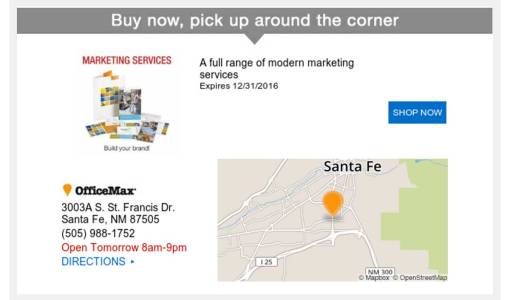
Office Max Uses Personalized Marketing
Many companies, like Office Max, use personalization to increase their customer engagement.

OfficeMax is a company that uses this strategy in their email campaigns. The company uses their user location data to send highly personalized emails based on the user’s location.

2. Create better content
Personalization also helps you stand out from the crowd by creating better and unique content that leaves a special memory for your customers.

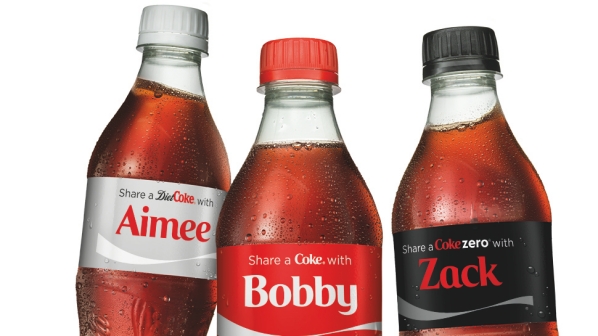
Coca-Cola used personalization to launch its Share A Coke campaign, which involved printing common names on Coke bottles to attract more millennials. The campaign helped the company grow sales for the first time in 10 years.

Personalization helps Coke increase their sales dramatically 
Adding first names to the bottles of Coke helped the company increase their sales.

Imagine finding a Coke bottle with your name on it. Wouldn’t you want to buy it and show it off to your friends? It’s amazing how a simple marketing strategy can bring so many sales for a business.

3. Build deeper relationships with customers

Personalizing your marketing will also help build stronger and more personal relationships with your customers. You can show how much you care about every one of your customers by showing your gratitude, by sending an email wishing for their birthday, or sending a thank you email on the anniversary of joining your email list.

Or, you can take things a bit further by improving your entire website and landing pages using personalization. This will not only help you generate more sales and conversions, but it will also make your website feel like home for your customers.

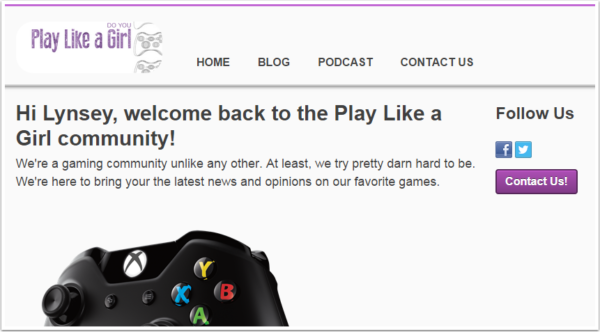
Deepen your relationships with customers using landing pages. 
This gaming community uses personalization to make members feel at home.


4. Gives a face to your business

In order to offer a truly personal experience through your marketing, you also need to give an identity for your company as well. This includes showing the human side of your business.

Include a working reply-to address in your automated emails to let your customers ask questions and leave feedback. Show who’s behind your company emails by including the faces and the names of your employees. Let your customers know that your company is run by humans, not robots.

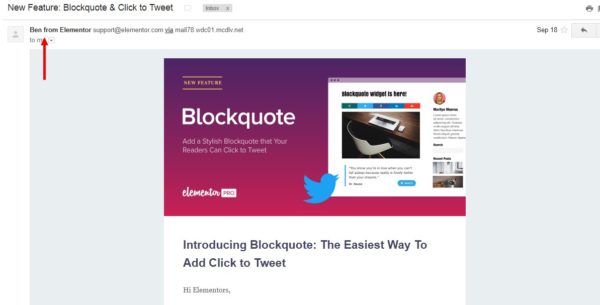
Show the customer your human side of your company
Adding a personal touch like a first name to your email can boost customer engagement.

Many businesses now combine the company name with the person in charge of different departments to offer a more friendly experience to customers.

5. Make better recommendations

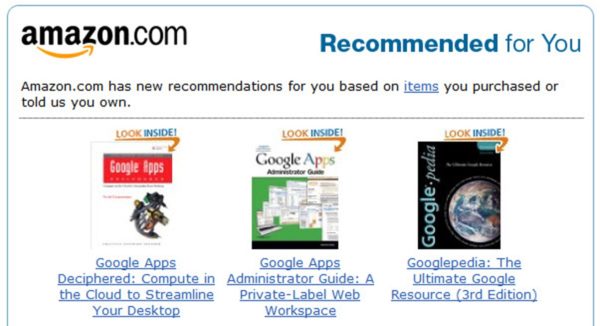
Learning about your customer’s buying habits is not a bad thing. Retail sites such as Amazon and eBay use this perfectly to offer more relevant product recommendations for their customers. They also occasionally send emails with recommended product catalogs.

Instead of asking from friends or searching the internet on which books you should read next, Amazon gives better suggestions based on your own behavior.


Product recommendations helps boost sales for Amazon
Amazon is known for having high-quality product recommendations.


Just remember not to take things too far like how Target exposed a teen girl’s pregnancy before her father knew about it.

6. Boost sales and conversions

Personalized marketing is not just about connecting with your audience. It’s also a great way to help your customers and also grow your sales at the same time. A simple recommendation or a suggestion can help bring you better results.


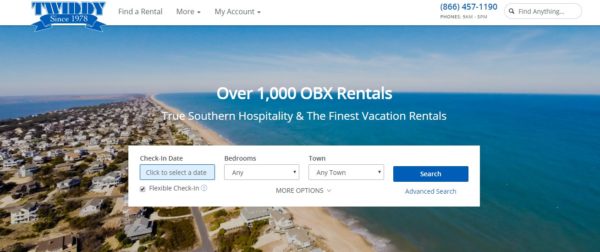
Twiddy boosted sales by helping their customers first
Truly helping your customers can come back around and help your bottom line.


The vacation rental company, Twiddy used a similar tactic to boost their inventory by over 10%. The company paid close attention to trends and customer behavior to offer pricing recommendation to homeowners to help them figure out better pricing for rentals. This brought in increased revenue for both the company and homeowners as well as a 15% cost reduction for Twiddy.


The future of marketing

Most expert marketers are now going as far as to say that personalization is the future of marketing. Seeing how it improves the campaign results, we have to agree with them.

Personalization is all about doing things to serve your customer first. So, you should try putting yourself in your customer’s shoes once in awhile to look at things in their perspective. This will immensely help you improve your marketing strategy.


Want more tips on personalization? Join us for a Email Marketing Workshop: Using Email Marketing Campaigns to Promote Your Business


Source: https://blogs.constantcontact.com


ABOUT WNFP
Westchester Networking for Professionals (WNFP) is a business organization focused on providing our members and guests with an extraordinary networking experience, bringing business professionals together for the sole purpose of generating new relationships and developing new business opportunities. Not a member, learn how you can become a member and join this awesome group of professionals to connect and grow your business.

Stay Connected with WNFP!
Join WNFP Communities!

Thursday, February 22, 2018

10 Tips for Writing Cold Emails That Will Land Your Next Big Job


Despite the rise of a variety of new communication methods, such as Instagram direct messages, virtual reality meeting spaces and Slack, email remains a central part of business communication. In fact, the average professional will send or receive 86 work emails each day.

For those hoping to land a great new job, email is still an excellent way to connect with recruiters, hiring managers and influencers. But, because people are bombarded from all angles, including the new messaging platforms mentioned above, getting the attention of an influential businessperson can be challenging.


Recommended for you: 
Monthly Email Marketing Workshop Series for Beginners

Here are 10 strategies that will enable job seekers to land an exciting new gig through unorthodox email outreach strategies.


1. Embed a personal video in emails.


Both consumers and B2B buyers prefer video content to written content when shopping for a product or service. The same is likely true for professionals searching for talented people to join their team.

Free or inexpensive video-production platforms like Wistia and Vidyard make it easy for anyone to record a high-quality personalized video using only the camera embedded in a computer.

Adding a personalized video will help to set your cold emails apart, and will provide you with helpful analytics that make it easy to know how many times your video was viewed, as well as how much of the video was viewed on each visit. Armed with this information, you can create a follow-up email that outlines only the points the viewer missed.


2. Track email delivery and open rates.


Email extensions like Mailtrack and MixMax track email open rates. This allows senders to time follow-up emails based on the level of engagement from the recipient. A recipient who opens your email multiple times is probably more engaged than someone who totally ignored your first email.

Tracking open rates can also help you to understand if your email subject line is effective. Ambitious job hunters can even devise tests to determine what subject lines work best.


3. Use tracking links to determine recipient engagement.


If your email was opened, did the recipient click on a link included within the email? The only way to know the answer is if you use a tracking link. Platforms like Google URL Shortener and Bit.ly help senders see if a link shared within an email was clicked.

Senders can experiment with the call to action, or link anchor text to see if presenting the link in a different light drives better click-through rate (i.e., the percentage of email recipients who clicked on a link in the email).


4. Sprinkle in outreach via unorthodox channels.


Simply hammering away at recruiters and hiring managers via email may not get the job done. Instead, you'll need to think like a marketer developing a multi-channel marketing strategy. Make a list of the channels members of your target audience use on a regular basis, and target those.

Certainly, email is a popular channel for most audiences. But, SMS messages, phone calls and even snail mail can be effective ways of engaging otherwise hard-to-reach professionals.


5. Take the time to offer overwhelming value early on.


Whenever asking for help from a professional you don't know, it's best to offer value upfront to prove your worth. A good way to do this as a job applicant is by suggesting a fix to a small but meaningful problem.

For software engineers, that could mean emailing the hiring manager with a fix for a bug you found in their project. For a marketer, it could involve analyzing the website's SEO performance to identify new areas of opportunity.

Offering value will take different shapes for different professionals and seniority levels. The point is, offering value before receiving value can be an effective way to motivate recipients to reply to a cold email.


6. A/B test cold outreach to identify the most effective tactics.


The best digital marketers use A/B testing to perfect various channels, including email. While the average professional will not have access to sophisticated A/B testing tools, a similar effect can be achieved using some of the platforms mentioned above.

The key to conducting the "poor person's" version of A/B tests is to carefully change one independent variable at a time while measuring a single dependent variable. Slowly, you'll begin to identify the ideal combination of subject line, call to action and email content to motivate recipients to get in touch with you.


7. Include a clear call to action.


A good call to action should provide the email recipient with a clear next step. In some cases, your call to action may be a request that the recipient click on a link in the email. In other cases, you may simply want the recipient to reply.

Whatever you may want to motivate, finding the right call to action can dramatically improve performance. Be specific with your ask, and be sure to place it in a prominent location so that the call to action will not be easily overlooked.


8. Create a professional email signature.


The average person forms a first impression in just seven seconds. That means everything about your cold email must be highly professional. A simple way to add another layer of professionalism to a cold email is by including a well-designed call to action.

Using a tool like Wise Stamp, email senders can provide forms of social proof like links to social media accounts or testimonials from colleagues to encourage recipients to take a minute to reply to your message.


9. Reply quickly to those who responde to your email.


Slow response time is the bane of business success. This is true when it comes to inbound marketing, and it is also true when communicating with business leaders through cold email. If a professional takes the time to reply to a cold email, by all means, get back to them as soon as possible.

By replying quickly, you show that you are excited about building a relationship with them and help to keep the forward momentum of the conversation.


10. Move the conversation to the phone or an in-person meeting.


Conversations should never end with email. The email should be a means of achieving a phone call or, preferably, an in-person meeting. This is because it is difficult to build meaningful rapport over email, and it is easy for messages to get lost in the shuffle.

Once the recipient has engaged over email, ask for a short phone call or, better yet, ask if you can meet them near their office for a coffee.


Brand new to Constant Contact? You can try us out for free! Sign up for your free 60-day trial to see for yourself. 
Put these tips to work today! Log in to your Constant Contact account to get started

Conclusion

As the famous proverb goes, success is about who you know, not what you know. One report estimated that 70 percent of open job positions are filled through networking rather than through online applications.

Readers who are interested in landing their next great job should experiment with cold email outreach to connect with hiring managers and recruiters. Persistence, creativity and analysis will inevitably help job seekers to connect with business leaders who can advance their careers.


Source: https://www.entrepreneur.com/
Image Credit: Caiaimage | Paul Bradbury | Getty Images


ABOUT WNFP
Westchester Networking for Professionals (WNFP) is a business organization focused on providing our members and guests with an extraordinary networking experience, bringing business professionals together for the sole purpose of generating new relationships and developing new business opportunities. Not a member, learn how you can become a member and join this awesome group of professionals to connect and grow your business.

Stay Connected with WNFP!
Join WNFP Communities!

Wednesday, December 6, 2017

How to Keep Your Email Marketing Campaigns Ethical & Legal


It’s no secret that email marketing is increasingly important for small businesses worldwide.

Not only does it offer you a direct way to land in consumer’s inboxes (a.k.a. their sacred space), but it has also been proven to bring in more return on investment (ROI) than other marketing methods.

In fact, just $1 of investment in email marketing can yield an average $38 in return. Nothing to be laughed at, right?

But it’s not just cold, hard numbers that has business owners bowing down to the email marketing gods. Well-structured and thought-out campaigns can create a positive brand image, boost credibility, and create a community – abstract goals that most modern-day businesses strive for.

With that in mind, it’s no surprise that more than 86% of businesses are planning to increase their email marketing budgets in the next year.

I believe that Constant Contact, is one of the best email marketing tools to help your small business get started. But, there’s a few more things you need to know. With great possibility comes a greater list of responsibility.

The importance of email marketing ethics
Direct access to consumer’s inboxes means there are a strict set of rules that all businesses must follow in order to align with legislation and ethics.

Here, I’m going to lay out what you need to know about creating ethical email marketing campaigns and why it’s so important for your business.

What exactly is the CAN-SPAM Act?
Let’s start by outlining the CAN-SPAM Act. This isn’t a tin of processed meat like you might think; instead, it’s a legislation that protects consumers from receiving too many spam emails.

The Act was passed in 2003 after a surge in the amount of spam emails consumers were receiving about certain medical enhancements and other irrelevant additions to their lives.

Under the Act, a number of requirements were drawn up to align with the national standards for email marketing stated within the law. Here’s the gist of it:

1. Use a subject line that does what it says it will

Have you ever received an email with an exciting subject line, clicked through in eager anticipation and been disappointed by the offering on the other side?

Maybe the content has nothing to do with the headline, or you feel like you’re being miss-sold something because the subject line was heavy clickbait.

Under the CAN-SPAM Act, you have to make sure your subject line doesn’t mislead your readers in any way.

QUICK TIP: Don’t disappoint your subscribers by promising the world in the subject line and not being able to follow through in the body of the email.

2. If your email is an ad, say so

If your email is advertising a company, product, or anything else, you need to make sure this is clear within the email.

Under the law, there is no specific way you must identify that your email is an ad to your readers. The law simply states that your disclosure must be “clear and conspicuous.” This means that as long as your subscribers can clearly see and understand the email is an ad, you should be ok. You also do not need to place this disclosure within your subject line.

3. Your sender information must be strictly true

It can be tempting to put a funny name in the sender segment of your emails, but under the CAN-SPAM Act, you have to ensure the “From”, “To”, and “Reply-To” fields of your emails and the routing information accurately identifies you or your business as the sender.

4. Provide a physical address

A lot of businesses try to side-step this option, especially if your business is ultimately run online. But, in fact, you have to provide a legitimate address that your email recipients can reach you at.

This is a non-negotiable under the CAN-SPAM Act.

If you don’t have a physical address for your business, you can easily and affordably get a PO Box or a physical mailing address using a virtual mailroom or office.

5. Make opting-out easy

It can be sad to see the unsubscribes roll in, but if you don’t offer your recipients the opportunity to opt-out of your emails, you’re essentially breaking the law.

You must provide a link in every email that recipients can click to unsubscribe for your mailing list if they no longer want to receive your emails.

You kind of want to do this anyway – imagine a potential customer getting so wound up because they can’t unsubscribe and then not buying from you or, worse, bad-mouthing you to other potential customers.

QUICK TIP: The top reason consumers unsubscribe from emails is because they receive them too frequently.

What are the repercussions?
If you are reported for not having complied with any of the CAN-SPAM Act requirements, you could be charged with fines of up to $16,000.

Seems like a lot, right?

Which is why it’s important when forming your email marketing strategy to double-check and double-check again to be certain you are not violating any laws.

Maybe not illegal, but is it ethical?
The CAN-SPAM Act is extensive in what it covers, but there are still a couple things it does not address.

Even though these things are not addressed, you should still ask yourself if they are necessarily ethical or effective to include in your marketing strategy (most of the time the answer is no).

Buying email lists


You might have come across list brokers on the market who claim they can sell you lists of people interested in what you have to offer.

Sounds too good to be true, right?

That’s because it is. Most of these claims are false but, let’s assume for a minute that they’re not.

Just imagine how many other marketers the list brokers have made their offer too – marketers you have no idea about.

Think about all the emails those marketers have sent to people that could be on a purchased email list. Think about how many other offers those recipients are receiving every single day from the other businesses that have essentially bought their way into their inboxes.

Do you really want your brand to be associated with just about anyone or anything? The answer is probably no, right?

Therefore, in order to be ethical and comply with the CAN-SPAM Act, it would be better to refrain from buying lists/leads from such brokers.

The best part about building your own email list from scratch is it’s full of people who actively want to hear from you. What’s more, you can segment your email list depending on the actions they take and the offers they take the most interested in.

Buying traffic


Buying traffic is legal, but it’s up to you to use common sense to decide on an ethical way to purchase traffic.

For example, let’s say you found a list owner who is willing to send an email to her list encouraging her recipients to visit one of your webpages where you offer something valuable in exchange for an email subscription.

As long as the list owner has an audience with interests matching your offer and market, you’re in business.

You can start building your own email list safely and ethically.

The same goes with buying ad traffic from advertising companies (Google Adwords, Facebook ads, Bing, etc.) and directing it toward the same type of lead acquisition process (although, in many cases, sending traffic directly to a form like I described is frowned upon, so you’d rather send it to some content buffer.)

The benefits of abiding by the rules
You probably know when a tactic is “bad”.

Things like buying consumer email addresses probably gives you a bad feeling in your stomach, but it might be tempting, especially if you’re trying to get your business off the ground.

But making a mistake in the early days can lead to negative effects later on in your businesses life, ranging from bad brand cohesion to consumers actively avoiding your products because you’ve bombarded them with too many irrelevant emails in the past.

So, you know what makes an email marketing campaign “bad” and unethical. But why is it SO important to be “good”?

The results are easy to see:


  • Higher open and response rates – by making unsubscribing easy, you’re left with people who actively want to hear from you and read your emails.
  • Increased sales – by building your own list of interested parties, you’re only going to be offering your products and services to people who are looking for them. Which means more sales.
  • More trust – in this day and age, trust and authenticity is important for every business if they want to succeed and stand out. Sending campaigns that are relevant and targeted to the right people means you’ll be consistently building that all-important trust.

QUICK TIP: Abiding by email marketing ethics and laws means you’ll see higher open rates, increased sales, and more trust amongst consumers.
But perhaps the biggest benefit is knowing that you’re building your business on your terms, with a list full of potential prospects who are eagerly waiting for your emails to drop into their inbox.

Conclusion
Knowing the difference between ethical and unethical marketing will ensure that your emails successfully reach your recipients and gain you more satisfied subscribers and customers.

By being aware of the current legislation, you will keep your business out of trouble and safe from being charged with expensive fines.

Log in to your Constant Contact account to send out some ethical and effective emails today! 

Not a Constant Contact customer? See what you’re missing! Sign up for a free 60-day trial.


Source: https://blogs.constantcontact.com
Image source: Constant Contact Blogs


ABOUT WNFP
Westchester Networking for Professionals (WNFP) is a business organization focused on providing our members and guests with an extraordinary networking experience, bringing business professionals together for the sole purpose of generating new relationships and developing new business opportunities. Not a member, learn how you can become a member and join this awesome group of professionals to connect and grow your business.

Stay Connected with WNFP!
Join WNFP Communities!

Wednesday, August 9, 2017

5 Essential Elements To Include In Your First Email To New Freelance Prospects


First impressions matter the most in the business world, and freelancing is no exception. You need to make the most of your first email to new prospects, but it can be hard to tell what you’re doing right and what you’re doing wrong.

But if you use these 5 essential elements in every pitch, you’ll be well on your way to success. Here they are:

1. A compelling subject line

If your subject line doesn’t attract your prospect’s attention, then none of the rest of your message matters. People get hundreds of emails per day, and if your subject line looks like “just another pitch,” they might not even bother opening the message.

If your freelance prospect has been referred to you, make sure your subject line is specific. Show that you already know about them and their needs, such as:

  • Blogging opportunity for yoursite.com
  • Your social media services quote

If your first email is a flat out cold pitch (meaning there’s no current connection between you and the prospect), then compelling is the way to go. Give them a good reason to open your email:

  • Why you need video content for your site
  • How to improve your traffic with blogging

2. A personalized message

Templates are helpful. They definitely save time when you pitch. But do they help you land more clients? Probably not!

So don’t bother pitching unless you’re going to deliver a personalized message for your client. Show that you understand their needs and position yourself as a solution to the problem.

For example, “I visited yoursite.com today and noticed you didn’t have any graphics with your blog content. Do you need someone to help create post headers and infographics?” 

This shows the prospect that you actually bothered to visit their site and see how you could help them before pitching.

In addition to personalizing your message to their needs, you should also address them personally. In marketing, personalized emails deliver six times higher transaction rates. That should work for you as well! Always use their name in the first line and avoid pitching prospects from the “Contact Us” form or the info@theirsite.com email address where possible. Find the business owner’s email address and use it instead.

3. Benefits of working with you

Next, make sure your email focuses on the benefits of working with you. Many freelancers like to show off their skills and expertise in a pitch email. But prospects don’t care that you’re good at your job. They care about how you can help them.

The best way to do this is using case studies of your success. Say you’re a social media manager. You could say something like this:

I ran across the Twitter profile for Your Company Name and noticed you have less than 500 followers. Do you need someone to help improve your reach online? I’ve helped my current clients:

  • Gain 30,000 engaged followers in less than 6 months
  • Increase their web traffic from social media by 25%
  • Get featured on Social Media Today

If you’re new to freelancing and don’t have a lot of personal case studies to back you up, then rely on industry statistics! For example, “Did you know blogging every day can increase your search traffic by up to 50%? You won’t regret hiring me as your new blogger.”


4. Social proof

Especially when you’re cold pitching, you don’t want prospects to just take your word for it that they should work with you. That’s why you should include social proof in every email.

What is social proof? It’s basically evidence that other people know you, work with you, trust you and would recommend you. Landing pages are covered in them. Testimonials, positive reviews, social following and page share counts are all examples of social proof.

But you don’t want to overcrowd your first email to a new freelance prospect so keep your social proof simple. Links to your social pages and website as part of your signature should be enough. If you have a testimonials page on your site, then link straight to it!

5. A call-to-action

You might think it’s clear from your email message what you want a client to do next. You want them to email you back, hire you, and send you a bunch of money. That is much more likely to happen if you actually use a call-to-action.

First, here’s what not to say: If you want, please let me know if you’d be interested in working with me.

What to say: Interested in continuing the conversation? Hit reply or let’s set up a phone call. Here are a few times I’m available…

Instead of giving them an ultimatum (hire me or don’t reply), you’re showing them exactly how they can keep chatting with you about the prospect of working together. The longer you keep them on the hook, the more likely they’ll become a client.


Getting quality freelance clients is a marathon, not a sprint. But if you use these 5 essential elements in every pitch, you’ll definitely find yourself ahead of the competition.


Source: https://www.forbes.com
Image Credit: Shutterstock


ABOUT WNFP
Westchester Networking for Professionals (WNFP) is a business organization focused on providing our members and guests with an extraordinary networking experience, bringing business professionals together for the sole purpose of generating new relationships and developing new business opportunities. Not a member, learn how you can become a member and join this awesome group of professionals to connect and grow your business.

Stay Connected with WNFP!
Join WNFP Communities!

Monday, May 8, 2017

5 Ways to Maximize Your Marketing


 Despite their small size, micro businesses in general have moved into the digital marketing age.

More than two-thirds (68.8 percent) market their businesses both online and offline. Over half (52.7 percent) say their online presence is “very important” to their marketing efforts, while 30.4 percent say it’s “fairly important.”

However, there’s still a long way to go. More than one-fourth (28.9 percent) of small business owners surveyed say they don’t market their businesses both online and offline. And even those who do market both ways often fail to present cohesive branding. About one-third of micro-business owners say developing a more consistent online and offline marketing identity would have a “substantial” financial impact on their businesses, and one-fourth think it would have a “significant” impact.

How can you maximize your marketing? Here are five tips:

1. Make sure your business website is up to snuff. 
Less than one-third (32.7 percent) of small business owners in the survey say their websites are their primary means of marketing. However, even if your website is not your main focus, it needs to be in good shape. Make sure your business website is mobile-friendly; most people search for local businesses on their smartphones these days, and Google awards higher rankings in search results to mobile-friendly sites. Make key information — your business address, hours, and phone number — easy to see, and keep it updated.

2. Give online advertising a try. Just 6.6 percent of micro-business owners in the survey describe online advertising as a marketing priority. However, when properly executed, online advertising can be highly effective and affordable. Since prospective customers search for businesses online, having your ads show up when they search for what you sell can only help your business.

3. Get listed in online directories. 
Only 5 percent of survey respondents say online directories are a key marketing method for them. But if your business is one that attracts local customers, online directories are vitally important to getting customers in your door. Plus, it’s easy (and generally free) to list your business in local search directories such as Google My Business or Yelp. To get the best results from online directories, make sure that your business name, address and phone number are exactly the same in all your listings — if they vary even slightly, search engines will view the variations as different businesses.

4. Don’t rely solely on social media marketing. Social media is the dominant marketing method used by micro-business owners; 53.3 percent say it’s their primary marketing focus. However, while social media marketing is important, putting all your efforts into social media marketing can leave you vulnerable. What happens if the key social network you rely on makes significant changes to its algorithm or has a sudden decline in popularity?

5. Promote a cohesive brand image. More than half of small business owners surveyed say business cards are their primary print marketing method; print advertising and signage are also used. Whether you’re marketing online, on social media or in print, you need to convey a unified brand image throughout. That means using similar graphics, colors and images, as well as reinforcing trademarks and taglines. Last but certainly not least, make sure your print materials drive customers to your website and social media platforms, that your social media accounts link to your website and that your website prominently displays your social media icons.

By integrating all your marketing — print, online and social media — you’ll get better results from each method you use.


Source: http://www.theselfemployed.com
Image Credit: Getty Images

ABOUT WNFP
Westchester Networking for Professionals (WNFP) is a business networking association dedicated to helping small businesses and entrepreneurs develop, expand and grow. We offer affordable opportunities to help create a positive impact and advancement in your business interests and personal quality of life to take you to the next level.

Stay Connected with WNFP!


Tuesday, March 28, 2017

3 Reasons Customers Aren't Opening Your Marketing Emails


I've been writing about email marketing frequently lately because email marketing is the last form of outbound marketing that still generates sales leads.

An email marketing campaign is useless, of course, if nobody opens your email. Thus it's important to know the five elements that determine if a marketing email is opened:

1)  When it's sent. Emails sent during heavy working hours are less likely to be opened than those send off-hours.

2)  Who's it from. Emails from strangers are less likely to be opened than those from colleagues.
The SUBJECT line. Emails with long, confusing SUBJECT lines are less likely to be opened than those with short, relevant ones

3) The SUBJECT line. Emails with long, confusing SUBJECT lines are less likely to be opened than those with short, relevant ones.

4)  The salutation. Emails that being with formalities ("Dear Mr. Jones") are less likely to be opened than those that begin informally ("Jane,").

5)  The teaser. Emails where the first 10 to 20 words are meaningless are less likely to be opened those that begin meaningfully.

Those five elements are important because they're what appears in the INBOX in most email programs. The example below are screen-captured from Outlook, but the same problems were obvious when they appeared on my iPhone.


1. Meaningless warnings.


In this example, the sender has wasted valuable "real-estate" on the INBOX display by displaying a message that's only meaningful after I've opened the email.

What's worse, the message implies that if I do open the email, I'll have trouble viewing it, which is not the best idea to plant in my mind when I'm considering whether to do so.

I'm pretty sure that this "If you're having trouble viewing" message is the default for one of the popular email marketing software vendors, proving that they are clueless.

I might also note that while the SUBJECT line is intended to be intriguing, it comes off rather hostile. The entire effect screams "Delete this and save yourself grief!"

 2. Repeating the subject line.


In this example, the SUBJECT line is strong and compelling. Who wouldn't want to know how to create sales champions?

However, the example wastes the INBOX "real estate" by simply repeating the SUBJECT line. I already know that part. Do I really need to see it again.

In addition, the "Hello" is unnecessary and the "This is just a quick reminder about" message is uninspired and clipped off.

Yes, I might open this based upon the strong SUBJECT line (and the fact that I know the sender), but overall, the teaser is just being wasted.


3. Obviously fakery.


This one is truly lame. Notice the space between the "Hi" and the comma? That was where the email program was supposed to plug my first name.

Apparently the list this marketer is using didn't have my first name in a break-out-able field, so they just went forward without it.

That gaffe is immediately followed by a fake (and therefore insulting) statement of concern about my health and similarly fake enthusiasm about... whatever.

Combine all that an opaque and self-interest SUBJECT line and you've got an email marketing campaign that gives new meaning to the word "meh."


Image Credit: Getty Images
Source: http://www.inc.com

ABOUT WNFP
Westchester Networking for Professionals (WNFP) is a business networking association dedicated to helping small businesses and entrepreneurs develop, expand and grow. We offer affordable opportunities to help create a positive impact and advancement in your business interests and personal quality of life to take you to the next level.
Stay Connected with WNFP!
Join WNFP Communities!

Thursday, February 23, 2017

5 Huge Mistakes That Salespeople Make in Cold Emails

Email marketing campaigns should start with a clear, no-nonsense, straightforward message.


 As I pointed out in yesterday's column on sales mega-trends, email marketing is the only form of outbound marketing that still works for B2B products. Unfortunately, most companies aren't very good at writing emails that people read and answer.

For the past five years, I've published a free weekly newsletter where provide links to my latest columns and critique sales emails that readers send me. In my experience, cold emails tend to suffer from the following problems:

1. False Friendliness

While it's true that most people, all things being equal (and even when they're not equal) prefer to buy from their friends. However, any attempt to force friendship causes people to raise their emotional barriers.

In face-to-face meetings, this tendency among salespeople to be too friendly manifests itself in handshakes that last too long, compliments that are too fulsome and too frequent use of the other person's first name, etc. Ugh.

In sales emails, the "too friendly" tendency manifests itself in phony inquiries about the other person's health or vacation, over-enthusiastic praise for trivial matters and (again) too frequent use of the other person's name.

Effective sales emails are polite and professional rather than effusive and emotional.

Wrong:

Dear Jill:
I hope you're having a wonderful week! I noticed that Acme released a new product last month. Good work! I hope it sells well. Jill, the reason I'm writing is to find out if you're the person responsible for purchasing software for Acme.

Right:

Jill,
Are you the person responsible at Acme for software purchases?

2. Self-Centered Enthusiasm

Many salespeople (and indeed many people in the culture at large) wrongly believe that expressing your own emotions will draw a positive emotional response from others.

While that may be true inside a relationship, it's not true when dealing with people who don't know you and have no reason to want to know you.

Unfortunately, many sales emails are chockablock with unnecessary and distracting emotional commentary on the sender's emotions, beliefs, motives and opinions.

Effective sales emails are about the customer rather the salesperson.

Wrong:

I believe that everybody wants to find the best value for their money which is why I am a writing to you. I'm certain that when you'll be delighted when you look at our products and prices and I would like to meet with you to discuss this.

Right:

My company can probably provide this product to you at a lower cost than your current vendors. Does this interest you?

3. Spray and Pray

Many salespeople weirdly believe that customers want to buy the products that provide the most features for the lowest price. But that's only true if customers have no better way to evaluate value.

Customer pick feature-rich products only when they're not clear which features have specific value to their specific situation. They want to know "what in it for me" and if they can't figure it out, they go for the feature-rich option.

To make matters worse, many customers are turned off when they're confronted with too much information and put decision-making on hold until they have time to sort everything out, which may never happen.

Effective sales email present a single, meaningful, unique benefit rather than a "spray and pray" list.

Wrong:

Even though our price is low, our widgets have the following features:
    1.    Double, redundant framistats.
    2.    Fifth-generation vebblefetzers.

Right:

Our widgets can reduce your inventory costs by reducing missing stock items by 20%.

4. Generic Benefits

Salespeople who "get" the idea that customers aren't interested in product features often make the mistake of replacing them with benefits that are too generic to be meaningful.

Every B2B product in the world either increases sales or decreases costs (aka saves time and money). Any product that didn't do these things wouldn't exist because nobody would buy it.

When customers see generic benefits, they shrug them off as just so much noise. What's worse, they're likely to feel that since you couldn't be specific you must not have thought things through.

Effective sales emails identify one or two specific unique benefits.

Wrong:

Our widgets will increase your sales allowing you to profitably grow your company. They will also save you time and hassle so that you can spend more time doing things that you enjoy.

Right:

Our widgets can reduce your inventory costs by reducing missing stock items by 20%.

5. Self-Praising Opinions

Some salespeople seem to think that they live in a world where customers believe something just because somebody tells them it's true. Customers, however, are exceedingly skeptical of any claim that a company makes about itself.

Repeatedly claiming that you have the "best service" or the "best product" or that your company is "industry-leading" or "innovative" convinces nobody. People just skip over that kind of marketing mush. If anything, people think you're lying or exaggerating.

Effective sales emails offer credible proof (or the potential of credible proof) for any claim.

Wrong:

Our industry-leading company has state-of-the-art products and the best customer service in the business!

Right:

An independent survey showed that our customers on average are happier with our products and services than with those of other vendors.


Source: http://www.inc.com
Image credit: Getty Images


ABOUT WNFP
Westchester Networking for Professionals (WNFP) is a business networking association dedicated to helping small businesses and entrepreneurs develop, expand and grow. We offer affordable opportunities to help create a positive impact and advancement in your business interests and personal quality of life to take you to the next level.
Stay Connected with WNFP!

Join WNFP Communities!

Wednesday, February 15, 2017

The Future of Email Marketing Is Already Here: Five Tactics You Can Implement Now


For businesses, the methods and the methodology with which we design consumer interaction is changing. And nowhere is it moving faster than in the digital landscape. The way your business presents itself to consumers is important in building successful customer relations. And how better to interact with consumers than through email?

Email marketing is not dead: Email marketing tactics have simply evolved. Businesses must be willing to change with them or fear getting left to rot in the spam folder. As the owner of a digital marketing company, I have learned many email marketing lessons the hard way, through countless experiments with approach and strategy.


Subscribers are unlikely to open an email from a business unless there is a clear benefit in doing so, such as a 50% off coupon, a promise of knowledge or insight, etc. If your email doesn't have a captivating title communicating the benefit of opening the email, then you could severely hinder your open rates. Here are a few ways email marketing strategies have shifted, and some examples of how you can leverage this knowledge to improve your customer outreach:

Tailored Email Campaigns  

The days when you could drum up a boilerplate email and blast them off to your subscribers are quickly diminishing.

So, what’s the alternative? We looked to one of the most innovative and exciting social media networks: Pinterest. Pinterest did away with batch-and-blast emails earlier this year and replaced them with emails that are 100% tailored to the user. Pinterest uses all of the customer data it is given (and, with its model, there is plenty of data) to personalize the customer experience and create emotional connections with its users.

By analyzing its customer's interests, Pinterest sparks their curiosity, leading to more clicks and opens. Pinterest also allows each user to personally customize their email settings, determining the frequency and type of emails they receive. This type of customization is key in that the users dictate how they are marketed to, making them more receptive and less inclined to mark emails as "spam." Whereas it's normally the marketer's job to determine how best to perform outreach to different demographics, under the Pinterest model, the customer tells them directly, "I want to be marketed to this way."

Real-Time Email Outreach

Real-time email triggers, which are already in use but not altogether effective yet, are going to be a game changer for email marketing. Essentially, a campaign like this is based on what the consumer is currently reading or searching for in their various social media feeds. For example, if a customer is reading reviews of a new movie, the movie times and methods for buying tickets online would arrive in their inbox in real time.

Yesmail is one of the leading companies for this kind of marketing: its platform allows businesses to set these triggers. For now, these triggers are fairly rudimentary, mostly relegated to the world of weather, location, sports and local events. Ideally, this will grow to include more triggered events based on habits, both online and locally.

While the types of trigger emails you should use are relative and determined by your business's niche, the general idea is to leverage awareness about your customer's situation so you can ignite a real-time dialogue with them via email and achieve greater influence.

Modular Email Templates

If you haven’t been using modular email templates, you’re not alone. It’s a wonder they haven’t become more prevalent as many businesses continue to choose the time-consuming process of coding all of their emails from scratch.

Think of modular email templates as a sort of digital collage: Drag and drop the content you want to use and build it, much like you would use web-building services like Weebly or Squarespace. Currently, only a few companies offer this kind of customizability. But no doubt, as personalized email becomes increasingly more common, so too will these kinds of email templates.

Cross-Channel Marketing 

The future of email marketing is inextricably wrapped up in the future of social media. Brands can build their email lists through the use of carefully-placed social media campaigns, garnering more ROI than a simple social media “like” and using those emails to bounce the consumer back to their social media landing page, website or mobile app. Anytime you offer the customer a clear benefit (through competitions, surveys, quizzes or free giveaways), they will likely share their email address in order to receive it.

Artificial Intelligence and Machine Learning

If you’ve used Google Inbox, you’ve already seen how your phone reads your emails and learns to respond. It’s still pretty basic (an algorithm that creates three short replies based on the email content you’ve received), but it’s gotten smarter in the last few years and will likely continue until we’re all just auto-replying through Smart Reply.

These types of AIs are becoming more common for marketers and consumers alike. Take Shopify’s Kit or Conversica: AI chatbots are being used as personal assistants for businesses to generate custom advertisements, social media posts and, yes, even email campaigns. This kind of AI and advanced algorithms will help make processes like the aforementioned personalized email campaigns that much easier to execute.

The future of email marketing is already in place, but is certainly far from perfect. By 2020, businesses and marketers should already be using all of the avenues currently available and, beyond that, be on the cutting edge of advancing marketing strategies for the years to come.


Source: http://www.forbes.com

ABOUT WNFP
Westchester Networking for Professionals (WNFP) is a business networking association dedicated to helping small businesses and entrepreneurs develop, expand and grow. We offer affordable opportunities to help create a positive impact and advancement in your business interests and personal quality of life to take you to the next level.
Stay Connected with WNFP!
Join WNFP Communities!
Business blogs
Business Blogs - Blog Rankings