Tuesday, March 27, 2018

How to Write Strong Subject Lines That Will Get Your Emails Read


It's easy to get lost in our inboxes. How many times have you been in the middle of responding to one email when another, seemingly more urgent, one comes in? Or how many times have you filed away an email to handle it later, only to find that you can't remember the subject line to search for it?

There are three areas that need to be addressed in every email subject line, and when you cover them, with or without acronyms, your employees will inevitably save time.


Topic


Clarifying the topic of your email seems like a no-brainer, but we still see plenty of one-word subject lines or forwarded emails whose subject lines no longer make sense. When teaching your employees how to craft subject lines, make it clear that writing "Thoughts?" with no context won't fly.

In my company's case, internal communication often centers around a specific book project. We make it a point to include the book's title or author in the subject line to help keep emails organized. Whether you work on specific projects with names or not, ask your staff to consider how they would search through their tens of thousands of emails to find this one again and draft subject lines accordingly.


Time


Many people block off specific times in their days to respond to emails. This can create problems when urgent issues come up that need to be addressed right away. But without the word URGENT in the title, how would the recipient know you needed a response by noon?

All employees should understand the value of their colleagues' and superiors' time (not to mention their own time). There are several ways that a subject line can help the recipient quickly determine if they need to read that email right this minute, or if it can wait until higher priority items are taken care of. Here a few common ways of doing so in the subject line:


Urgent: If you need an answer right away, make that clear.


PRB: This means "please respond by" and is followed by a date. Do you need something by the end of the day (EOD), end of the week (EOW), or at a date much farther in the future?


EOM: Writing EOM, or End of Message, is another nice signal that the recipient does not need to spend any more time reading the email. Rather, all the necessary information is in the subject line, such as "Jane Out of the Office Today [EOM]"


Action


The biggest factor in how long it will take someone to act on an email of course depends on the action required of them. Was the email simply informative, or do you need approval on something? Use the subject line to indicate what you're asking the recipient to do to help them prioritize their inbox and improve response times.

Here the most common ways of clearly stating the action needed:


FYI: Meaning For Your Information, FYI is a quick way of telling someone that they don't need to do anything with the email other than read it.


NRN: Similar to FYI, NRN, or No Response Needed, signals to the recipient that they can read the email whenever it's convenient.


Response Needed: If you need an answer to a question but there's no deadline attached to it, writing "response needed" is a helpful cue to your recipient that they need to spend some time on your email.


For Review: Similarly, when you have completed a project that needs approval, writing "for review" tells the recipient that you have completed your work and that the email you sent isn't a question or update about the project.

There are countless ways to craft email subject lines. Some companies prefer strict systems in which all employees use the same abbreviations and formats. I tend to steer clear of hard rules around email communication with one notable exception: repeat emails. If someone is pulling a weekly or monthly report, the subject lines should always follow the same format so that you can easily find and access all similar emails.

Ensuring that your team addresses these three areas in all of their email communications will make everyone more efficient at managing the potential black hole of office email.


ADVERTISEMENT


Source: https://www.inc.com/
Image Credit: Getty Images


ABOUT WNFP
Westchester Networking for Professionals (WNFP) is a business organization focused on providing our members and guests with an extraordinary networking experience, bringing business professionals together for the sole purpose of generating new relationships and developing new business opportunities. Not a member, learn how you can become a member and join this awesome group of professionals to connect and grow your business.

Stay Connected with WNFP!
Join WNFP Communities!

Monday, March 26, 2018

5 Ways Personalization and Segmentation Are Changing Email Marketing


In years past, personalization and segmentation may have been optional, but no more. In 2018, marketers have to meet expectations and that means creating relevant, personalized messages that subscribers want to read.

Research shows marketers lean on email marketing to create a personalized experience for customers, compared to other options:

MarketingCharts email personalization chart

There’s no question, there’s a lot of power behind personalization and segmentation. In this post, we’ll look at five ways it’s changing email marketing:


1. Increased revenue through advanced segmentation


Segmenting email contacts into specific groups can give your bottom line a boost. Marketers have noted a 760% increase in revenue from segmented campaigns, according to Campaign Monitor research.


Why does segmentation impact revenue? Grouping contacts by location, gender, age, job title, or buying history, gives you the opportunity to send emails that are more in-tune with what subscribers are interested in. As a result, subscribers are more apt to open your emails, click through, and convert.


For continued success, segment your segments. Start breaking your segmented lists into even smaller groups. For instance, take your ‘female customers’ list and create a list of ‘VIP female customers’ that buy from you regularly.


2. Better engagement through self-segmentation


Customers are embracing the idea of self-segmentation too. Rather than segment email contacts yourself, why not let subscribers do it for you?


Marketers are using email preference centers to give subscribers the power to select their interests. Penguin Random House directs its subscribers to the preference center below. It gives subscribers the power to self-select the book genres they’re most interested in. In return, subscribers receive emails that provide book suggestions they’re excited about.


Penquin Random House Preference Center

Marketers are also giving website visitors the ability to join specific newsletters. BuzzFeed, gives visitors the chance to sign up for newsletters that are based on the content they read. For instance, if a visitor reads an article about cats, a form pops up asking the visitor to join a specific cat newsletter.


BuzzFeed Newsletter signup


This kind of self-segmentation removes any doubt about categorizing a subscriber. As a result, engagement climbs because subscribers see content they want in their inbox.


3. Stronger relationships built through dynamic content


Marketers have figured out how to create personalized emails without spending a ton of time manually tweaking emails. How? Dynamic content.


Dynamic content allows marketers to create one email, but customize blocks of it for certain subscribers. Let’s say you’re hosting a sale at both of your stores in Fresno and Los Angeles. Through dynamic content, you can localize the images and content. The subscribers in Fresno see a picture of their local store and those in LA see their hometown store.


Dynamic content is personalized. When subscribers open the email they think, “This company gets me.” With every dynamically personalized email, you build a stronger relationship with your customer.


4. Eased workload via automation and integrations


The need to create more personalized content sounds like more work for marketers, right? It doesn’t have to be, if you’re using an email service provider that has automation features and useful integrations.


Automation is a must for marketers looking to save time. Using automation, you can send emails automatically. That’s right. You can set up triggers so emails that you pre-make are sent to subscribers when they meet a certain condition.


For instance, when a subscriber joins your newsletter that action can trigger a welcome email. When a subscriber makes a purchase, a confirmation email is triggered. You can even trigger emails based on a specific date, so a Valentine’s Day email can arrive in inboxes a week before the holiday.


In addition, marketers should lean into integrations.  Integrations let you sync platforms for ease of use. 


It’s these simplified processes that have become crucial to marketers as they’re asked to personalize more and more campaigns.


ADVERTISEMENT

5. An increasing need to collect data


To personalize emails, you have to know your customers. That means you have to collect data on an ongoing basis.


Marketers are getting more sophisticated when it comes to data collection. When a customer signs up for a webinar, downloads a white paper, makes a purchase, or interacts with a social ad, they’re asking for new pieces of information.


As information rolls in, marketers use the data to build customer personas. These personas are meant to help marketers visualize real customers with details that specify age, location, interest, buying activity, etc.


Every new piece of information strengthens a persona and helps marketers create tailored content.


Marketers weigh in: How personalization and segmentation are impacting campaigns


We asked marketers to tell us how personalization and segmentation are changing their strategies. From increased conversion rates to connecting with customers, here’s how these two tactics are improving the ROI of email marketing:


  • Instead of a “spray and pray” email strategy, we now segment our database by emotional target or a reason why they contacted us. Personalizing all emails with content that is geared towards customers’ concerns creates a lasting bond between our brand and our potential audience._
-Brannan Glessner, Express Homebuyers
  • What truly drives awesome email performance is a more personalized messaging strategy, one that adjusts the timing, cadence, and content of emails to segments built off our users’ captured behavioral data. With this approach, email is part of a conversation that begins at the inbox, but doesn’t end there.
-Stephen Hammill, Anvil Media Inc.
  • We put a lot of strategy into segmenting our email, starting with detailed persona building to determine messaging. From there, we have in-depth interviews with our client’s sales side to identify common questions, concerns and pain points – and we’ve had great response rates as a result.
-Louise Armstrong, Bonafide
  • As a higher education institution, we have multiple offices emailing prospective students. By adjusting our email strategy to be more personalized and sending emails segmented by age, location, and level of interest, we have seen a massive increase in open and click rates.
-Lexi Carter, Southern Utah University
  • Personalization-at-scale is one of the most important digital trends in 2018. Brands can use the new breed of email marketing automation tools to capture audience attention at the right time, with personalized engagement for every touch-point in the customer journey. It’s still “selling,” but selling in a very efficient yet personalized way.
-Alessio De Luca, Florence Consulting Group


Wrap up

As you can see, marketers are reaching new heights as they incorporate personalization and segmentation into their strategies. The two tactics have become a necessity for marketers looking to connect with customers in a digital world. In 2018, the trend will continue as customers’ expectations continue rise.


ABOUT WNFP
Westchester Networking for Professionals (WNFP) is a business organization focused on providing our members and guests with an extraordinary networking experience, bringing business professionals together for the sole purpose of generating new relationships and developing new business opportunities. Not a member, learn how you can become a member and join this awesome group of professionals to connect and grow your business.

Stay Connected with WNFP!
Join WNFP Communities!

Friday, March 23, 2018

How to Leverage the 6 Principles of Persuasion in Your Email Marketing


Do you know how to persuade? It’s a critical skill for an email marketer. Perhaps the most critical.

“You’ve created your campaign and attended to all the details of identifying your audience, created your offer, and toiled for hours and hours, honing copywriting and design,” writes Gary Hennerberg at Target Marketing. “But in the end, the tipping point for your success likely stems from the degree to which you emotionally persuade an individual to take action.”

In his groundbreaking 1984 book, “Influence: The Psychology of Persuasion,” Dr. Robert Cialdini identified what he termed “The Six Principles of Persuasion”: reciprocity, commitment/consistency, social proof, authority, liking and scarcity. He was onto something important: his book has sold more than three million copies and been translated into 30 languages.

If you haven’t been putting Cialdini’s principles to work in your email marketing, now is a good time to start. Read on to learn how you can leverage them in your campaigns.


Reciprocity


“Reciprocity is the obligation to give once you receive,” writes Mark Brown at Emailaudience,

Brown illustrates the power of reciprocity by citing a study linking mints that accompanied diners’ checks with higher tips. “The waiters in the experiments enjoyed double the tip amount for one mint (3%), quadruple the amount for two mints (14%) and went as high as 23% when the waiter provided extra gifts unexpectedly,” he writes.

The bottom line: “In every email that asks users to take an action – whether it be clicking on a link, buying a product or sharing information – you should offer a small gift or offering. These gifts can be downloads, discounts or even entertaining videos, however, they should be seen as having some kind of inherent value in order to be effective.”


Commitment/Consistency


This principle posits that once people make a commitment, they behave in a manner consistent with that commitment.

Asking recipients to sign-up to receive free content is an example of gaining commitment. Once they do that, they are very likely to take the subsequent steps needed to obtain your offer.

“You’re persuading people to commit to your content, so that they start behaving in alignment with their choice of committing to you,” writes Neil Patel. “The returns garnered by the commitment and consistency principle could be something as subtle as liking and sharing your content on social media or something as large as following your CTAs.”


Social proof


Social proof drives conformity by compelling people to behave in alignment with the actions of others. Social proof gets results. It’s why email marketers use testimonials, endorsements, awards, product reviews, press coverage, and other forms of validation in their messages.

“Put simply, people trust people, not ads or self-promotion,” writes Daniel Kohn on the Kissmetrics blog. “We want to see or hear or read about others using, enjoying, and succeeding with a product or service before committing to it ourselves.”


Authority


“The principle of authority says most of us realize we can’t be experts at everything,” write Jacob McMillen at The Daily Egg. “Our best bet is to rely on the testimony of experts. Accordingly, we allow experts and those considered the ‘authority’ on any given topic to influence us.

“You can put the principle of authority to work in email marketing by citing professionals to back up any claims you make, by pointing to research conducted on your product or service by prestigious organizations and by showcasing awards and other recognition your company has earned.


ADVERTISEMENT

Liking


“It’s hard to say ‘no’ to someone we like or consider a friend, because we want to make a good impression and preserve the friendship,” writes Alexis Rodrigo at Vero. When it comes to leveraging this principle in email marketing, “The key is to get your subscribers to like you in the first place,” Rodrigo advises.

“To start, your emails should sound human. Write conversationally – think business conversation, not street talk – avoiding jargon and legalese.”More tips: “Show the human side to your company or organization. Let subscribers know who’s writing to them, and show an agreeable photo of the author. Get the people who make up your business to share who they are through personal anecdotes or stories that relate to the rest of your email.”


Scarcity


“The feeling of being in competition for scarce resources has powerfully motivating properties,” Cialdini wrote.“Scarcity triggers an emotion response because we find it hard to resist wanting things that are scarce,” writes Sarah Jamieson at Persuasionworks. “Scarcity also increases desire.If we know we can’t have something, we want it even more.”

Jamieson suggests email marketers leverage the persuasive power of scarcity by stressing that quantities are limited, that the product is only available to members of an “exclusive” group, or that a deadline is looming.


Source: https://www.business2community.com/


ABOUT WNFP
Westchester Networking for Professionals (WNFP) is a business organization focused on providing our members and guests with an extraordinary networking experience, bringing business professionals together for the sole purpose of generating new relationships and developing new business opportunities. Not a member, learn how you can become a member and join this awesome group of professionals to connect and grow your business.

Stay Connected with WNFP!
Join WNFP Communities!

Friday, March 2, 2018

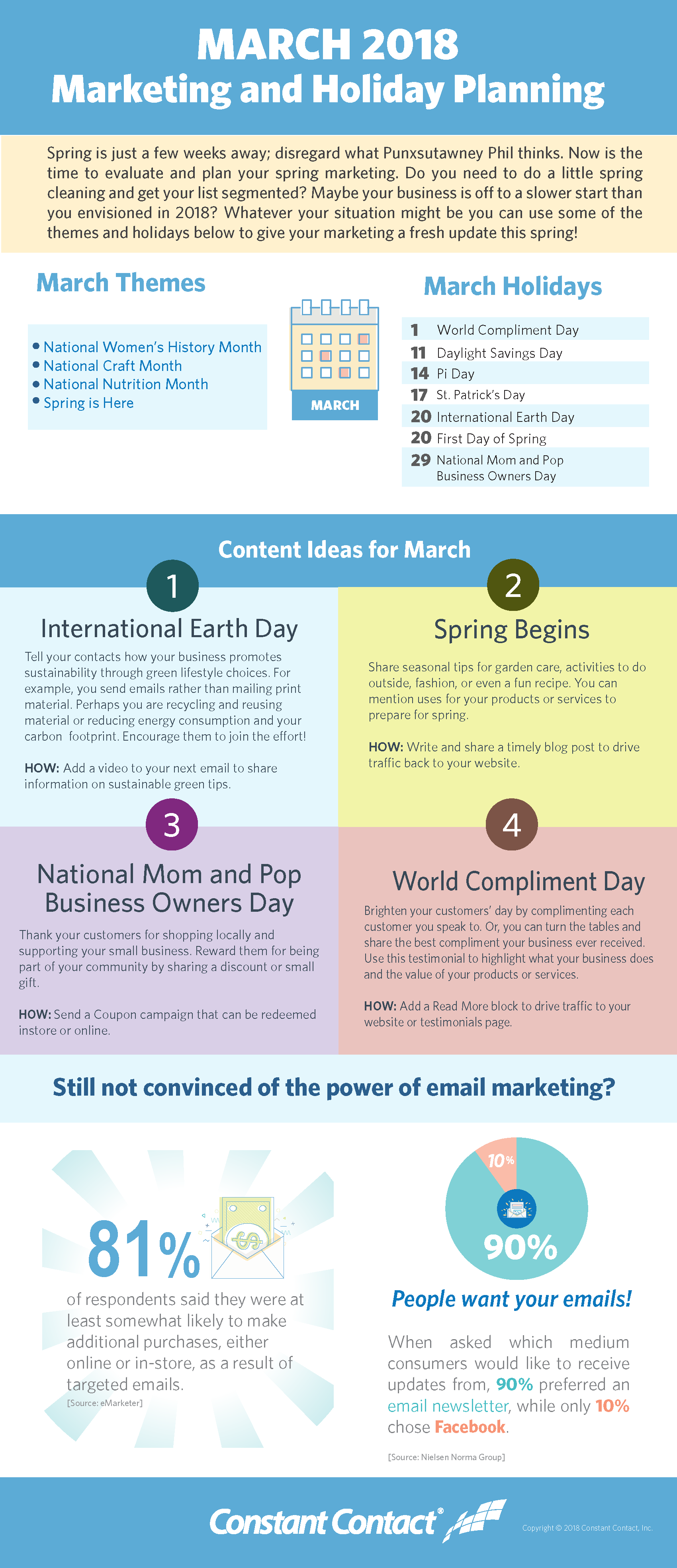
[Infographic] March 2018 Marketing and Holiday Planning


Spring is just a few weeks away; disregard what Punxsutawney Phil thinks.

Now is the time to evaluate and plan your spring marketing.

Do you need to do a little spring cleaning and get your list segmented? Maybe your business is off to a slower start than you envisioned in 2018?

Whatever your situation might be you can use some of the themes and holidays below to give your marketing a fresh update this spring!

click image to enlarge

Still not using email to market your business? Give Constant Contact a try for FREE!


Source: https://blogs.constantcontact.com


ABOUT WNFP
Westchester Networking for Professionals (WNFP) is a business organization focused on providing our members and guests with an extraordinary networking experience, bringing business professionals together for the sole purpose of generating new relationships and developing new business opportunities. Not a member, learn how you can become a member and join this awesome group of professionals to connect and grow your business.

Stay Connected with WNFP!
Join WNFP Communities!

6 Reasons Why Personalization Makes Your Marketing Better


Dale Carnegie once said that “a person’s name is to that person the sweetest and most important sound in any language.”

This is the same reason why you see companies and brands address you by your first name in their promotional emails.

Personalization can be a powerful tool when used right. Marketers have been using this strategy for decades to improve their marketing efforts.

In fact, research shows that personalized email campaigns receive 29% higher email open rates and 41% higher click-through rates than ordinary emails.

Needless to say, if you still haven’t implemented personalization in your marketing strategy, you’re missing out. Here’s why.

Join us for a Email Marketing Workshop: Using Email Marketing Campaigns to Promote Your Business

What is personalized marketing?

How does personalization factor into marketing? Well, it’s much more than just using your customer’s first name in your emails.

Personalized marketing is a strategy of its own that you can integrate into your different types of marketing mediums, such as email, social media, and blogs, to generate better results. Personalized marketing involves collecting data related to your customers and crafting marketing experiences that target specific types of customers through your content.

Data is your friend

Your personalized marketing strategy begins with user data. The success of your campaigns will depend on how well you collect and measure data. Whether it’s email list segments or surveys, you can collect different data to learn more about your users. It’s the only way to offer more personalized experiences through your marketing campaigns.

Once you have enough data and you start to paint a picture of your typical customer, you can begin to properly personalize your marketing campaigns.

The following examples will help convince you of the power of personalization.

1. Effectively target specific audiences

The main benefit of personalized marketing is the ability it gives you to reach specific audiences. By collecting user data from list segments, surveys, or studies you can create more effective email campaigns targeting audiences based on their interests or buying habits.

For example, if your audience likes movies, you can use pop-culture references in your email campaigns, blog posts, or even in your email opt-in forms to offer a more personalized experience through content and increase conversions.

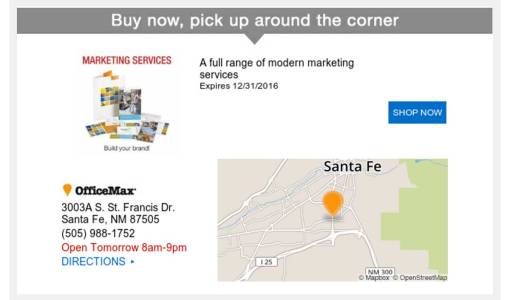
Office Max Uses Personalized Marketing
Many companies, like Office Max, use personalization to increase their customer engagement.

OfficeMax is a company that uses this strategy in their email campaigns. The company uses their user location data to send highly personalized emails based on the user’s location.

2. Create better content
Personalization also helps you stand out from the crowd by creating better and unique content that leaves a special memory for your customers.

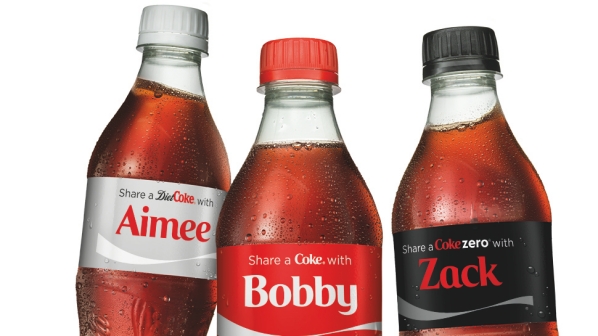
Coca-Cola used personalization to launch its Share A Coke campaign, which involved printing common names on Coke bottles to attract more millennials. The campaign helped the company grow sales for the first time in 10 years.

Personalization helps Coke increase their sales dramatically 
Adding first names to the bottles of Coke helped the company increase their sales.

Imagine finding a Coke bottle with your name on it. Wouldn’t you want to buy it and show it off to your friends? It’s amazing how a simple marketing strategy can bring so many sales for a business.

3. Build deeper relationships with customers

Personalizing your marketing will also help build stronger and more personal relationships with your customers. You can show how much you care about every one of your customers by showing your gratitude, by sending an email wishing for their birthday, or sending a thank you email on the anniversary of joining your email list.

Or, you can take things a bit further by improving your entire website and landing pages using personalization. This will not only help you generate more sales and conversions, but it will also make your website feel like home for your customers.

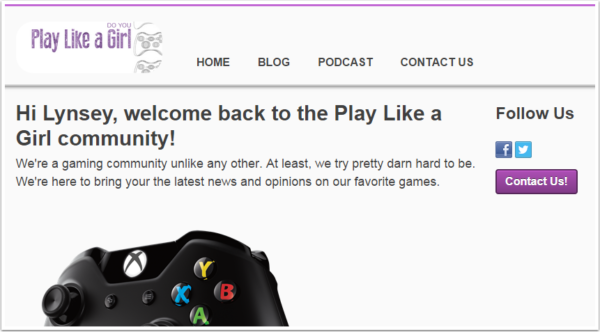
Deepen your relationships with customers using landing pages. 
This gaming community uses personalization to make members feel at home.


4. Gives a face to your business

In order to offer a truly personal experience through your marketing, you also need to give an identity for your company as well. This includes showing the human side of your business.

Include a working reply-to address in your automated emails to let your customers ask questions and leave feedback. Show who’s behind your company emails by including the faces and the names of your employees. Let your customers know that your company is run by humans, not robots.

Show the customer your human side of your company
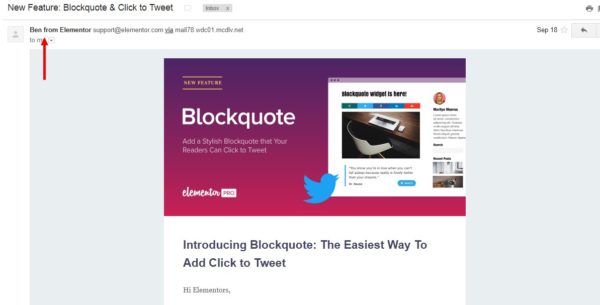
Adding a personal touch like a first name to your email can boost customer engagement.

Many businesses now combine the company name with the person in charge of different departments to offer a more friendly experience to customers.

5. Make better recommendations

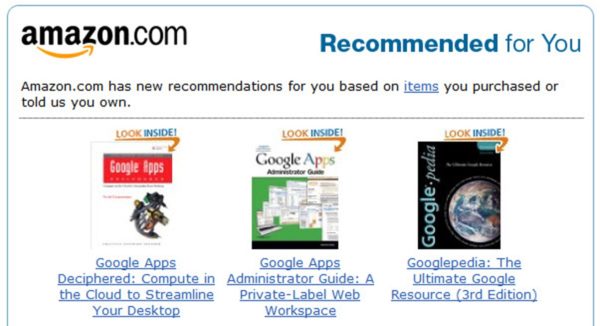
Learning about your customer’s buying habits is not a bad thing. Retail sites such as Amazon and eBay use this perfectly to offer more relevant product recommendations for their customers. They also occasionally send emails with recommended product catalogs.

Instead of asking from friends or searching the internet on which books you should read next, Amazon gives better suggestions based on your own behavior.


Product recommendations helps boost sales for Amazon
Amazon is known for having high-quality product recommendations.


Just remember not to take things too far like how Target exposed a teen girl’s pregnancy before her father knew about it.

6. Boost sales and conversions

Personalized marketing is not just about connecting with your audience. It’s also a great way to help your customers and also grow your sales at the same time. A simple recommendation or a suggestion can help bring you better results.


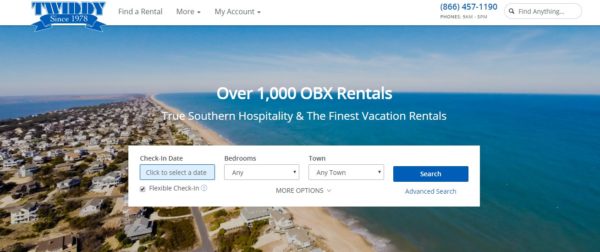
Twiddy boosted sales by helping their customers first
Truly helping your customers can come back around and help your bottom line.


The vacation rental company, Twiddy used a similar tactic to boost their inventory by over 10%. The company paid close attention to trends and customer behavior to offer pricing recommendation to homeowners to help them figure out better pricing for rentals. This brought in increased revenue for both the company and homeowners as well as a 15% cost reduction for Twiddy.


The future of marketing

Most expert marketers are now going as far as to say that personalization is the future of marketing. Seeing how it improves the campaign results, we have to agree with them.

Personalization is all about doing things to serve your customer first. So, you should try putting yourself in your customer’s shoes once in awhile to look at things in their perspective. This will immensely help you improve your marketing strategy.


Want more tips on personalization? Join us for a Email Marketing Workshop: Using Email Marketing Campaigns to Promote Your Business


Source: https://blogs.constantcontact.com


ABOUT WNFP
Westchester Networking for Professionals (WNFP) is a business organization focused on providing our members and guests with an extraordinary networking experience, bringing business professionals together for the sole purpose of generating new relationships and developing new business opportunities. Not a member, learn how you can become a member and join this awesome group of professionals to connect and grow your business.

Stay Connected with WNFP!
Join WNFP Communities!

Thursday, March 1, 2018

Facebook Now Offers Job Posting Feature to Small Businesses


Finding the right talent can be a challenge. Reach qualified people where they're already spending their time—on Facebook. Post job opportunities on your Facebook business Page for free.


ABOUT WNFP
Westchester Networking for Professionals (WNFP) is a business organization focused on providing our members and guests with an extraordinary networking experience, bringing business professionals together for the sole purpose of generating new relationships and developing new business opportunities. Not a member, learn how you can become a member and join this awesome group of professionals to connect and grow your business.

Stay Connected with WNFP!
Join WNFP Communities!

Tuesday, February 27, 2018

3 Ways To Build Authentic Relationships When Networking


The idea of networking makes some people’s skin crawl. They imagine a bad event in a hotel conference room where everyone has a name tag and a pitch. This alone makes it difficult to build authentic relationships. They may also feel fears about being judged or rejected for their business idea.

Like with most things, we’ve been told a story about networking that simply isn’t true. The truth is if you focus on building and nurturing authentic relationships – and knowing when to ask for something – then you can get what you want. Here are some ways to build authentic relationships when networking.


Give before you take.

Whenever most people think of networking, they think of a used car salesman. That’s probably because we’ve all had an experience where all someone wanted to do was take from us.

The key is to always give before you take. Help someone out when they need it. Volunteer to teach a class. Share stuff on social media when they ask for it. Get to know people as friends instead of business opportunities.


Recommended for you: 
Monthly Email Marketing Workshop Series for Beginners

However, there is one caveat to this. Some business owners give but never ask. This brings me to the next point.


Balance the act of giving with your own needs.

The problem I see with a lot of business owners is not necessarily with building authentic relationships. In fact, many of them are quite good at this. The real problem for some is never asking for what they want. In fact, they spend all their time nurturing a relationship but never get much out of it because they don’t ask.

For example, instead of asking a contact whether or not they can get a booth at an expo they say something like, “Let me know if you need any help.” In their minds, they are still nurturing a relationship, but the reality is the relationship might already be established and they just need to be more direct.

For example, my colleagues and I ask each other for help all the time. Are we friends? Yes. But that doesn’t stop us from asking for what we need in business. This is how I’ve gotten new business, mentors, media opportunities and an agent.


Be consistent with your work.

One of the students in my group coaching program is working on an offering that helps people boost their confidence in building authentic relationships. Just recently, she gave a great piece of advice to other students who were struggling to turn networking opportunities into new business.

Essentially, she called them out for not being consistent with their work. In her experience, if your connections see that you are consistent with your work, then they will be less afraid to refer you for business opportunities. The problem lies in the fact that many people just aren’t sold on what it is they are doing, so their connections don’t want to risk their reputation.


Final Thoughts

Building authentic relationships is an important part of moving your business – and your life – forward. The key is learning how to balance relationship building with your own needs. By using these tips, you’ll be able to turn those relationships into business 
 opportunities.

Brand new to Constant Contact? You can try us out for free! Sign up for your free 60-day trial to see for yourself. 
Put these tips to work today! Log in to your Constant Contact account to get started.


Source: https://www.business2community.com/


ABOUT WNFP
Westchester Networking for Professionals (WNFP) is a business organization focused on providing our members and guests with an extraordinary networking experience, bringing business professionals together for the sole purpose of generating new relationships and developing new business opportunities. Not a member, learn how you can become a member and join this awesome group of professionals to connect and grow your business.

Stay Connected with WNFP!
Join WNFP Communities!

Monday, February 26, 2018

5 Strategies to Boost Donor Retention Using Email Marketing

Without the regular contributions of passionate supporters, nonprofits wouldn’t be able to achieve their goals. However, receiving regular donations means cultivating relationships with existing donors and creating a strong donor retention strategy.

Retaining donors is a serious concern for many nonprofits, and according to a recent study, only 46% of donors have given to the same organization two years in a row. That means there’s likely room to amp up your retention strategy, leading to a lot more donations down the line.

From fundraising events to social media outreach, there are several ways organizations go about improving their donor retention. One of the best ways to boost retention is with email marketing. Using the right strategies, your organization can level up your outreach to keep donors interested in supporting your cause.

In this post, we’ll show you five ways you can improve donor retention using email marketing.


Brand new to Constant Contact? You can try us out for free! Sign up for your free 60-day trial to see for yourself. 
Put these tips to work today! Log in to your Constant Contact account to get started.


1. Use CRM software to personalize your outreach.

One of the cardinal rules of email marketing is to make your messages personal and targeted. What’s more, personalizing your emails can help boost donor retention.

When donors feel like your organization knows them personally, they’re much more likely to feel that your organization appreciates their support.

Using email marketing software is a great first step in ensuring that your emails are personalized. Organizations can take their personalization one step further by utilizing their nonprofit CRM or donor database software.

Let’s face it: your CRM holds a lot of information about your donors. Everything from their name and preferred contact information to their giving history and interests is conveniently stored in your donor profiles.

Put this information to use by segmenting your email outreach so that donors only receive emails that are relevant to them.

For example, if you have a group of donors who like outdoor activities and staying fit, they should be the first people you invite to participate in your walkathons and marathons.

Alternatively, first-time donors should receive more information about the history, mission, and past achievements of your organization whereas recurring donors are likely already familiar with that information.

Moreover, using both your email marketing and CRM software can help you evaluate what types of messages are most effective.

Organizations can gain a better understanding of what emails lead to more donations and event registrations by tracking metrics like:

  • Click-through rate
  • Total donations raised per email
  • Behavioral tracking using heat maps and recordings

Takeaway: Segmenting your donors based on giving history, interests, and location ensures that they receive emails that have information valuable to them. As a result, donors are more likely to read your emails and stay involved in supporting your nonprofit.


2. Write emails that are donor-centric.

A common mistake that many organizations make when writing emails is focusing on the achievements your organization has made rather than focusing on how their donors’ contributions made those achievements possible.

In other words, whether you’re writing an end-of-year appeal or sending a newsletter, no matter what type of email you’re sending it’s important to show your donors you wouldn’t be able to accomplish anything without their support.

The key to keeping your emails donor-centric is to:


  • Personalize your letter. Like we mentioned in the previous section personalization can have a huge effect on a donor’s motivation to contribute. Make sure that all your emails address the recipient by name.
  • Use the word “you” more often in your message. Using a recent email, tally up the number of times you use the words “you” and “we.” The language in your email should be focused on your donors because it shows that you appreciate their support.
  • Appeal to the donor in your opening paragraph. A vital step in encouraging donors to contribute is by creating a connection that appeals to the donor’s passions. If your school is trying to raise money, reach out to alumni and let them know that contributing will help provide new students with the same enjoyable experience they had.


In addition to the tips mentioned above, your organization should make a point to mention the support and contributions donors have already made. This shows that you’re aware of all the help your donors have given.

Takeaway: Focusing on your donors shows them that you value their support and not just their money. And when donors feel truly appreciated, they’re more likely to stick around.


3. Update donors about fundraising opportunities.

One of the challenges of retaining donors is that your supporters aren’t always aware of all the fundraising events and campaigns your organization is hosting.

By sending donors emails that keep them up-to-date on all the fundraising and volunteer opportunities your organization has, the more opportunities your donors have to get involved.

Plus, boosting donor engagement is a proven way to improve your donor retention. The more involved your donors are, the more connections they’ll build with people working at your organization.

As such, donors will become more passionate about your cause, especially if they’re volunteering, attending events, and seeing your organization in action.

Cultivating a community of donors with a passion for your cause and strong connections to your organization’s team is the winning formula for retaining your supporters

Keep donors updated on fundraising opportunities in your email outreach by:

  • Letting them know about upcoming events.
  • Reminding them about ongoing crowdfunding or peer-to-peer fundraising campaigns.
  • Encouraging them to volunteer at events.

If you’re not sure how to frame your email messages, Fundraising Letters has a comprehensive list of templates for every occasion.

Takeaway: Having donors participate in events and volunteer for your cause is the cornerstone of any successful stewardship plan. Use email to spread the word about your engagement opportunities.


4. Let donors know how their funds were used.

Generally, after donors give to your nonprofit, they’ll receive a thank-you letter (sometimes in an email or via direct mail) and the engagement usually ends until your organization will make another appeal.

When organizations make that second appeal, they may find donors don’t want to give again. Even if donors are passionate about your cause, they may not contribute because they don’t know how their funds were used the first time.

After a donor gives to your organization, the engagement shouldn’t stop at the thank-you letter. It’s crucial that you let your donors know how their money was used.

For example, if you launched a crowdfunding campaign to update the facilities at your animal shelter, you should send the donors that contributed emails updating them on the progress of your project.

These emails can include:

  • Photos and videos of your nonprofit in action. In our animal shelter example, the organization could send photos of the updated facilities and explain how the changes improved the living conditions of the animals.
  • A breakdown of how the money was used. Include a pie chart that shows how each portion of your fundraising goal was used. For instance, the animal shelter may show that 50% of the funds raised went to building materials and equipment and 30% went to labor costs.
Of course, if you’re sending out updates, your organization will need to keep a record of which donors contributed to what campaigns so that no is left out of the loop.

Using comprehensive fundraising software and your email marketing tool, you can keep donations organized and use segmented lists to send emails to the right donors.

Takeaway: Don’t let your engagement end after the thank-you letter. Make sure to keep donors up-to-date on the progression of your nonprofit’s project.


5. Include a clear call-to-action.

When your organization creates an email, you likely have a goal or multiple objectives you’d like your reader to complete. Creating these goals is not only useful for assessing the effectiveness of your emails but also creating the copy and designing the message itself.

In order to help donors complete your main objective, your organization needs to have a clear call-to-action that leads donors to their next steps.

Depending on the email you’re sending, your call-to-action could:

  • Direct donors to your online donation form.
  • Encourage donors to RSVP for your event.
  • Motivate donors to share your fundraising campaign with their peers.
  • Ask donors to volunteer for an upcoming fundraising event.
Once, you’ve determined what your call-to-action is going to be, you need to make it clear to your donors what you want them to do.

Towards the beginning of your email, make a direct ask so that donors know exactly what your organization needs to be successful.

Additionally, place your call-to-action in a prominent location and make it stand out. For instance, if you want people to make a contribution, don’t just include a link to your donation form. Instead, create a “Donate Now” button that’s placed at the top of your email.

For more tips on how to improve your calls-to-action, check out this article.

Takeaway: Just like any fundraising campaign, your emails need a clear call-to-action that lets donors know exactly what you need to reach your goals.


Wrap up

Improving your donor retention doesn’t have to be a struggle. With these five tips, you can amp up your email marketing and encourage donors to keep giving.


Recommended for you:
Monthly Email Marketing Workshop Series for Beginners


Source: https://www.business2community.com


ABOUT WNFP
Westchester Networking for Professionals (WNFP) is a business organization focused on providing our members and guests with an extraordinary networking experience, bringing business professionals together for the sole purpose of generating new relationships and developing new business opportunities. Not a member, learn how you can become a member and join this awesome group of professionals to connect and grow your business.

Stay Connected with WNFP!
Join WNFP Communities!

Unknown Yet Effective Email Marketing Tips for Businesses To Rule in 2018

Email marketing had a momentary setback in the past. It happened due to people’s tendency of spamming emails. However, with time companies once again started taking up email marketing as their promotional tool. There is little doubt that email marketing plays a significant role when it comes to catching a hold of targeted customers.

Few Benefits of Email Marketing


Low-Cost Marketing

Running a business requires high expenditure. It is natural for the business owners to look for inexpensive tools that will help them expand their brand name. Email marketing is low cost and easy to handle. That is why small-scale businesses, especially the startups opt for email marketing as their promotional tool. The business owners, who are dealing with substantial debts, often find solace in email marketing as they find it difficult to opt for any other marketing tool.

Brand Expansion

With each email that you shoot, the consumers become aware of the business that you are running. They are also getting to know the brand which you are trying to establish. This exposure, when comes in a low cost, becomes a boon for every business. It is not only the small-scale businesses, but even the corporate giants opt for email marketing as their promotional tool.

Easy Sharing Option

You would rarely find a marketing tool which you can easily share with your targeted clients. Sharing email marketing requires only hitting a send button, and that is it, you are exposed to millions of people at one go.

You Can Measure Email Marketing

With the help of modern-day analytics, you can measure the success of email marketing. You can draw specific metrics which includes opening rate, delivery rate, and many other crucial measurable information.

Email Marketing Tips

Crafting an email which draws attention is an art. You need to acquire the skill by practice. However, when you are opting for promotion at an urgent basis, acquiring skill is the last thing you would want to invest your time on. In such circumstances, you can use some quick email marketing tricks to attract the attention of the potential clients.

Images play a significant role in making people open an email. A long text might get ignored, but people will notice a picture for sure. If you dig deep, you will see that average people get at least 400 emails every month. Most these emails end up in the junk box. If you do not want your email to share the same fate, you need to add a well-drawn image. However, there is a catch. In this smartphone era, almost all the emails get checked on mobile devices. Pictures do not always respond well to the small screen. That is why you need to check the image before shooting the email.

Map Your Journey

Email marketing opens up a channel for the small-scale businesses to strike a communication with the potential customers. If you want to build a long-term relationship with the customers, you need to go down on a personal level and communicate with the customers. Technology makes this journey easy for you. Now, you can send out personalized emails to thousands of people out there. To craft this email, you can think like the customers and try to contemplate what kind of email would have attracted your attention. Once you have decided this, you will be able to create your email and send it out to the people.

Acquiring Data

The success of email marketing depends on the quality of data. There is no point in shooting random emails. No one would open it up. Instead, you should invest time in data collection through registration. These will be solid leads. These people have registered because they want your service, and with the right push, you can sell off your product to them.

However, to make people register on your website, you need to offer high-quality products or high-quality content. Another important fact which you need to remember is that the process of registration needs to be easy or else people will not register to your website. Let them register with a single click only.

Some reward or incentive will lure people to register. Often websites offer free ebook as registration gift. Everyone likes to receive gifts. Therefore, you can use this trick to make people register to your site. You can offer something else as well. There is no strict rule about giving an ebook only.

Raise Expectation

Yes, you need to do this with care. When the expectation is raised correctly, you will be able to get people to come back to you. Here do not try to use flowery words or lengthy prose. In an email, these two things do not work. You need to be upfront and bold here. It is essential that you tell your potential customers what they can expect from your service. With each email, build this expectation and get it as high as you can.

Create a Sense of Urgency

Hurry, the winter is coming. Well, not really, but the voice should have a similar tone which will get the attention of the readers. If they do not feel the hit of excitement in the form of urgency, they will not respond well. The first line of the email is important. You only have six seconds. Between which the readers will decide whether to read your email or discard it.

Easy on the Language

People respond to chatty tone and casual voice. Use this when you are writing an email. Make the readers feel that you are sitting across from them and talking. Once you establish this bonding, you will be able to get them to open all your emails.

As you keep sending emails to people, you will succeed in finding the flaws. You will be able to see what works and what does not. You can only learn by doing it.


Source: http://tweakyourbiz.com


ABOUT WNFP
Westchester Networking for Professionals (WNFP) is a business organization focused on providing our members and guests with an extraordinary networking experience, bringing business professionals together for the sole purpose of generating new relationships and developing new business opportunities. Not a member, learn how you can become a member and join this awesome group of professionals to connect and grow your business.

Stay Connected with WNFP!
Join WNFP Communities!

Friday, February 23, 2018

8 Old-School Branding Techniques That Will Still Work for You Today


Everything seems so fast-paced these days: You go to bed one night and wake up the next morning to the announcement of an entirely new technology, or a breakthrough on a project that seemed far-fetched until, well, this moment.

If you personally have issues with the speed of change, imagine what companies contend with: To keep up and stay relevant, they have to adapt their branding, marketing and sales efforts at a pace at least as fast as that of the new techologies' debuts.

Gone are the Mad Men days of designing billboards and magazine ads (those jobs still get done, just in a different way and with different tools). In are the days of instant publishing. Despite the changes that the marketing industry has experienced, though, there are still some old-school branding and marketing strategies that work as effectively as before. Just because they seem old-fashioned doesn’t mean they’re out of date.

Here are eight aged but still workable branding and marketing strategies that are as effective in 2018 as they were back in the day.

Business cards. Business cards are less common now that text and email are so prevalent, but they’re still as effective as ever. Rather than simply telling someone what you do and asking them to email you if they’re interested, (though they may not remember your email address), a physical business card is more personal.

Business cards visually represent you and your brand -- they have your logo and contact information, which will visually stand out in your prospect’s mind. Moreover, not only do business cards stand out visually, but because you made a physical, personal connection, the next time that prospect needs your company’s type of services services, he or she will likely contact you first.

Snail mail. Who doesn’t love getting a personal letter? Unfortunately, nowadays, mail most of the time is just bills and advertising disguised as letters or important documents. You on the other hand don’t have to trick consumers into opening your mail, in order to have a successful snail mail campaign. Although impersonal ads are disappointing, coupons and discount notifications are not.

Public talks at events. Speaking at events is a great way to get your company’s name out to people already interested in your industry. You can search out events related to your vertical or let connections know that you’re interested in speaking; then prepare an address that is educational and meaningful and will make a lasting impression.

Think about the last time you attended an event about something you were interested in. Did any of the speakers stand out to you? Why? When you find a speaker to be impressive, take notes, then apply his or her techniques to the next time you have the opportunity to raise awareness about your company. Offer yourself to speak at an event.

Publishing testimonials. Testimonials are as effective today as they’ve ever been. Customers turn to online reviews and testimonials all the time before making online purchasing decisions or deciding which service provider they want to use.

So, asking existing clients for testimonials and then publishing their words on your website and printed marketing materials will help establish trust between your brand and your customers and potential customers.

Sponsorships for community events. One old school but great way to get your company’s name out there is your sponsorship of a community event. Whether it be a local high school football team or a charity walk to raise cancer awareness, an event that gets you involved in your community through your sponsorship will raise awareness of your company and the things you do. It makes for great PR as well.

Cold calls. The term “cold calls” has a negative connotation, but why? Perhaps the reason is that rejection is tough and some people just aren’t cut out for sales. Assigning one of those people to cold calling probably won’t result in much success. Others, though, do their best work when making cold calls.

So, if you're pursuing this strategy, you'll need a plan in place that includes a list of potential customers, a strategy and possibly a script. Once you feel confident in your pitch, call the customers on the list. Don’t be afraid to digress a little bit or indulge in a personal conversation, since it will warm your prospect up and keep the conversation friendly.

A branding redesign. If your brand has been around for some time, it may be time for are design. Although this can be a difficult undertaking, redesigning your brand, logo and the overall look of your company can get you a lot of attention. This is especially true if your branding is outdated. Old customers will enjoy a fresh new look while potential customers will get curious and pay more attention because, let’s face it, sometimes we do judge books by their covers.

Trade shows. Trade shows like CES are still as popular as ever. Whether you attend trade shows in your local area or travel to national and even global events, participating in and presenting at trade shows is a great way to increase brand recognition. Not only can you get your name out there, but you can show potential partners and customers your products, what they do and what else you have been working on.

Alhough these strategies may not be the newest ways to brand and market your business, they have been tried, tested and proven true. Which have you found to be the most effective for you and your business?


Source: https://www.entrepreneur.com


ABOUT WNFP
Westchester Networking for Professionals (WNFP) is a business organization focused on providing our members and guests with an extraordinary networking experience, bringing business professionals together for the sole purpose of generating new relationships and developing new business opportunities. Not a member, learn how you can become a member and join this awesome group of professionals to connect and grow your business.

Stay Connected with WNFP!
Join WNFP Communities!

'Superconnectors': 3 Steps to Becoming a Networking Genius


“Social capital is the most important currency in the world" is the core message of an upcoming book I was recently privileged to read before its release. That book? Superconnector: Stop Networking and Start Building Business Relationships That Matter, by Scott Gerber and Ryan Paugh.

Their book got me psyched about the importance of the people the authors call, well . . . superconnectors.

What's a superconnector? Your first impression might be of a social maven who connects anyone and everyone -- and you wouldn't be far off, because there is a strategy involved in being a superconnector. But there's more to it than that.

In fact, being able to make long-lasting connections means something in addition to how many LinkedIn invitations a person receives or his or her number of friends on Facebook. Rather, superconnectors are information brokers who are constantly learning about others and constantly connecting.Therefore, superconnections are relationships that are not only mutually beneficial but also the basis from which whole communities can be built.

With their book, Gerber and Paugh seek to change the very way we think about networking. They dig deep into best practices, commentary from successful superconnectors, how-tos and insights into how we can all advance our careers. They strive to make us all take a big step up from the mindless networking we've been doing, to a high degree of effectiveness at being the kind of connector they're writing about.

Of course the ability to form significant professional relationships is paramount to all entrepreneurs. Below, are the three pillars behind the concept Gerber and Paugh define and how you too can implement those pillars to join this all-star club.


Pillar 1: the art of selectivity


Ever heard the phrase “You are the company you keep”? Being selective about the people you let into your network is crucial to earning the title of superconnector. It also goes beyond your connections.

Superconnectors are selective with their time, as well; they don't immediately connect with 500 people, but instead start with a select five people they believe could become evangelists (people who believe in their cause and will spread the word for their ventures). The idea is that those five evangelists will then take the superconnector's mission to another five people they think will likely be inspired by it. And those people will then carry the mission further.

One of the most common mistakes that entrepreneurs make when they're just starting out is growing their inner circle too quickly and taking on too many projects at once. Remember to focus only on a few projects at a time and really dedicate yourself to them. This also applies to your inner circle: Be mindful of how much you can really give to people. You can do more for your community as a whole when you are focused.

Pillar 2: the power of association


When we think of the word “anchor,” we think of someone who's grounded, sturdy and trustworthy. An anchor is exactly the person every superconnector needs: someone similar to a mentor, who can fill in the gaps where weaknesses exist. Anchors are the gatekeepers to meeting other people. This kind of gatekeeper need not be a wildly successful CEO, but instead be a group organizer, an advisor, a family friend.

These anchors also act as a sort of professional recommendation, which ties back to our previous point, “You are the company you keep”; the anchor that introduces you to his or her network is giving you credibility and value and showing that by the association with you, you are someone who can be trusted.

Pillar 3: habitual generosity


Some call it karma: Superconnectors are big believers that what you put out into the worldalways comes back around to you. This idea underscores why superconnectors are generous with both their time and positivity; the more they, give the more they get in return.

A superconnector Gerber and Paugh describe in their book is named Adam Rifkin; he's the co-founder of 106 Miles, a tech entrepreneur meetup group. Rifkin is someone who swears by the impact of the “Five-Minute Favor,” the authors write. This kind of favor is something that can be done in five minutes or less, like delivering a handwritten note or sharing something a contact wrote on Twitter, Facebook or LinkedIn.

Another way to practice habitual generosity is to help share the stories of others through blogs, books or social media. Interviewing a few professionals in the industry whom you are interested in forming professional relationships with might make them feel inclined to repay the favor one day.


Conclusion


Being selective with both your time and the people you most closely associate with (i.e.,your "inner circle") is crucial to being a successful superconnector. But, with that said, when you do select projects to dedicate yourself to, give your time generously. What you put out into the world will come back to you. Also be sure to find your anchor, the person who is an advisor and can help you build strengths in unfamiliar areas. We all have them!

You have heard it a million times, but it bears repeating: Being connected in meaningful ways is important to each and every entrepreneur’s success. Building your network of brand ambassadors and evangelists could be the difference between where you are and where you want to be. After all, no man (or woman) is an island, and great things are accomplished together.


Source: https://www.entrepreneur.com/
Image Credit: graphicstock


ABOUT WNFP
Westchester Networking for Professionals (WNFP) is a business organization focused on providing our members and guests with an extraordinary networking experience, bringing business professionals together for the sole purpose of generating new relationships and developing new business opportunities. Not a member, learn how you can become a member and join this awesome group of professionals to connect and grow your business.

Stay Connected with WNFP!
Join WNFP Communities!
Business blogs
Business Blogs - Blog Rankings