Wednesday, July 18, 2018

How to Apologize After an Email Marketing Snafu

Things don’t always go as planned, and as a marketer, you’ll likely find yourself needing to apologize for mistakes. Email is no exception. It’s easy to send out a broken link, get a date wrong, or send an email to the wrong segment.

Most of us have been there. While it’s difficult to own up to a mistake, the best bet is always to mitigate the situation and apologize. Your subscribers are human, too. They know that mistakes happen, and if they’re happy with what you offer, they’ll usually give you the benefit of the doubt.

So, when you make a mistake in an email, how can you apologize? We’re here with tips for how to apologize after an email marketing blunder.


Stay cool and react as promptly as possible


You might be a little stressed from all the complaints you’ve received. Plus, you’re likely beating yourself up. Before you get to writing your apology email, center yourself and calm down. You want to be calm and rational when you write your email.

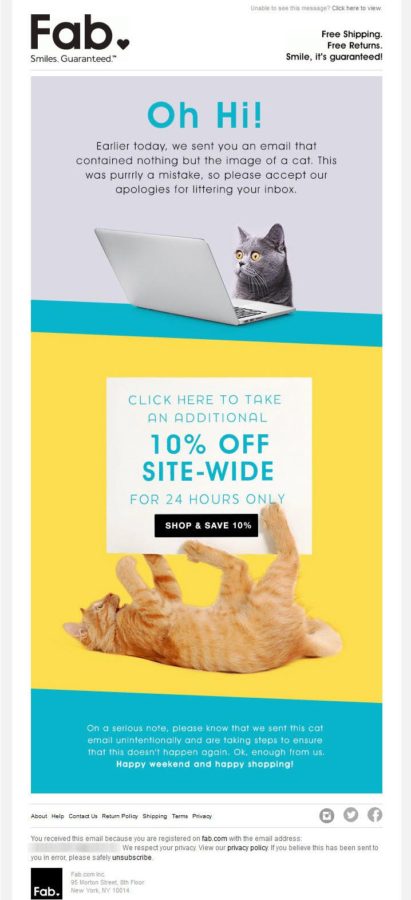
But as soon as you feel you’re in a proper state of mind, it’s time to get to work. Not sending out a timely response can cause even more confusion and frustration for your customers. For example, Fab sent out a casual and friendly apology email on the same day they made the mistake, pairing the message with a promo code.


Don’t play the blame game


It can be tempting to put the blame on someone, and maybe there is really is an individual person or specific entity that is responsible. But whatever you do, do not blame an individual or another company. It reflects poorly on your organization.

Focus your apology on how the incident should never have happened. You want to be seen as taking ownership, not trying to dodge responsibility. Your customers will respect you accepting responsibility much more than making excuses or finding a scapegoat for what happened.

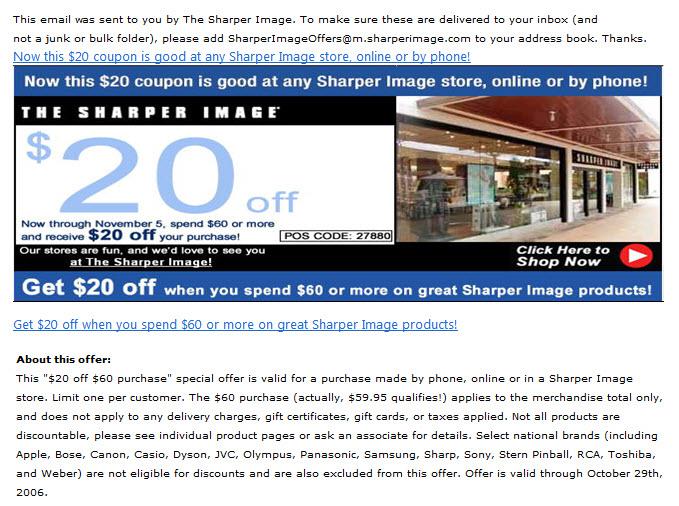
For example, The Sharper Image made a mistake by sending a coupon available only in San Antonio to every subscriber nationwide. They quickly realized it was a mistake, but they didn’t play the blame game and they sent a coupon to everyone as a way to apologize.


Personalize your messages


You want your customers to know they are receiving an apology from a real person. Ideally, send it out from a personal inbox, but you can also send it out from your team inbox as long as you sign it with an actual name.

“Never send out an apology email from an unattended email box. Never send out an apology from a ‘no-reply.’ Your customer is already unhappy, and an impersonal email they cannot even respond to will only make it worse,” advises Gary Mulligan, email marketer at BoomEssays.

For example, after Shutterfly sent an email congratulating new moms to everyone on their list, they sent out an apology using the subscriber’s first name and wrote the apology from John Boris, the Chief Marketing Officer.


Put yourself in your subscriber’s shoes


Empathizing with your customer is key to writing a proper apology email. Ask yourself, if you were the customer, what would you want to hear? What kind of information and updates are you looking for?

Also, think about how you would want the company to make things up to you. Your customer could be wondering why the incident happened, how it affects them, if it will affect them in the future, etc.

Accidents happen. Emphasize that it was not your intention to hurt anyone by your actions. Maybe the offense was preventable, and maybe it wasn’t. But it’s in the past now and what matters is your apology and letting your customers know you did not mean to offend them.


Give them a reason to forgive you


You’ve apologized for your offense, but now what will you do to make it up to them? Show your customers you care about upsetting them by providing them with a gift or, at the very least, explaining how you will avoid future mishaps.

You could offer them a coupon or a discount code. Reiterate your company values and why their business is important to you. Show them a little love by offering free shipping on their next purchase. Get that bad taste out of their mouth and remind them why they loved your business to begin with.

For example, Lucky Brand sent the following email after a technical glitch caused a poor web experience. The brand offered up a generous 30% discount to give subscribers a reason to forgive and forget.


Use humor if appropriate


Be careful with this one, as a poorly thought-out joke may be the reason for your apology in the first place. However, using humor can help lighten the mood after a gaffe.

When it comes to humor, consider your brand’s tone. Is it out of character for your brand to be humorous, or does it fit with who you are? Brand consistency is important when you are conducting damage control.

Before you engage with humor, consider the degree of seriousness of your offense. If the mistake was not terribly serious or if it was out of your control then humor may be a good tool for you. It shows your human side.

For example, Wistia sent an apology email after sending the wrong link with a familiar face — the company dog. Wistia made light of the situation with a joke and fun image.


Wrap up


Mistakes are going to happen; what’s important is how you react. Remember to keep your cool, respond promptly, avoid blaming, and personalize your messages. If you’re thoughtful, keep your cool, and have fun, mistakes will be easily forgotten and forgiven by your subscribers.


ADVERTISEMENT


Source: https://www.business2community.com
Image Credit: N/A


ABOUT WNFP
Westchester Networking for Professionals (WNFP) is a business organization focused on providing our members and guests with an extraordinary networking experience, bringing business professionals together for the sole purpose of generating new relationships and developing new business opportunities. Not a member, learn how you can become a member and join this awesome group of professionals to connect and grow your business.

Stay Connected with WNFP!
Join WNFP Communities!

Tuesday, July 17, 2018

Everything You Need to Know About Email Marketing

When it comes to successful marketing strategies, did you know email marketing consistently ranks as one of the best tactics? Studies show email has a median ROI of 122 percent; this is more than four times higher than other top strategies, including social media. In addition, HubSpot reports 86 percent of consumers want to receive emails from companies they do business with at least once a month.

[WATCH VIDEO]

As you can tell, research backs up claims that email marketing is worth the investment. In addition to the hard numbers, there are additional reasons this tactic plays an important role in your overall content marketing strategy.

As Forbes points out, email marketing can “fuel” your business’ strategy to increase website traffic and search engine optimization (SEO). How?


  • It’s cost efficient.
  • It provides a way to promote your blog posts, articles or other content.
  • It increases link shares by making it easy for subscribers to share your content on their social pages or website.
  • It encourages customer loyalty as well as brand awareness and reputation.
  • It increases your social media follower base by offering another way to remind subscribers to connect with your social channels.

How can you include email marketing as an effective component of your content strategy? Keep reading to find out!

Before we move on though, I wanted to make sure you are aware of how the EU’s new GDPR laws may affect your business, even if you operate in the United States. As Erika’s article about how GDPR affects marketing explains:

While this law only applies to members of the European Union, it’s still going to affect those of us that do business on this side of the pond thanks to our global economy. In terms of your email marketing, if you have even one person on your list that is an EU citizen, it’s important you’re aware of the regulations. And if you don’t, it’s beneficial to be informed for good measure.

Make sure you check out her post for specifics about how to comply with the regulations.


How to Create Effective Email Marketing Messages


Before you begin your email marketing campaign, make sure you have a clear understanding of your budget and goals. Once you’ve clearly established them, you can tackle the question of how you’ll achieve your goals.


ADVERTISEMENT

Effective Email Marketing Tactics


When it comes to the most effective email marketing tactics, Campaign Monitor reports the most important tactics are (in order):

  • Personalization
  • List Segmentation
  • Automated Campaigns (see 15 examples of automated emails you can send on the Social Media Hat)
  • Testing and Optimization
  • Responsive Design

Entrepreneur backs up the importance of personalization too, sharing that, “More than half of consumers and 65 percent of B2B buyers surveyed were likely to switch brands if a company didn’t make an effort to personalize its communications to them.”

Whether you’re putting together an email marketing strategy for a small business, a medium-sized company or a major organization, personalization matters. How can you do this? As Entrepreneur recommends, “Get to know your subscribers better, and increase personalization by including polls in your emails. Not only is this an easy way for small businesses to learn more about their subscribers, it leads to more engaging emails and gives subscribers a chance to voice their preferences proactively.”

How are you segmenting your email marketing lists?


As you get to know your subscribers better, you can segment your lists better. Kissmetrics recommends separating them based on your target audience’s variables, such as:

  • Demographics (e.g. age, gender, job title, etc.)
  • Email Engagement (open rate and clickthrough rate)
  • Geographic Area
  • Past Purchases
  • Amount Spent with Your Business
  • Website Behavior
  • Time Since Last Purchase


Once you have subscribers divided into specific lists, you can send more targeted, personalized emails based on their information. For example, if you have the lists segmented by geographical location, you could send an email letting one group of subscribers know about an upcoming event in their area.

Clearly, this can be a lot to manage. The good news is you can also subscribe to a third-party email marketing management platform (such as MailChimp or Constant Contact) to take advantage of tools and services they offer to assist with personalization, as well as list segmentation, automation, testing and responsive design.

Speaking of MailChimp, their blog shares a lot of helpful advice based on research into what’s worked well for their customers. In addition to the tactics above, the email marketing platform recommends:

  • Using landing pages to provide, “A clear call to action and an easy space to make purchases.” This tactic has helped their customers increase their list growth rates by about 36 percent.
  • Incorporating social media into your email marketing. MailChimp provides tools to incorporate Facebook and Instagram ads directly into your email campaign.
  • If it’s appropriate for your brand voice, incorporate emojis into your emails.
  • Rely on clear, high-quality visuals. As MailChimp explains, “What we do know is that when it comes to the relationship between click rate and the ratio of text to images in campaigns, keeping the amount of copy per image lower leads to success.”

Email Marketing Specifics: Creating Your Messages

How much time do you spend crafting your email marketing subject lines?

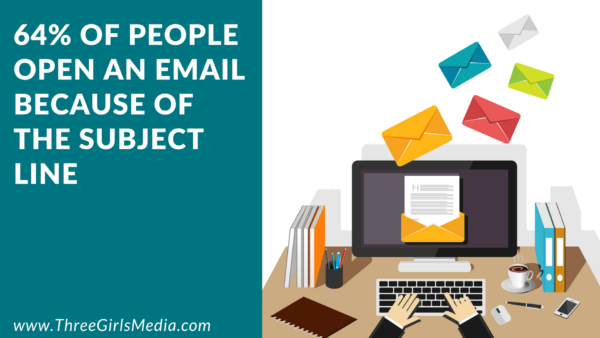
Email marketing statistic next to computer with envelopes coming out.

How much time do you spend crafting your email marketing subject lines?

Now that you have an idea of what tactics you want to include in your email marketing strategy, it’s time to get down to actually creating messages for your subscribers.

As Natalie Petersen shared in her recent post about content development, your e-newsletter should include these elements:


  1. An enticing subject line. 64 percent of people say they open an email because of the subject line, so spend time on it and make sure it’s enticing.
  2. A strong visual appearance. In addition to choosing colors and an overall feel that matches your brand, include high-res images throughout the newsletter.
  3. Concise, helpful content. Make your email easy to read and provide something of value to your readers. If you want to share an article that’s more than a couple of paragraphs, post it on your blog and link to it from the newsletter. Also, a brief introduction at the top of the email is a fantastic way to give your readers a quick look at what the issue includes and infuse a bit of your personality.
  4. Grammatically correct text. Text that’s rife with errors can be confusing, plus it makes you look less professional. If possible, have a co-worker or friend proofread the text for you and double check your work.
  5. A call to action. What do you want your readers to do after reading your newsletter? Share it with their friends? Contact you to for a free consultation? Make it clear how you’d like them to respond – after all, if you never ask they’ll never do it!

What type of content should you include? The biggest key here is to know your target subscriber. What messages will they want to receive from you? How will you provide them value?

For example, if you have a younger target audience, research into millennials’ preferences will help guide your email content. As this infographic shares:


  • 63 percent of millennials actually prefer to communicate with retailers via email.
  • 59 percent will take action from emails containing a site-wide or product category-wide promotional offers.
  • The majority of millennials want to engage with retailers via email for discounts and promotional offers.
  • 71 percent will take action from an email containing their preferred content (e.g. discount codes and free shipping)
  • The majority of millennials will pull up an email when browsing in a physical store to access coupons.

10 Common Email Marketing Mistakes


As you begin (or revisit) your email marketing campaign, make sure you avoid these all-too-common e-newsletter mistakes:


How often do you review your email marketing analytics?


1. You forget to look at the analytics. How will you be able to measure success without objective data? Each time a newsletter is distributed, take a look at how many recipients open it, which links they click, if they forward it, etc. As you look at this information, try to notice any trends you see emerging. Do your readers seem to like a particular type of content more than another? Is the open rate higher or lower when you send it in the afternoon as opposed to the morning? Pay attention to these tendencies and adjust your email marketing campaign accordingly.

2.  Your emails aren’t mobile friendly. If your newsletter doesn’t load on mobile devices, or is formatted in a way that’s hard to read, readers won’t take your email seriously. Ensure images, email size and videos that you send are compatible with mobile devices so that potential customers can find your emails.

3. You lack consistency. Sporadically sending out emails to subscribers may frustrate them and then cause them to forget they asked to receive your messages and then unsubscribe when they see them. Instead, implement your email marketing on a consistent schedule and stick to it. You also want to be consistent with the content you share in your emails so subscribers will know what to expect and be more interested in opening them.

4. You over communicate. Your subscribers follow you for a reason, but if you spam them with too many emails they will unsubscribe. When you create your email marketing schedule, don’t over load it with too many messages going out too frequently. 

5. You ignore design.
Do your email marketing messages fit your branding?

While a generic template or no HTML at all can be tempting, ignoring a custom-design means you’re losing brand identity. Custom templates allow you to showcase your business in a unique way and make it stand out from the rest of the emails people receive.

6. Your headlines are dull. You want your marketing emails to be opened at the very least. Create a compelling subject line that grabs the attention of your recipients. Subject lines that lack pizazz can be easily categorized as spam to potential customers.

7. You forget to customize the preview text. This is the preview of what shows up in recipients’ inboxes. As HubSpot explains, “If your email client supports preview text, also known as pre-header text, you can optimize it for every email you send. Allowing this text to auto-populate is a lost opportunity to grab attention or delight your recipients.” Most email marketing platforms include a place for you to customize this space.

8. Your emails are too long. When it comes to email marketing, the shorter the content, the better. Each paragraph of your email should be about 3 to 4 lines at the most. Your potential customers are in a hurry and usually scan through emails. Ensure that your first sentence has the most important information so they won’t miss the crucial parts of your message.

9. You don’t repurpose content you’ve already created. There’s no need to reinvent the wheel every time you send a newsletter. Share your latest blog post or a fascinating article you shared on Facebook. Remember, it takes multiple impressions for consumers to remember a brand, so repeat your message in as many channels as possible.

10. You sound like a used car salesperson. Just because email marketing isn’t face to face doesn’t mean you can’t add a little personality to your messages. Avoid sounding like a used car salesperson by avoiding a full on sales pitch within your emails. Try adding a little humor, fun facts or anything else that may tickle the fancy of your potential customers.

Now you’re ready to get started with or revisit your email marketing campaign!


Source: https://www.business2community.com
Image Credit: N/A


ABOUT WNFP
Westchester Networking for Professionals (WNFP) is a business organization focused on providing our members and guests with an extraordinary networking experience, bringing business professionals together for the sole purpose of generating new relationships and developing new business opportunities. Not a member, learn how you can become a member and join this awesome group of professionals to connect and grow your business.


Stay Connected with WNFP!
Join WNFP Communities!

Monday, July 16, 2018

The 55 Best Questions To Ask To Break The Ice And Really Get To Know Someone


What’s the first question most people ask you when you meet?

It’s likely, “What do you do?”

This has become the new “How’s it going?” or “How about that weather?” and it’s awful.

If you’re anything like me, this question leaves you feeling sized-up and minimized. It’s as if the asker is thinking to herself, “I’m out of here if she doesn’t fit my predetermined criteria of what is interesting.”

So, you struggle to answer, not even sure if the asker cares in the first place, or if it’s just small talk.

Why does it have to be like this? And why do we care so much about what someone does, anyway? Hopefully, we respect ourselves enough to know that we are dynamic people who can’t be described adequately in one sentence. We also know that we can’t get someone to feel invested in us, or our work, in a quick transactional conversation.

Isn’t there a better way? Yes, but you may have to break a few norms to bust up the status quo to really get to know someone.  

Here’s a list of some better icebreaker questions to consider. I’ve broken them into mild, medium and hot so you can go deeper as your palate allows.

Play with what works for you in various environments and points in a conversation. A ‘hot’ one is typically best if reserved until after you’ve warmed someone up a bit, so they feel comfortable enough to open up. Some environments create this intimacy quickly, in which case you can dive right in.

And sometimes, a great precursor to any question is simply to admit that you’re over surface-level conversation and really want to learn what makes this person tick. So, might they mind your asking some untraditional questions, and speaking more authentically?


ADVERTISEMENT


With that, here are 55 questions you might want to try:


Mild:


Any upcoming travel plans?

What brought you here?

How do you two know each other?

When you're not working, how do you like to spend your time?

What are you reading currently?

What’s the first concert you attended?

Where do you most hope to visit?

What’s your favorite book?

What's your favorite 90’s show?

What's the best Halloween costume you've ever had?

What's your dream job?

What's your favorite word?

What was your first job?

What's one thing you're excited about that's coming up in 2018?

What was the worst job you've ever had?

What is your most-used emoji?

If you could win an Olympic medal for any sport, real or fake, what would it be?

If you could change your name, what would it be?

What movie or TV show title best describes your week?

What was your favorite subject in school?

What’s your hidden talent?

If you had to eat one thing for every meal going forward, what would you eat?

If someone were to play you in a movie, who would you want it to be?


Medium:


If you could spend a day in someone else’s shoes, whose would they be? Why?

What's one thing your mother/father taught you that completely changed your life?

What’s been on your mind lately?

What’s the first career you dreamed of having as a kid?

What’s the last text you sent?

What's one of your favorite memories?

What's one thing about you that surprises people?

Who, or what, was your biggest teacher?

What was something you've done that made you feel extreme happiness?

Knowing what you know now, what advice would you give your 18-year-old self?

If you could instantly become an expert in something, what would it be?

What does success mean to you?

What’s the best piece of advice you’ve ever been given?

Where is your happy place?

If you could invite 3 people, dead or alive, to a dinner party, who would they be, and why?

How can someone win a gold star with you?

What energizes you and brings you excitement?

What qualities do you value in the people with whom you spend time?

For what would you be famous?

What does your dream day look like?

If you didn’t have to sleep, what would you do with the extra time?

What’s your guilty pleasure?

At what job would you be terrible?

If you had to choose only 3 adjectives to describe yourself, which would you choose?


Hot:


What do you give a damn about?

What is a dream you have that you’ve yet to achieve?

What's something you say you'll do, but never will?

What did you have to give up to achieve your current level of success?

Has anything ever happened to you that you could not, and cannot, explain?

Do you ever find there are things about you that people misunderstand? What are they?

For what are you most grateful today?

If you could have one 'do over' in your life, what would you do differently?

Of what are you most afraid?

See what it's like to stop leading a conversation with “What do you do?” and see how it makes you feel. How does your conversation partner respond? Do you find that it can be a shortcut to warm them up? And by taking that leap, does it give permission to others to break the mold of their typical conversation patterns?

It takes time to build a relationship. The initial interaction should be used to find some chemistry and build rapport. If you can spark curiosity in getting to know you more, you've succeeded. Choose any of these questions to have in mind for your next interactions, and see what feels authentic to you in kickstarting new relationships.

Most importantly, don’t attack someone with questions. When you ask, deeply listen. Any questions that come after should be a natural follow up to their response. These are helpful primers, but follow the course that the conversation takes.

And then, you will eventually get to know what someone does. No need to lead with it. Ideally, it will uncover itself as you get to know what really matters to your new friend.


ADVERTISEMENT


Source: https://www.forbes.com
Image Credit: Pixabay


ABOUT WNFP
Westchester Networking for Professionals (WNFP) is a business organization focused on providing our members and guests with an extraordinary networking experience, bringing business professionals together for the sole purpose of generating new relationships and developing new business opportunities. Not a member, learn how you can become a member and join this awesome group of professionals to connect and grow your business.

Stay Connected with WNFP!
Join WNFP Communities!

Friday, July 13, 2018

4 Tactics You Need to Know for an Effective Email Marketing Strategy

As consumers, emails bombard us at every opportunity, and as marketers, we’re still sending them because they continue to be one of the most effective means of getting the results we want. The success of email marketing lies in its versatility. It’s a tool that serves countless purposes across every industry, and no two marketing emails will have the same look and feel, intent, or result.

The impact of email marketing goes far beyond delivering messages, monitoring open rates, and tracking click-through rates. So, whether you’re working on a start-up, or your company is already well-established, an effective email marketing strategy is key to promoting your business, generating leads, and increasing revenue.

According to Campaign Monitor, on average, email marketing brings in a 4400% ROI. In other words, every $1 spent on email marketing produces $44 in return. This might be because 58% of adults wake up and immediately check their email or because email is 40 times better at converting consumers than Facebook and Twitter. And despite what you may think, email marketing is still growing. Gmail alone has 1 billion users worldwide, and The Radicati Group predicts that there will be 2.2 billion email users worldwide by the end of 2018 and 3 billion by 2020 (that’s almost half of the world’s population!).

So, here are four email marketing tactics that give your customers a reason to care, a reason to engage, a reason to buy, and most importantly, a reason to stay with your business:


Segment your database

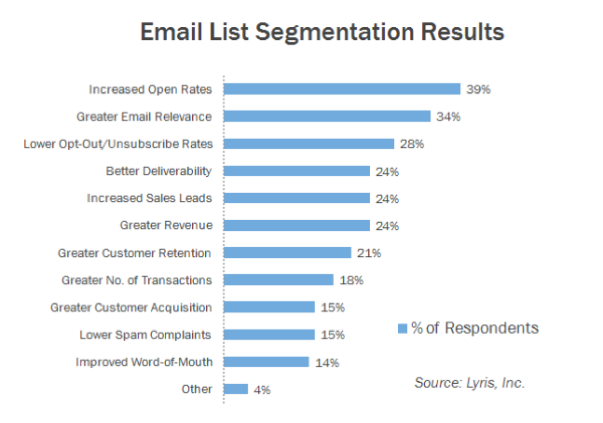
Email list segmentation directly correlates to recipient behavior and ensures that what you’re sending is relevant to the reader. Without it, most emails bounce or end up in the trash folder; with it, you stand a much better chance of enticing the reader to care, to learn more about your brand, and to purchase your product or service. You can’t afford to miss out on the demand generation opportunities represented by email segmentation.

A study by HubSpot found that all key email marketing KPIs perform better when you segment your email list.


DMA says 77% of ROI comes from segmented, targeted, and triggered campaigns. So, one simple adjustment—segmenting your email list to appropriately target your subscribers—can improve your engagement and conversion rates as well as increase your ROI.

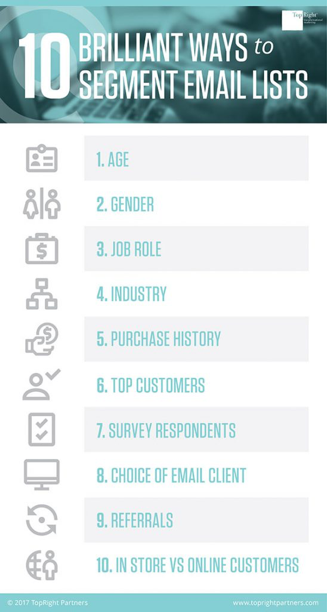
To help you get started with basic segmentation and increase your email marketing engagement, here are ten recommendations from MailingManager.


Personalize your emails

Admittedly, email automation makes the lives of marketers and salespeople easier. Long gone are the days when we laboriously thumbed through piles of business cards to email prospects one by one. But, just because technology has allowed us to be faster and more efficient, we are not now granted immunity to establishing personalized, authentic connections with our audiences.

Additionally, a recent study by Campaign Monitor found that emails with personalized subject lines are 26% more likely to be opened. They also showed that segmenting email campaigns to deliver more personalized content increased email revenue by 760%. In other words, personalized content has become a necessity rather than just a nice touch.


Ensure Deliverability

Deliverability isn’t always a guarantee. And, how much you pay for a platform has nothing to do with the likelihood of your emails reaching someone’s inbox. A perfect subject line with spectacular content is worthless if your email gets lost in transit or flagged as spam. Here are six tips to make sure your email gets in front of your audience, so you can begin to perfect your digital experience and improve marketing efficiency and dollars spent.


Automate your campaigns

Marketing automation platforms help you streamline your marketing efforts to consistently stay connected with your audience, so you can eliminate repetitive tasks and focus on the quality of your campaigns and messaging.

Automated emails generate 320% more revenue than non-automated. Marketing automation is extremely powerful for many reasons: more responsive messaging, effective prospect nurturing, improved productivity, better targeting, and programs that free up marketers to focus on strategy, to name a few.

Whether you are launching your marketing automation initiative or are preparing for a future investment in marketing automation, here are four tips to help you get started:


Your success in marketing automation will help you engage with more customers more often and increase sales and loyalty.

In short, email is not going anywhere and remains one of the most effective business communication tools today. Email marketing, when done correctly, can help you engage with your customers, increase sales, grow your business and retain loyal customers. It is both an art and a science that takes time and practice to get right, but nailing down just a few of these tactics can result in a huge return on investment (ROI) for your business.

ADVERTISEMENT


Source: https://www.business2community.com
Image Credit: Toprightpartners.com and Lyris, Inc.


ABOUT WNFP
Westchester Networking for Professionals (WNFP) is a business organization focused on providing our members and guests with an extraordinary networking experience, bringing business professionals together for the sole purpose of generating new relationships and developing new business opportunities. Not a member, learn how you can become a member and join this awesome group of professionals to connect and grow your business.

Stay Connected with WNFP!
Join WNFP Communities!

Thursday, July 12, 2018

Email Marketing Not Working As Well As You’d Hoped? Here’s Why:


Does your email marketing strategy include only sending emails when you need something in return – like a sale, or a sign up? This is the type of thinking that we see commonly when small businesses are just starting out with email marketing.

Do you have that one friend that only calls when they need something? We all do, and this is how customers can feel when you’re only asking them to buy something.

By sending emails that are really only trying to hard sell customers, you are not giving your business the best chance to successfully market to them. Your contacts can easily become fatigued with this type of communication and lose interest.

Instead, you should think about how you can send on a consistent basis and balance sales emails with content your customers will value.


What does “valuable content” mean?

Valuable content is information that your customers will find helpful, and that pertains to the type of business you are running, including your services, products and industry. This content should be offered to your customers when you communicate with them, and without expecting anything in return while also providing them an opportunity to buy if desired.

Just like wine and cheese or chocolate and peanut butter, asking a customer to make a purchase pairs very well with valuable content.

Here are some examples of emails that would include valuable content:


  • A dog grooming company could create a guide on how to de-stress your pup.
  • A yoga studio could let you know about upcoming retreats in your area.
  • A wine store could send an email about the top five reds to bring to a dinner party.
  • Circling back to the “wine and cheese” reference, content and selling compliment each other when implemented into your email marketing strategy.


Additionally, you are probably going to buy that wine from that specific wine seller because you know they have it in stock, they are the experts, and you trust them. They didn’t specifically ask you for a sale, but they did encourage it with their valuable content.

When emails are paired with valuable content and an option to purchase, there is a much higher chance of actually getting that purchase, along with building trust, and your reputation as an expert in your industry.


Do not fall for this email marketing misconception:

The major misconception we see is that you only need to send an email when you need a boost in sales. If your customers are not getting emails from you consistently, you risk them forgetting who you are, causing your email marketing results to plummet.

Whether you schedule ahead of time, map out a plan for your entire year, or use automation, make sure you’re sending regularly. Consistency will set the stage for your email marketing performance.

When you communicate on a regular cadence, and especially when those communications contain valuable content, you’ll be viewed as a dependable source to your audience. They’ll start to expect the next campaign, and will become more engaged with the valuable content within, boosting revenue organically.

When you’re sending emails with content that your customers actually want to learn about, then they’ll become excited about seeing your emails in their inbox. And once you establish a regular cadence, those same customers will be anticipating the next one.


See the results you’ve always hoped for

The truth is, if you balance your sales emails with valuable content on a consistent basis, you can get the email marketing results you’ve been hoping for all along. When customers recognize your emails in their inbox, they’ll think of you first when they are ready to buy.


ADVERTISEMENT


Source: https://www.business2community.com
Image Credit: N/A


ABOUT WNFP
Westchester Networking for Professionals (WNFP) is a business organization focused on providing our members and guests with an extraordinary networking experience, bringing business professionals together for the sole purpose of generating new relationships and developing new business opportunities. Not a member, learn how you can become a member and join this awesome group of professionals to connect and grow your business.

Stay Connected with WNFP!
Join WNFP Communities!

Wednesday, July 11, 2018

7 Ways Custom Audio Branding Can Turn Your VOIP System Into a 24/7 Brand Ambassador


A custom audio brand is as important to your customer’s ear as your visual identity is to their eye.

From the choice of music and voice talent to the strategy of the script and voice prompts, a custom audio brand is the auditory conduit that connects callers to your business with warmth, familiarity and professionalism.

But if your business has transitioned to a voice-over-internet-protocol (VOIP) telephone system, you may be missing out on the advantages of custom audio branding.

That’s because VOIP systems come with basic ‘plug and play’ features that are limited in customizable options. If you’re using these, you may be missing a strategic opportunity to connect with your customers, serve them and even sell to them.

Consider these seven ways custom audio branding can turn your VOIP system into a 24/7 brand ambassador.


#1: Custom audio branding ensures a great first impression


Without custom audio branding, your VOIP system will sound like every other company using an out-of-the-box system, including bland messaging backed by canned music.

Custom audio branding puts your best foot forward with a customized script matched with music specifically selected for your target demographic.

All components work together to ensure that the first impression is the right one.


#2: Custom audio branding gives your business a sound signature


When customers call your company, you want them to be able to close their eyes and feel as if they just walked into your lobby.

Custom audio branding enables you to create a sound signature that’s tailored to your demographic, builds a positive connection and engenders familiarity.


#3: Custom audio branding makes your VOIP audio congruent with other audio marketing touch points


It’s likely that when a customer calls, they have already visited your website and may even be familiar with audio branding you’ve used on promotional videos, radio ads or even podcasts.

Using the same audio brand on your VOIP telephone system reinforces your other audio touch points and strengthens the connection with your customer.


#4: Custom audio branding reinforces visual identity


Human senses work together to complete our understanding of an experience.

Your brand experience is no different.

Whether your visual identity is professional, informal or whimsical, your audio brand should reflect and reinforce that.

ADVERTISEMENT


#5: Custom audio branding aligns your music with your brand


Music choices are a key part of your brand. Any music you use should align with your target demographics.

You only get a handful of choices with most VOIP telephone systems and none of them are great. But with a custom audio branding consultant, your musical choices are unlimited and you can rest assured that you’re operating within copyright laws.


#6: Custom audio branding strengthens your customer connection


At the end of the day, it really is all about customer connection. Every branded touch point your customer experiences strengthens the connection with your company.

When you have custom audio branding on your VOIP system, you have a competitive edge over those who do not.


#7: Custom audio branding prevents transition problems


When you work with a custom audio brand consultant for your VOIP telephone service, you benefit from years of professional experience and know-how.

Experienced consultants know how to pinpoint potential branding or technical problems that can accompany a transition to VOIP. These can include solutions ranging from simple audio format tweaks and hardware upgrades to ‘run-arounds’ that can save you time and money.

Consultants can also help you create an audio branding workflow and bridge the communication gap between the technical and marketing departments. This helps everyone understand the new technology and work together to achieve a seamless transition.


Source: https://www.business2community.com
Image Credit: Pixabay


ABOUT WNFP
Westchester Networking for Professionals (WNFP) is a business organization focused on providing our members and guests with an extraordinary networking experience, bringing business professionals together for the sole purpose of generating new relationships and developing new business opportunities. Not a member, learn how you can become a member and join this awesome group of professionals to connect and grow your business.

Stay Connected with WNFP!
Join WNFP Communities!

Tuesday, July 10, 2018

How to Spotlight Your Growing Business on Social Media


Is there a way to ensure your business will take off on social media? Unfortunately, there are no definite answers. However, we do have some quick tips to make sure your company can start off on the right track. Here’s some helpful advice for using four popular social media platforms to promote your business.


1. Instagram—According to Hootsuite, there are a few ways to keep this image-based platform fresh and compelling to your audience.


  • Make your company’s logo noticeable and easy to see
  • Set goals for growth
  • Create a theme for the posts you intend to share
  • Follow a schedule that is planned out in advance
  • Stay creative
  • Keep these tips, as well as more outlined in the Hootsuite article, in mind as you promote your company’s Instagram presence.


2. Twitter—Building up your Twitter page takes a lot of work, but this platform is one of the largest in the world. Post Planner has a lot of helpful tips on how to create a Twitter presence that will grow your company.


  • Use Twitter cards
  • Have a detailed plan on how to gain followers
  • Include compelling hashtags that draw the audience you want.
  • There are many more tips that can help grow your Twitter page. in the Post Planner article


3. Facebook—The original social media platform. Beyond the quick photo or short Tweet, this is the space where you can get your company’s message across. These tips from Entrepreneur can help you on your way to building this platform.


  • Promote your Facebook page across all of your other channels
  • Publish factual and helpful content for your audience to benefit from (think to yourself: what value am I providing through this update?)
  • Keep track of your engagement to make changes on or improve your strategy
  • If you want to learn even more about growing your company’s Facebook, check out on of our articles for additional advice.


4. LinkedIn—Known as the social media platform for professionals. This way of connecting with users is slightly different than the other platforms as it shifts the tone—your tone on this site should change with it. This article by Inc. shares helpful tips for you to boost your LinkedIn engagement.


  • Keep all of your photos professional. This isn’t the place to post casual updates—though your Instagram or Facebook pages could be!
  • Make sure your endorsements on LinkedIn reflect what you want them to. You don’t want unrelated skills cluttering up your profile
  • When connecting with others, make it personal. Use their names and cater to who they are—don’t let your wording become generic or overused
  • Besides these points, we also have some advice that will help you generate more traffic on your LinkedIn page in


Social media is such an important part of connecting with potential leads, and we want you to have the best running start you can.


ADVERTISEMENT


Source: https://www.business2community.com
Image Credit: N/A


ABOUT WNFP
Westchester Networking for Professionals (WNFP) is a business organization focused on providing our members and guests with an extraordinary networking experience, bringing business professionals together for the sole purpose of generating new relationships and developing new business opportunities. Not a member, learn how you can become a member and join this awesome group of professionals to connect and grow your business.

Stay Connected with WNFP!
Join WNFP Communities!

Monday, July 9, 2018

Strengthen Your Customer Relationships Through Branded Content


In the world of social platforms, attention spans are often short. In turn, brands are forced to adapt at breakneck speeds. Out of this strange brew of ever-evolving consumer preferences and marketing strategies, branded content has emerged as the new king of marketing and public relations (PR).

Branded content (sometimes referred to as branded entertainment or branded journalism) can involve videos, articles, podcasts and other media. Unlike commercials, social ads and more formal advertising, branded content brings value to people by entertaining and/or informing them. It’s a more effective, direct form of advertising that has a strong uplift because of its efficacy.

Big brands -- including the likes of Disney, Dove, Discovery, MTV, Red Bull and others -- rely on branded content as a primary saturation mechanism. This branded content stands out and has a substantial PR reach and social media effect.

Make no mistake, producing branded content that is memorable and impactful requires that businesses deeply understand the values they share with customers. The objective is to create and strengthen that bond through a shared narrative.  

A great example of this in motion is Dove’s Real Beauty Sketches series. The company’s overall objective was to, “Inspire every single one of the 80% of women who feel anxious about how they look to reconsider their view of their own beauty and remember: You’re more beautiful than you think.”

The cosmetics maker produced a film centered on having FBI forensic experts draw portraits of participating women based on self-descriptions while separated by a curtain. In turn, the same women were drawn based on the descriptions of others. The unveiling of the final portraits was captivating and profoundly moving.  

ADVERTISEMENT


According to Dove, the video saw more than 50 million views in the first 12 days and has since reached nearly 180 million views. The series was covered by The New York Times, ABC News, Bloomberg and The Guardian, to name a few outlets. How’s that for PR outreach?

While viewers of branded content may be well aware that they’re being advertised to, the method of connecting them with a brand is successful because of the strong narrative and storyline. I've seen this success firsthand, as my agency focuses on creating strategic branded content for our clients, among other brand-building initiatives. 

From my perspective, setting your brand apart in these turbulent, shark-infested waters is critical. In order to reap the rewards of your efforts, there are some important things to keep in mind.

Create a seamless story that speaks to your audience. 


To cut through the clutter and make your branded content truly stand out, there are some tricks to the trade. Marketers must be sure to: 

  • Create content that welcomes people, instead of relying on emotional filters or a sense of urgency.
  • Understand that content is created for people, not a consumer or a member of a demographic.
  • Tell a story that’s thoughtfully created and highlights the values of the brand.
  • Make branded content seamless -- the voice of your ads, social channels and site content should carry over the same message.


By following these simple rules, you can expand your digital reach faster. Moreover, you’ll be connecting with people who are encouraged to act based on the content they’ve enjoyed. Above all else, branded content should leave the viewer with a sense of solidarity with the brand.

Insert personality into your story.


Content that lacks personality is stale and boring, and it is essentially a waste of your time and that of the readers. Instead, evoke a strong, personal flavor in your content -- one that carries on with residual value in the mind of the reader long after they’ve already mentally ingested it.

Whether your message is humorous, boisterous, empathetic, emotional or downright serious in tone, maintaining this theme across all your branded content channels is imperative. The goal is to interact and reach consumers who appreciate the message your brand is conveying.

The more your brand speaks in its natural voice and talks about the things it believes in, the easier it is to connect with audiences that believe in those same ideas.

Remember the three must-haves of branded content.

Finally, like any marketing method, you’ll see better results if you follow a few simple rules of the trade. Based on my experience, the following three rules should be a part of your strategy:

  1. Create stories for people, not for sales. Doing so makes your content more valuable to the consumer and rewards them for viewing it.
  2. Syndicate your content far and wide. Don’t just plop it on your website and expect sales to skyrocket.
  3. Use PR to share your content. PR isn’t dead. Tell the world about your content by issuing a press release and using social syndication services to gain reach.


The marketing paradigm has shifted. From my perspective, the average user now abhors ads, pop-ups, click bait and wasted time spent on shoddy content. To gain reach and saturation -- and, ultimately, an uplift in sales -- you’ll need to create amazing content that shines. Doing so will deliver measurable results to your ROI in the long run.

ADVERTISEMENT


Source: https://www.forbes.com
Image Credit: Pexels


ABOUT WNFP
Westchester Networking for Professionals (WNFP) is a business organization focused on providing our members and guests with an extraordinary networking experience, bringing business professionals together for the sole purpose of generating new relationships and developing new business opportunities. Not a member, learn how you can become a member and join this awesome group of professionals to connect and grow your business.

Stay Connected with WNFP!
Join WNFP Communities!
Business blogs
Business Blogs - Blog Rankings